
 E-Paper



Advanced techniques for rapid recovery in pregnant patients: PGI doc
Post Graduate Institute of Medical Education and Research (PGIMER) has adopted cutting-edge techniques to ensure speedy recovery of pregnant patients


Post Graduate Institute of Medical Education and Research (PGIMER) has adopted cutting-edge techniques to ensure speedy recovery of pregnant patients. The professors from the department of anaesthesia, obstetrics and gynecology, recently shared their insights during a two-day workshop and continuing medical education (CME) event held at PGIMER. They highlighted that these methods have shown promising results in facilitating quicker recovery.
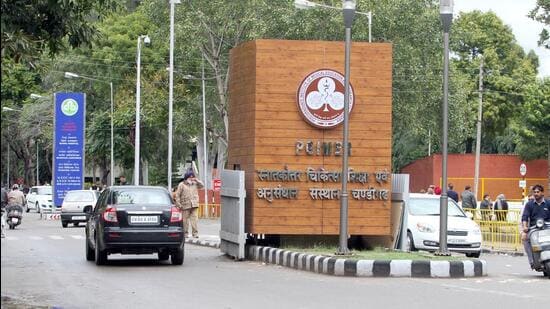
The event was organised by the department of obstetrics and gynecology, in collaboration with the Obstetrics and Gynecology Society of northern India.
The professors said these methods deviate from the traditional practice of keeping patients’ stomach empty for prolonged periods as it can result in weakness and hinder the recovery process.
“Our bundled approach focuses on getting patients back on their feet as soon as possible during pregnancy, as the risk of blood clotting increases. If we do not provide adequate nutrition and hydration, the blood can thicken, which could pose a serious risk to the mother if she attempts to stand or walk after delivery,” said Dr Kajal Jain, professor in department of anaesthesia. She further added “The motto– sip till you send– means patient can sip water or fluid till her turn for delivery comes. We aim to minimise the duration of fasting”
Our approach has evolved significantly, and now we prioritise nutrition and hydration of patients just six hours after delivery. In the past, patients were kept without food and water for 24 hours after giving birth, Dr Jain added. She also highlighted that pregnancy opioids are not being used for pain relief in postoperative patients.
Dr Jain pointed out that some of the medications contribute to the emission of greenhouse gases and this approach focuses on minimising use of general anaesthesia and reducing plastic consumption.
Dr Minakshi Rohilla, professor in obstetrics department, said that their goal is to prevent maternal deaths during childbirth and emphasised on the importance of prompt action in response to warning signs. The issue arises when there are delays in diagnosis, which can be mitigated by proactively recognising early warning signs and taking swift action.
Over 150 delegated from the across the city participated in the second day of CME event.


