
 E-Paper



Punjab budget: 60% agriculture outlay to fund free power for pumpsets
The other big slice — ₹450 crore — has been reserved for the previously announced incentive of ₹1,500 crore to paddy growers of the state for adopting direct seeding of rice

 Prefer HTon Google


In its first budget, the Aam Aadmi Party (AAP) government in Punjab on Monday made an outlay of ₹11,560 crore for the agriculture sector, of which a major chunk — ₹ 6,947 crore (exactly 60%) — goes into funding the free electricity supply to more than 14 lakh agriculture pumpsets. The allocation saw a jump of 150%, as compared to the last fiscal’s ₹4,778 crore for agriculture.
The other big slice — ₹450 crore — has been reserved for the previously announced incentive of ₹1,500 crore to paddy growers of the state for adopting direct seeding of rice (DSR). The incentive has been pegged to be given for DSR cultivation over 12 lakh hectares (30 lakh acres), but paddy using this water-saving non-conventional method has been sown over only one lakh acre. There are chances that allocation might have to be diverted to other heads in the sector.
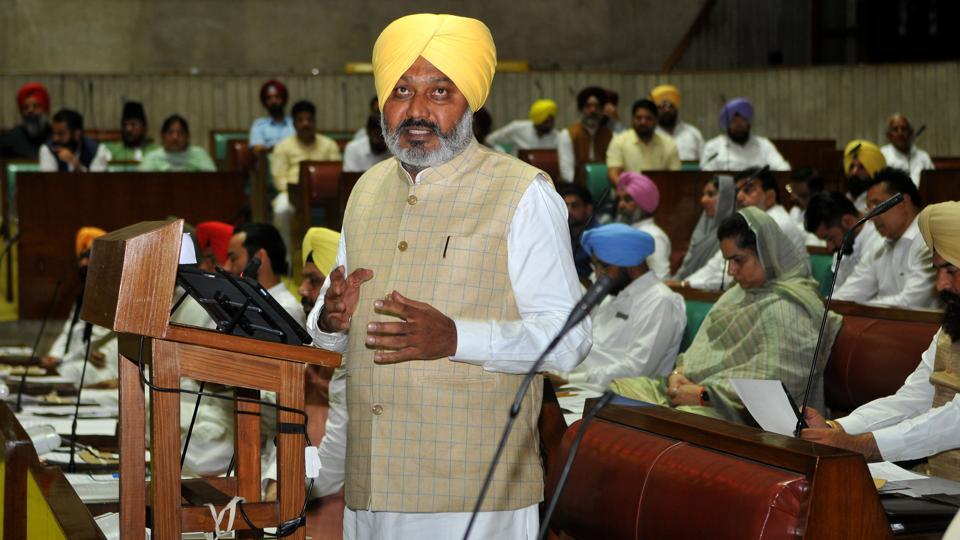
“Punjab’s agriculture sector is at crossroads. On the one hand, we need to increase farmers’ income, and on the other, we are under the obligation to save Punjab from desertification,” said finance minister Harpal Singh Cheema reading out his budget speech. He also paid tributes to the farmers who lost their lives in the last year’s agitation against the Centre’s now-repealed farm laws.
The FM brought on record that the National Agricultural Cooperative Marketing Federation of India (NAFED) has agreed to partly procure green gram (moong dal) from the state under its Price Support System. The state government is offering an MSP of ₹ 7,275 per quintal, helping farmers earn an additional income of ₹30,000 per acre soon.
“The AAP government has made a historic decision to procure green gram at MSP. It would nudge farmers to go for three crop cultivation from the traditional two crop rice-wheat cycle,” announced the FM.
Stubble burning
The budgetary allocation of ₹200 crore has been proposed to check burning of paddy stubble in the kharif harvest season. “This practice causes air pollution, impacts people’s health and is not good for soil health,” said the FM, adding that the state government would only undertake targeted actions for controlling it.
The state department has already sought ₹474 crore from the Centre for supplying 32,000 subsidised machines to the farmers for in-situ management of the paddy stubble.
Cheema also announced to double the fund allocation for the horticulture sector, for supporting diversification. He also advocated digitisation in agri sector to help farmers reap the benefits of modern technological advancements.
The government proposed a new quick freezing centre at Verka village in Amritsar with an outlay of ₹7 crore and an integrated hi-tech vegetable production-cum-technology dissemination centre at Malsian, Jalandhar, with a fund allotment proposal of ₹11 crore.
Cooperation sector
The government has allocated ₹1,170 crore for the cooperation department, claiming an increase of 35.67% as compared to the last financial year.
As per the budget proposal, Markfed will construct new godowns for foodgrains at 13 locations under NABARD-assisted scheme, for which ₹56 crore have been proposed.
To support Marked for green gram procurement, the state government has already given a state guarantee of ₹400 crore, helping the state cooperative federation raise loans. To bail out Punjab State Cooperative Agricultural Development Bank (PSCADB), Cheema proposed ₹688 crore for clearing all liabilities.
Water resources
For success of the agriculture in the state, Cheema said adequate irrigation facilities are needed. For water resources projects, the budget has allocated ₹2,547 crore, which includes ₹189 crore for Shahpur Kandi Dam Project over River Ravi that is expected to be completed next year.
For relining of Rajasthan Feeder and Sirhind Feeder, an outlay of ₹780 crore was proposed, and for relining of phase–2 of Kotla Branch, an allocation of ₹18 crore has been proposed. The work is expected to be completed by 2025, and will help irrigate 1.43 lakh hectares of land in Bathinda, Mansa, Sangrur and Barnala.
For conservation and productive use of run-off water, pond water, rainwater harvesting and augmentation of groundwater recharge, four new schemes were proposed with fund allocation of ₹21 crore.


