
 E-Paper





Vishal Rambani is Assistant Editor at Hindustan Times, covering Punjab's political, governance and public policy landscape. With more than two decades of journalistic experience, he has extensively reported on politics, power and energy, crime, bureaucracy, environment, urban development and socio-economic issues. His reporting combines ground-level coverage with data-driven and investigative journalism, producing impactful stories on governance, regulatory affairs, corruption, public finance, elections and infrastructure. Over the years, he has broken several exclusive stories involving enforcement agencies, the power sector, real estate, and state administration, earning recognition for incisive reporting, accuracy and in-depth analysis of Punjab's evolving political and administrative landscape.
Punjab seeks refrigerated wagons on Vande Bharat, Shatabdi for farm, dairy produce
The officials said the main goal is to speed up trade between Gujarat, Punjab, and Haryana, promote rail-based freight transport, and lower logistics costs


To take Punjab’s farm and dairy produce to markets across the country, the state government has proposed that the Railways introduce refrigerated wagons on Vande Bharat and other high-speed trains, enabling the faster, time-bound transport of perishable commodities.
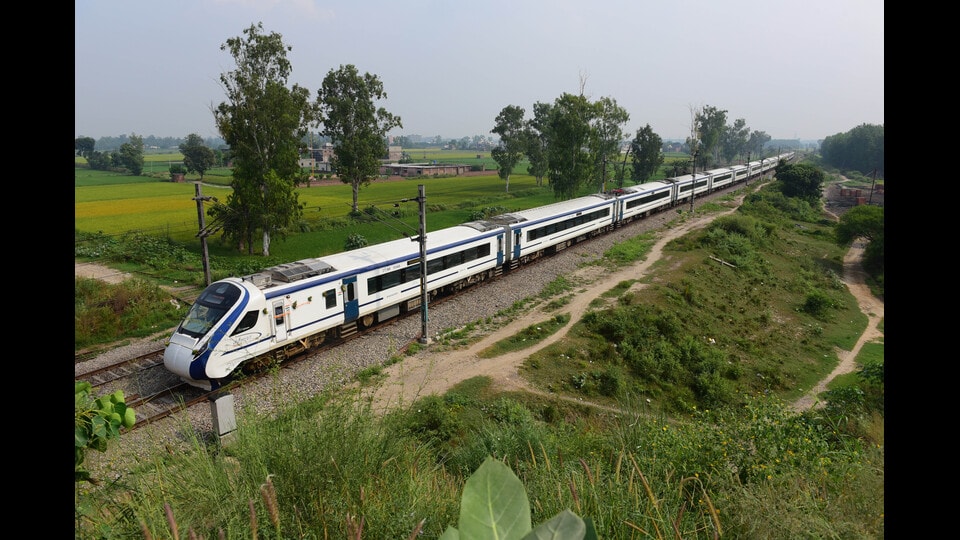
Ajit Balaji Joshi, secretary, taxation and cooperation department, Punjab, said, “Railways should bring special refrigerated wagons for transportation of perishable goods like milk, vegetables, and other crops to tap pan-India market. Punjab has unique milk products from Verka, like ‘rabri’ and ‘kheer’and Markfed ready-to-eat products, which are highly in demand in the country, but the state needs time-bound transportation of such items. Railways should bring wagons in high-speed trains like Vande Bharat and Shatabdi for time-bound deliveries, so that consumers get fresh vegetables, fruits, and milk items at far-away places.”
He asked the Railways to introduce a mechanism and suitable wagons so that potato producers can use railway wagons to send their produce to different parts of the country.
He was speaking at the ‘’Trade Meet 2026’ organised in Chandigarh by the Ahmedabad, Ambala, and Ferozepur Railway Divisions in association with the Central Warehousing Corporation to boost rail freight transportation and trade between Gujarat, Punjab, and Haryana.
He said there is an Agricultural Infrastructure Fund under the Union Agriculture Ministry, and the Railways and the Punjab government should bring projects for transporting produce from Punjab and Haryana to different parts of the country.
He said that the Railways can help the state government curb tax evasion by directly transporting steel scrap from different seaports to Mandi Gobindgarh and Ludhiana.
Rabindra Kumar Agarwal, chairman, Central Warehousing Corporation; Ved Prakash, divisional railway manager (DRM), Ahmedabad; Vinod Bhatia, DRM, Ambala; and Annu Tyagi, senior divisional commercial manager, Ahmedabad along with senior officials of Indian Railways and CWC, and representatives from the freight transportation and industrial sectors were present at the event.
The officials said the main goal is to speed up trade between Gujarat, Punjab, and Haryana, promote rail-based freight transport, and lower logistics costs. Farmers, traders, rice mill operators, industrialists, exporters, importers, transporters, and logistics service providers were urged to use the railway freight corridors.
Ved Prakash, DRM, Ahmedabad Division, said, “Railways is playing a crucial role in driving economic growth, supporting industrial expansion, creating new markets for agricultural products, and enhancing the global competitiveness of goods. Our objective is to reduce transportation costs for traders, provide farmers with access to larger markets, improve connectivity for industries, and ensure reliable logistics facilities for exporters”.
He added, “We need two-way freight movement to reduce costs and improve railway efficiency. If freight trains transport rice, potatoes, foodgrains, and export containers from Punjab and Haryana to Gujarat, our endeavour should be to ensure that these trains carry imported timber, salt, fertilisers, industrial products, and import containers from Gujarat to North India on their return journey. This will reduce empty rake movement, improve wagon utilisation, and make freight transportation more cost competitive.”


