
 E-Paper



Punjab set for two-fold jump in biomass pellet-making units
According to Punjab Pollution Control Board (PPCB) officials, 72 new entrepreneurs have registered with the state government to establish small-scale pelletisation units, compared to the existing 74 such units

 Prefer HTon Google


Encouraged by an organised push by the Centre and the state government to contain the environmentally hazardous annual farm practice of burning paddy stubble, the number of units converting biomass into pellets for co-firing by various industries is expected to double in the coming months.
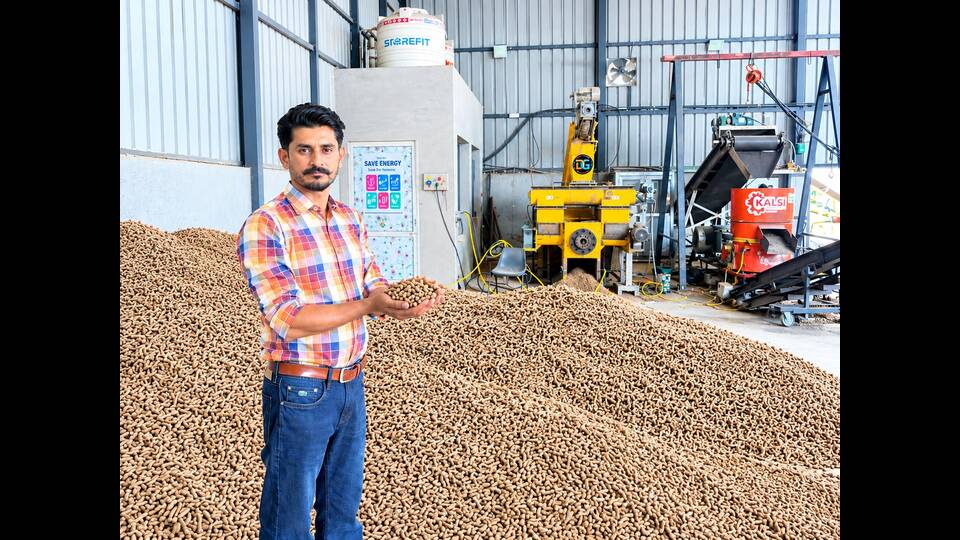
According to Punjab Pollution Control Board (PPCB) officials, 72 new entrepreneurs have registered with the state government to establish small-scale pelletisation units, compared to the existing 74 such units.
The upcoming units will be able to process 22 lakh tonnes of paddy residue. PPCB authorities said the existing 74 operational units have a capacity to process 19 lakh tonnes.
Data shows that Bathinda and adjoining districts in the Malwa region have shown interest in setting up units that convert paddy straw into pellets using the pelletisation process.
The initiative was first taken in 2023 as an ex-situ measure when five such pelletisation units were set up to address the problem of rampant burning of non-basmati residue.
PPCB’s nodal officer for the pelletisation projects, Sukhdev Singh, said that while 74 such units are already operational across 20 districts, the other 72 are in various stages of approval and installation.
He attributed the surge in biomass processing units to the economic incentive by the Centre, under which an entrepreneur receives a 40% financial grant, must invest an equal amount from their resources, and raise the remaining 20% from any institute.
“An increase in the number of pelletisation units in the last four years indicates that the initiative is being appreciated by entrepreneurs because of a wide market of biomass to be used as fuel. PPCB has directed coal-based thermal power plants in the state to procure biomass pellets and briquettes produced by the entrepreneurs in the state,” said Singh, a superintendent engineer.
He said six to seven units are expected to be functional by December as work on others is underway. Data says that Sangrur is leading with 12 proposed projects, followed by 10 in Muktsar.
In the industrial town of Ludhiana, seven entrepreneurs are working to set up units, whereas six projects are expected to be established in Barnala soon.
Out of 23 districts in Punjab, entrepreneurs have opted to work in 18 districts. Data says that out of the existing pelletisation units, Mansa has the maximum 18 units and Bathinda has seven plants. Districts of Sangrur and Patiala have seven functional units each, as per PPCB.
Sandeep Dhillon, an entrepreneur who has been successfully operating a unit since 2023 at Bathinda’s Kota Fatta village, said that he is geared to start operations of supplying pellets to thermal plants for the fourth consecutive year. “This small-scale sector can play a significant role in paddy biomass management if more industries are directed to start using the pellets,” said Dhillon.


