
 E-Paper



Shared love for Urdu brings Ludhiana students, lawyers and retirees under one roof
Being organised by the state government’s language department, the classes have been drawing a diverse group of participants in Ludhiana

 Prefer HTon Google


Eager-to-learn students greeted teachers at the government-sponsored Urdu classes, which emerged as a surprise success in the city.
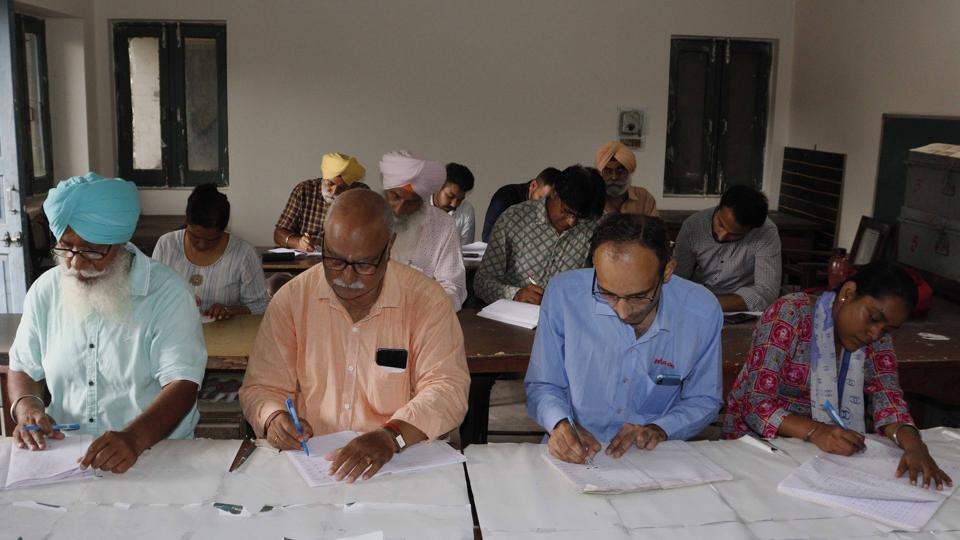
Being organised by the state government’s language department, the classes have been drawing a diverse group of participants, including advocates, civil service hopefuls, retirees, and literature enthusiasts.
They aim to preserve and celebrate the enduring significance of Urdu in Punjab’s cultural fabric.
Attendees feel that Urdu is an inseparable facet of Punjabi literature and has persisted in the government’s documentation work even after the Partition of India and Pakistan.
Learning Urdu then has become an appealing endeavour.
The ongoing classes, spanning over a month, have witnessed a remarkable mix of participants. For some, the allure of learning the language lies in enhancing their professional profile and comprehending official documents written in Urdu. Others, such as retirees and literature enthusiasts, view the classes as a unique gateway to delve into an age-old script, explore historical dimensions and appreciate the literary marvels that transcend borders.
Amanpreet Singh, a student who works in a medical lab, speaks of his motivation, saying, “Interacting with my international friends during college, I realised the significance of learning a new language. Arabic initially caught my interest, but I faced challenges learning it. After graduation, Urdu poetry deeply influenced me, and as a Punjabi song lyricist, I’m eager to expand my skills.”
District language officer Sandeep Sharma elaborates on the diverse motivations driving Urdu learners in Ludhiana, saying, “Our annual Urdu classes attract a diverse cohort of learners, each with their own unique motivations. We’ve had participants, like a 60-year-old lady from our previous batch, who learned Urdu to read and understand handwritten letters and books from her grandmother’s collection.”
“We have also welcomed lawyers and patwaris who seek a professional edge, as many documents like ‘fards’ are written in Urdu,” he adds.
The allure for students is even greater, as Sharma says, “Students proficient in Urdu can secure job opportunities as translators and transcribers, roles that are highly sought after in government sectors. Moreover, a significant number of people are driven by the desire to read epic literature written in East Punjab, where Shahmukhi script adds a distinct flavour to the literary works.”
“This shared love for literature serves as a powerful connecting thread between the two Punjabs,” he says, beaming after seeing the response.
Armed with ‘Urdu Aamoz’
The Urdu classes were initiated by the state language department in 1975, with a commitment to providing free education. However, it wasn’t until 48 years later that the department introduced its own teaching book, titled “Urdu Aamoz” earlier in February this year.
The book, designed for Punjabi medium learners, aims to facilitate the process of learning Urdu.
Kuljeet Kaur, another student, perfectly sums up the experience of coming together under roof over the shared love for a language, “Urdu is a captivating language, cherished by many. By learning it, we not only gain language proficiency, but also forge a meaningful connection with our heritage and those who we share it with.”


