
 E-Paper



South Malwa dists account for 35% of farm fire cases this season
Punjab's south Malwa region faces severe smog and a spike in stubble burning, with 2,174 farm fires reported, worsening air pollution and visibility issues.

 Prefer HTon Google


With the paddy harvesting in the south Malwa districts at its peak, the semi-arid region of Punjab is reeling under a blanket of smog, with the seven districts in the area witnessing a surge in stubble burning incidents in the last six days.
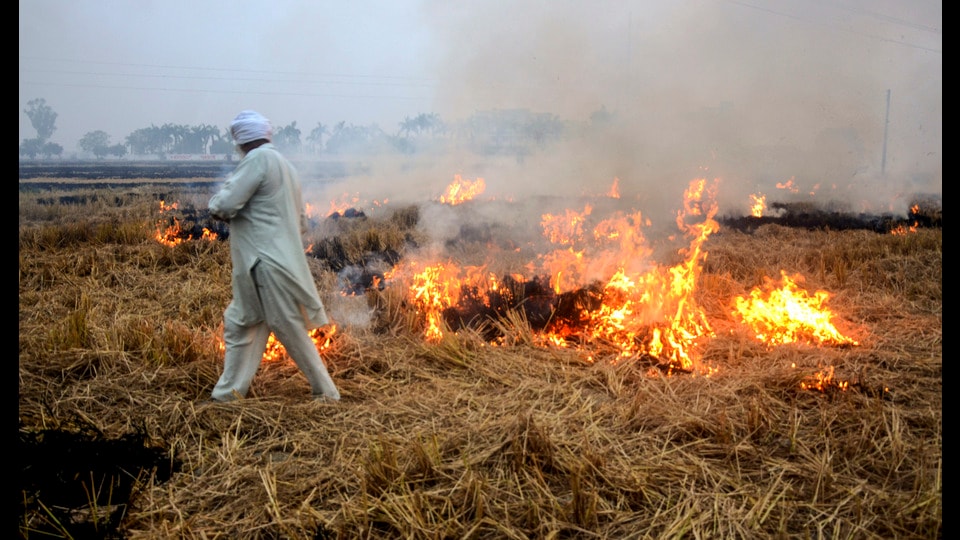
As per data from the Punjab Remote Sensing Centre (PRSC), the seven districts of the southwest belt have reported 2,174 farm fires till November 9, amounting to 35% of the total crop residue burning cases in Punjab this kharif harvesting season.
Since November 4, a total of 1,037 farm fires have been recorded in the seven districts, translating to 47% of the total cases reported this season in the south Malwa region.
On November 9, a total of 237 farm fires were recorded in Punjab with the seven districts of south Malwa reporting 68 events.
Sangrur once again recorded the highest 106 cases followed by Faridkot (17), Mansa (15), Malerkotla (12) and 11 fire events each in Ferozepur, Patiala and Barnala.
Out of 23 districts, no biomass fire was reported from seven districts — Fazilka, Gurdaspur, Hoshiarpur, Jalandhar, Pathankot, Rupnagar and SAS Nagar, on Saturday.
Agrometeorological data of the Punjab Agricultural (PAU) said that since November 4, “bright sunshine hours” have dropped drastically in the region.
PAU agrometeorologist Jatinder Kaur said that the sunshine hours in the Bathinda region this week hovered between zero to five hours against the average normal of 8-9 hours.
“On November 4, the bright sunshine hours were for five hours and reduced to 3.5 hours the next day. There was no bright sunshine hour from November 6-8 while the conditions improved slightly on Saturday when the sunshine remained for three hours. The hazy conditions are due to air pollution caused by burning of biomass in the region,” she added.
Kaur said the hazy conditions are prevalent in almost all districts of the state.
Experts said due to ongoing climatic conditions ample pollutants from different factors, including construction, industrial units, vehicular traffic and burning of crop residue have contributed to smog.
Sunil Mittal, a professor in the department of environmental science and technology of Bathinda-based Central University of Punjab, said that smog has reduced the visibility.
“The current climatic conditions can cause respiratory problems among the elderly, children and asthmatic patients. The situation will subside after rains or strong winds,” he added.


