
 E-Paper



Sow wheat crop by Nov 15 to maximise its yield: PAU urges farmers
Sudden rise of 2.1 to 6.6 degrees Celsius of minimum temperature and 2.6 to 6.0 degrees Celsius of maximum temperature in March during last year became unfavourable for wheat crop


As sudden rise in the temperature and heavy rainfall in January led to a decline in wheat yield earlier this year, the premier agricultural university of the region has suggested the sowing of wheat crop by mid- November. Sharing details Vice-Chancellor of Punjab Agricultural University (PAU) Dr Satbir Singh Gosal asked farmers to sow wheat crop by November 15 as it helped in maximising wheat yields. Wheat is an important rabi crop of Punjab and is being cultivated on about 35 hakh hectares.
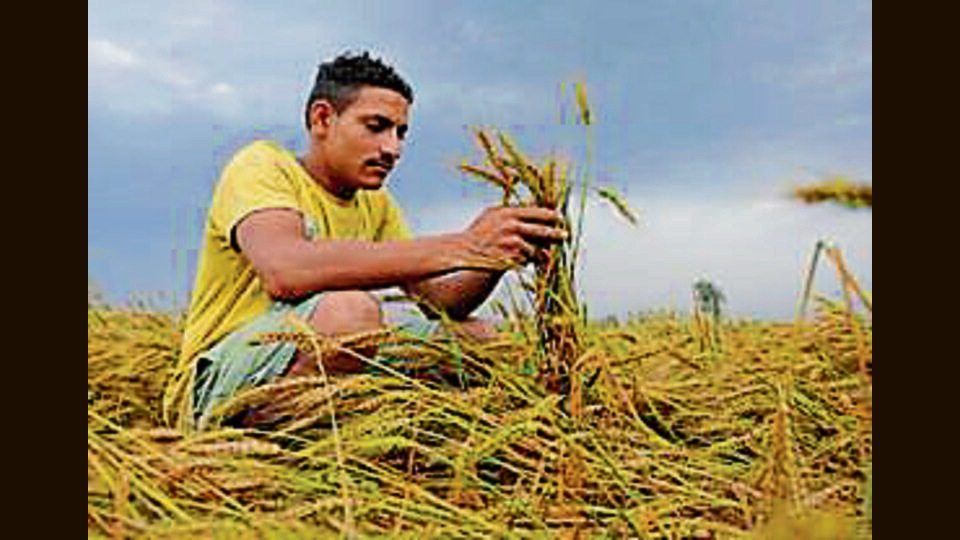
Elaborating, Dr Gosal said that the sudden rise of 2.1 to 6.6 degrees Celsius of minimum temperature and 2.6 to 6.0 degrees Celsius of maximum temperature in March during the last year became unfavourable for the wheat crop. This temperature forced the crop to early maturity, leading to shrivelled grains and a yield loss of about 10%, he said.
“As the sowing of wheat crops has started, farmers are urged to sow the crop before November 15 to protect the crop from high-temperature stress during February and March and maximise the yield. Emphasising that the wheat varieties like PBW 826, PBW 824, PBW 766 (Sunehri) and PBW 725 were climate-resilient varieties,” Dr Gosal advised the farmers to multiply their seed for the next season.
Delay in sowing could impact yield:
Dr Hari Ram, Principal Agronomist (Wheat), informed that the first fortnight of November was the optimum sowing time for the wheat crop. The experimental results showed that the delayed sowing of wheat after November 15 resulted in a 1.5 quintal per acre per week reduction in grain yield, he disclosed.
Long duration paddy varieties real culprit: PAU
The university has blamed the sowing of long duration paddy varieties for causing a delay in sowing of wheat crop. Dr Hari Ram stressed upon avoiding the transplantation of PUSA 44 paddy variety as it took longer time to mature and usually delayed the sowing of wheat crops. He further asked the farmers to purchase seed from a reliable source preferably PAU or government seed producing agencies for multiplying seed for the next season. “The farmers are advised to use certified seed, if they are using seed procured from private agencies. If the farmers are using their own seed, then the seed should be cleaned, graded, and free from other crops/varieties and diseased seeds,” he said.
The cultivation of the un-recommended varieties may not perform well and may increase the incidence of fungal diseases like yellow rust. In view of this, the expert suggested farmers manage paddy residue in the field by using Happy Seeder, PAU Happy Seeder, Smart Seeder, Super Seeder and zero till drill.
“Sufficient soil moisture at the time of sowing is the key to successful wheat cultivation. The paddy straw management through various machines not only sows the crop timely but also reduces pollution, saves energy, improves input use efficiency, lowers weed pressure, reduces lodging, reduces yellowing of crop after first irrigation and reduces cost of production,” he observed.
Dr Hari Ram further impressed upon the farmers to avoid using a mulcher in very heavy soil otherwise after first irrigation or heavy rains, the crop would show yellowing due to less aeration in the soil.


