
 E-Paper



Wild Buzz: Love for lizards
The reach out between man and the proverbial ‘mini-dragon’ of the gardens evolved at a residential complex in the Thar Desert seven km outside the golden city of Jaisalmer


Positioning water bowls for creatures in scorching summer not only makes for eminent empathy but yields revelatory insights into survival strategies. Worthy of emulation in any home garden, an unexpected interaction between a zoologist’s family and non-venomous garden lizards serves as a beacon of human goodwill and understanding. With a little bit of thoughtful care extended by their human friends, the creatures smartly adapted and triumphed over menacing odds.
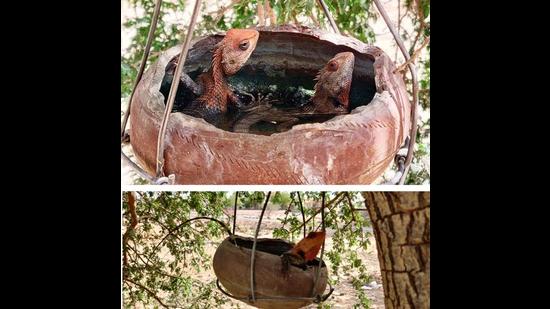
The reach out between man and the proverbial ‘mini-dragon’ of the gardens evolved at a residential complex in the Thar desert seven km outside the golden city of Jaisalmer. There, the common species of garden lizards (or the much reviled and feared ‘korkirlas’) occupied water bowls put out in native trees by zoology assistant professor Shyam Sunder Meena, when afternoon temperatures soared beyond 48 °C and touched 55 °C. The lizard adaptation astonished Meena. He had no idea lizards would make such good use of the bowls he had placed with the intention to quench the thirst of birds, mammals and insects!
“Most creatures turn inactive during peak heat and take shelter under shadows cast by plants or rocks. I return from office in the afternoon, check the bowls and refill them. I discovered that six water bowls were occupied by male lizards for a few hours in the afternoon. They regularly leave their territorial zones and come to the bowls. Under heat duress, the lizards showed a remarkable capacity to equitably share the water opportunity. Under normal conditions, the dominant male is intolerant of the sub-dominant male’s presence but both amicably share the same bowl. The lizards’ primary objective here is to regulate body temperature not to drink water or predate on insects attracted to the water. As the afternoon heat ebbs, male lizards return to contested territories. Some smart female lizards chill outside our kitchen window which lets out the draught from air-conditioners,” Meena told this writer.
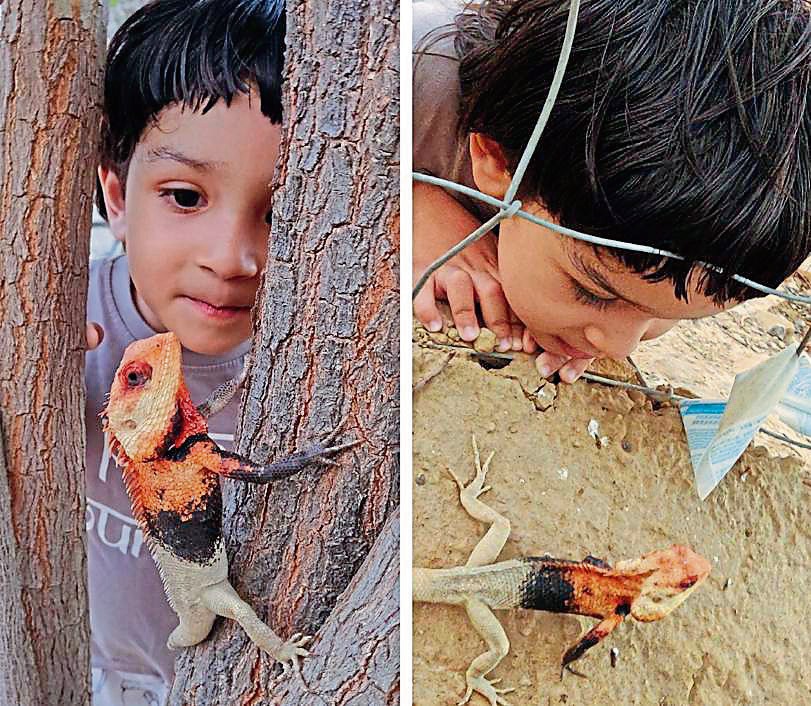
His children, Vaishnavi, 13, and Khushank, 3, also display compassion, curiosity and love for the lizards. “Khushank is not afraid of lizards. Neither are the lizards as they sense the child means no harm to them. Khushank touches their tails, observes them up close as if they were puppies, and wants to make them his pets. But I told him that they can remain his pets forever in their natural state and he understood,” said Meena.
Meena recently tested positive for Covid so Vaishnavi took over the task of keeping the water bowls filled. With a simple camera, Vaishnavi recorded the female lizard digging a hole and laying eggs. With a cell phone, Meena documented courtship rituals and mating as the lizards trust him totally and do not scamper away on his approach. Meena made a video of a frolicking lizard jumping in and out of a bowl enjoying a cooling splash just like skinny kids thronging a village tank!
So endearing was the image posted by Meena on social media of cute little Khushank peering at a trusting male lizard — their faith in each other so evident — that it attracted raving comments. A thoughtful one from Dalia Bose: “What a brilliant moment when all comes to a standstill because Truth comes visiting in the form of a child and Nature, both spontaneous, marvellous beings”.


