
 E-Paper



Wildbuzz: The hunting of armed men
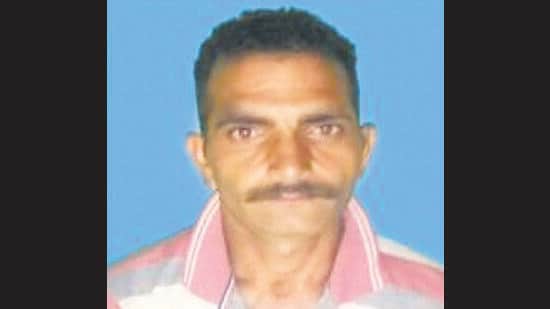
Parshotam Kumar, a farmer and village defence committee (VDC) member from Rajouri’s mountainous jungles – a terrain made for terrorists underlined by deadly ambushes unleashed on the Army since October, 2021 – was bestowed the Shaurya Chakra, the peacetime equivalent of war’s Vir Chakra.


Asli shikari kaun? In true-blue shikari circles, hunting a man-eating tiger at night or a wounded Cape buffalo in the African bush on foot is regarded as the most dangerous pursuit. It requires a very experienced grasp of jungle craft. Both animals can hit back hard, unlike the defenceless deer looming innocently in the rifle’s sights. However, the deadliest of all shikar is hunting armed men, just as playing Russian roulette with the revolver constitutes high-risk gambling on the far extreme.
There is a famous quote of Ernest Hemingway: “There is no hunting like the hunting of man, and those who have hunted armed men long enough and liked it, never care for anything else thereafter.” This quote was, incidentally, used by PAFF-Jaish terrorists to caption photos released on social media of the heads of two decapitated soldiers of the 48 Rashtriya Rifles ambushed in the LoC hinterland of Poonch on December 21, 2023.
A high gallantry medal was awarded to a rare civilian this Republic Day. Parshotam Kumar, a farmer and village defence committee (VDC) member from Rajouri’s mountainous jungles – a terrain made for terrorists underlined by deadly ambushes unleashed on the Army since October, 2021 – was bestowed the Shaurya Chakra, the peacetime equivalent of war’s Vir Chakra. Armed with an outmoded, inferior rifle and all alone, Kumar had in August, 2023 taken on two highly trained guerrilla warfare terrorists of the PAFF-Jaish, who were equipped with sophisticated assault rifles and grenades.
The award’s citation stated: “He is a go-getter with a panache for service to the nation and has ensured the safety and security of his village. While in the jungle with his family collecting firewood, he spotted two suspicious, armed individuals with rucksacks resting in close vicinity to his location. Realising the imminent danger to the village, he quietly moved his family members to the safety of their house and fetched his weapon while also alerting other members of the VDC, police and army. While the (security) forces were closing in, unmindful of his safety, he tailed the two terrorists and (displaying) raw courage and excellent field craft, he closed in on the terrorists and engaged them from close distance. He maintained contact with the other till (security) forces closed in. His brave act led to the neutralisation of one foreign terrorist.”
Kumar’s action establishes him truly as a “shikari of shikaris’, the ‘bravest of the brave’ in the realm of jungle encounters. A fine tribute came Kumar’s way from Ashish Dasgupta, a long-standing member of the Himachal State Wildlife Advisory Board and veteran hunter of 30 man-eating tigers/ leopards and two rogue tuskers. “Kumar’s fearless action surpasses that of any tiger hunter. We hunters do get 4 to 5 seconds to react to a tiger’s charge, but Kumar armed with only a standard Indian rifle was faced with adversaries with latest weapons, hence he was without any time for reaction. He only had grit. In all conflicts, whether man-animal or ‘man on human’, surprise is of paramount advantage. The opportunity for success presents itself for a split second and not having the wits and guts to avail it results in failure. Very few survive a sudden tiger attack. Kumar’s handling of the Rajouri encounter revealed a presence of mind and excellent use of intricate terrain knowledge. By exercising stealth and hence achieving surprise, Kumar triumphed in an asymmetrical encounter,” Dasgupta told this writer.
Dracula of the heart’s blood
The Eurasian sparrowhawk, known as the ‘Chirimaar’ in Punjabi, is an ace hunter of small birds. It strikes its little bird quarry with a powerful blow of the feet tipped with fierce, black talons (claws), which may kill smaller birds outright. But larger prey such as pigeons and partridges may survive the first blow from the talons and will lash out with wings or attempt to peck back at the sparrowhawk. To subdue a quarry putting up a valiant fight, the sparrowhawk literally stands on top of them. The flailing target is pinned down with the sparrowhawk’s long legs. Then, the talons are driven into flesh in a squeezing action, quarry dismembered by upward pulls of the hooked beak and heart eaten out literally beating.
“The ghastly plucking begins. The curved beak, as sharp as a fishhook, clears back the feathers and goes for the jugular. The helpless prey is plucked alive until its arteries are ripped asunder and blood pulses out. The bigger the bird, the longer and messier the kill,’’ wrote John Lister-Kaye of the sparrowhawk in his book, Gods of the Morning: A Bird’s Eye View of a Highland Year.
Though sparrowhawks hunt for living flesh as their natural food and to feed chicks, they attract hatred and culling sprees from pigeon fanciers, poultry keepers and gamekeepers. Those feeding cute, little birds in their gardens find the sparrowhawk an unwelcome visitor.
A poetic evocation of the sparrowhawk’s remorseless, amoral death grip came from Lord Alfred Tennyson: “A sparhawk proud did hold in wicked jail, Music’s sweet chorister, the Nightingale, To whom with sighs she said: ‘O set me free, And in my song I’ll praise no bird but thee.’ The Hawk replied: ‘I will not lose my diet, To let a thousand such enjoy their quiet.’”
vjswild2@gmail.com


