
 E-Paper



101 new buses take Delhi’s fleet to a record 7,000
Transport minister Kailash Gahlot also said that over three million people, on average, used a public bus every day in February, the highest daily ridership for the city’s bus services since the pandemic set foot in the Capital in March 2020


Delhi now has over 7,000 public buses, a record for the city, said state transport minister Kailash Gahlot on Monday, as he inducted 101 buses into the Capital’s bus fleet.
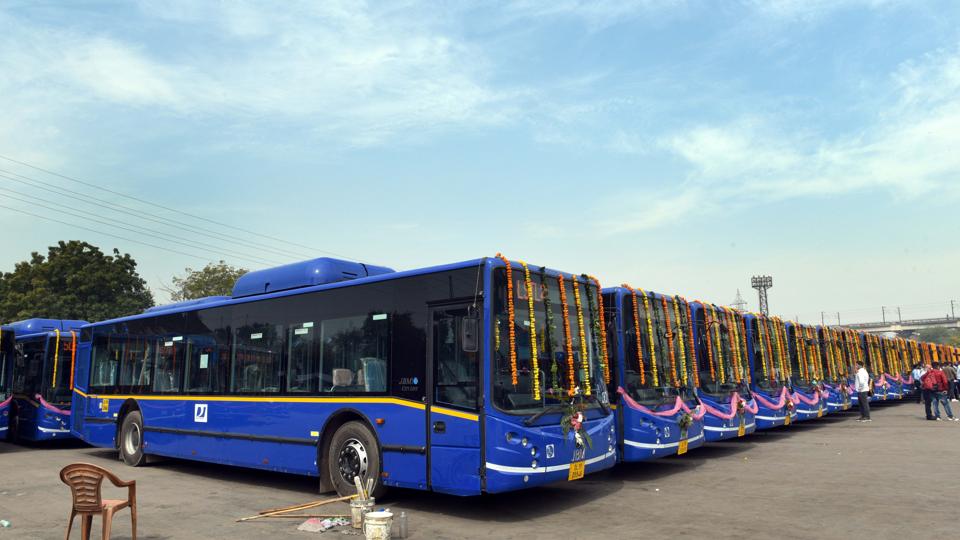
Of the buses added to the city’s fleet on Monday, 100 were low-floor air-conditioned CNG buses, and the other was an electric bus. The city now has two e-buses, while the rest are powered by CNG.
Gahlot also said that over three million people, on average, used a public bus every day in February, the highest daily ridership for the city’s bus services since the pandemic set foot in the Capital in March 2020.
“More than 30 lakh [3 million] people travelled in DTC [Delhi Transport Corporation] and cluster buses every day in February 2022, which is nearly 14% of Delhi’s population... Delhi’s public bus fleet has, for the first time ever, crossed the 7,000 mark. Our buses have become an example of safe, convenient and affordable transport,” he said during the event at the Indraprastha depot on Monday.
Before the pandemic, Delhi’s state-run buses used to record an average daily ridership of 4.2 million, showed government data, significantly higher than the Delhi Metro’s 2.7 million. The Capital has a population of roughly 20 million people, according to state government records.
“Over 2,000 electric buses will be added to our fleet in the coming year. I dedicate these new buses to the citizens of Delhi and urge them to reduce their usage of private vehicles and shift to public transport for a pollution- and congestion-free Delhi,” he said.
On the eve of International Women’s Day, Gahlot also addressed women conductors and marshals working on Delhi government’s buses, thanking them for their contribution towards making the city’s buses safer for women.
Delhi government had also recently relaxed height and experience criteria for female Heavy Motor Vehicle (HMV) licence holders for allowing more entry of women drivers into the DTC fleet. Delhi government had also announced that the fee for training of women HMV drivers will be fully borne by the government.
In January this year, the Delhi government added more than 200 buses to its fleet, including the first electric bus. Work orders for at least 500 more electric and CNG buses have already been awarded, and these will be inducted in the coming months. The DTC board last month also approved the procurement of 1,500 e-buses under the Centre’s “FAME” programme.
Besides, the Delhi government also plans to induct 1,000 e-buses for its DTC fleet and 240 e-buses into its cluster fleet to replace the existing fleet of CNG buses, which will be retired. The department is also in the process of electrification of all its existing and new depots to accommodate these new buses.

Stay updated with all top Cities including, Bengaluru, Delhi, Mumbai and more across India. Stay informed on the latest happenings in World News along with Delhi Election 2025 and Delhi Election Result 2025 Live, New Delhi Election Result Live, Kalkaji Election Result Live at Hindustan Times.


