A total of 23,907 birds from 159 different avian species, including 53 bird families, were found across Delhi’s seven biodiversity parks during a four-day-long census carried out in the last week of February, biodiversity park officials said on Monday.
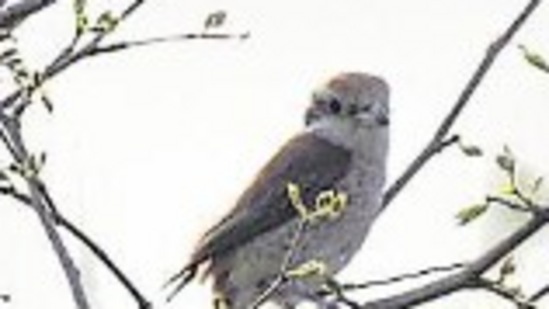
The Borwn Shrike (Sourced)
Faiyaz Khudsar, scientist in-charge at the Yamuna Biodiversity Park in north Delhi, said the data they collected was also compared with the data uploaded on the eBird platform for the month of February 2022 for Delhi, which included data from the Big Bird Day, held on February 20. It showed that the seven biodiversity parks recorded over 75% of the bird species recorded in Delhi during the month, he said.
“Many species such as the brown shrike, the Indian eagle-owl, white-eyed buzzard, stoliczka’s bushchat, eastern orphean warbler and the paradise flycatcher were all exclusively recorded across the biodiversity parks,” he added.
The census was carried out from February 23 to 26, with park officials saying that they found the jungle babbler, bulbuls, parakeets, gulls, cormorants and the yellow-footed green pigeons, among the bird species.
Khudsar said this is the first time such a coordinated census has been carried out over four days at all seven biodiversity parks, adding that birds were counted using the line transect method, under which all birds falling on a chosen straight line segment (transect) are recorded at the same time.
“Transects for bird census were laid in different parks which passed through different habitats, including restored forest communities, grasslands, shrublands and wetland and marshes. Counting of birds was carried out from 7.30am to 10.30am and from 3.00pm to 5.00pm. Repeated monitoring of transects were conducted across all seven biodiversity parks with the bird species, the number, the activity at the time of sighting, the habitat type and their strata at the time of sighting, such as upper canopy, middle canopy, lower canopy were all recorded during the process,” Khudsar added.
Delhi has seven biodiversity parks, all falling under the Delhi Development Authority. These are Yamuna Biodiversity Park, Aravalli Biodiversity Park (Vasant Kunj), Neela Hauz, Tilpath Valley, Kamla Nehru Ridge, Kalindi Biodiversity Park and Tughalakabad.
The Yamuna Biodiversity Park and the Kamala Nehru Ridge recorded 69% of all birds seen in North Delhi in February. The Aravalli Biodiversity Park and Neela Hauz Biodiversity Park reported 65% of all birds of southwest Delhi recorded in February; the Tughlaqabad Biodiversity Park and Tilpath Valley Biodiversity Park saw 61% of the birds of south Delhi; and Kalindi Biodiversity Park attracted 85% of the birds of east Delhi.
CR Babu, head of the Centre for Environmental Management of Degraded Ecosystems (CEMDE) in Delhi, said each biodiversity park represents a different natural ecosystem of Delhi, which has been revived over time. “As a result of this revival, one can find micro climates as well as the food base beneficial and suitable for certain birds. This will automatically lead to good bird diversity and it is possible some birds are only attracted to these niche micro-climates,” he said.

 E-Paper