
 E-Paper



A facelift for Delhi’s Chandni Chowk, years in the making
Although much-delayed, the first phase of the Chandni Chowk redevelopment project is expected to be completed by the end of July. Built in the 17th century by Mughal emperor Shah Jahan’s daughter, Jahanara Begum, Chandni Chowk is among the most popular marketplaces in the country

 Prefer HTon Google


Until a year ago, Chandni Chowk, one of Delhi’s most popular but congested marketplaces, was a fire trap. With tangled wires draped across the streets, visitors, cycle rickshaws, and freight vehicles jostled for space as they made their way along the main stretch, filled with encroachments of various kinds. But the Chandni Chowk of last year is vastly different today. Both the market and its skyline have undergone a massive facelift since the first lockdown was imposed last year. The overhead mess of wire has become a thing of the past while pedestrianisation of the key stretch from Red Fort from Fatehpuri Masjid has been notified by the government.
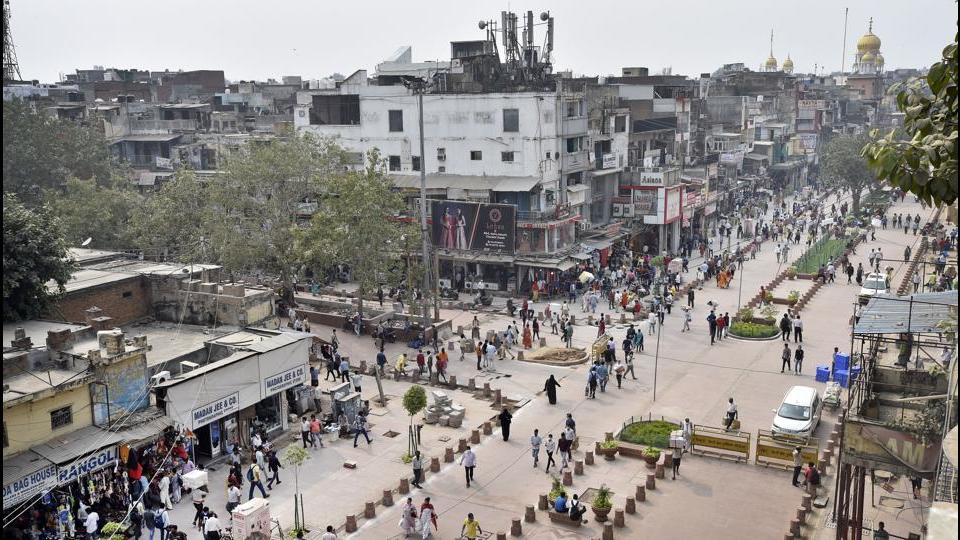
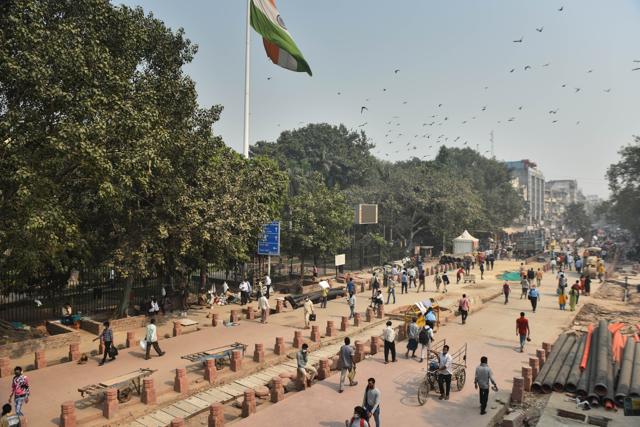
Steel gates plastered with posters announcing a ban on entry of motorised vehicles between 9am to 9pm and a fine of ₹20,000 have come up at the entrance of the revamped Chandni Chowk, opposite Red Fort. With the 1.3km stretch between Red Fort and Fatehpuri Masjid becoming a no-go zone for motorised vehicles, queues of rickshaw pullers line up at the entrance, waiting for customers. With cars missing from the scene, business has improved for the rickshaw pullers.
Although much-delayed, the first phase of the Chandni Chowk redevelopment project is expected to be completed by the end of July. Built in the 17th century by Mughal emperor Shah Jahan’s daughter, Jahanara Begum, Chandni Chowk (which translates to Moonlit Square) is among the most popular marketplaces in the country. The market has been in the process of receiving a makeover for many years.
Also Read | Electric golf carts may ply in Chandni Chowk to help elderly shoppers
Conceived by the Congress-led government in 2006, the work on the project finally started in December 2018 following the directions of the Delhi High Court. In December 2018, Delhi’s deputy chief minister (CM) Manish Sisodia laid the foundation stone for the project.
In the first phase of the project, utilities such as electric and other cables were taken underground, and dedicated lanes for non-motorised transport and walkways were constructed. Facilities such as toilets, ATMs, and benches were provided. The Shahjahanabad Redevelopment Corporation (SRDC) — the nodal agency for the redevelopment project — plans to improve the facade in the second phase.
While the initial deadline for the project was March 2020, it was changed to March 2021, due to pandemic-induced lockdowns and delays, and legal issues in removing encroachments. The inauguration for Phase 1, scheduled for April 17, also was called off amid a spike in Covid-19 cases at the time. Work had resumed on the site after construction activity was permitted as part of the unlocking proceedings, with finishing touches being given to streetlights, CCTVs, and the signage on the main stretch.
Clearing the skyline
In a mammoth exercise, meshes of intertwined wires were removed and key cables were moved underground over a period of two years. The chaotic mess of dangling wires on the main stretch was cleared after intervention from multiple agencies and telecom operators, and the Delhi high court warning of contempt action against agencies such as North Delhi Municipal Corporation, Mahanagar Telephone Nigam Limited (MTNL), and BSES if they failed to comply with its orders for removal.
A walkway for all
Between 9am and 9pm, pedestrians can now walk freely across the marketplace without having to fear oncoming traffic. As per the gazette notification issued by the transport department on June 14, restrictions on the movement of motorised vehicles will only be relaxed to allow emergency vehicles. Fire tenders, ambulances, hearses, and vehicles carrying patients will be allowed along with vehicles deployed for enforcement and maintenance services. Officials associated with the project said that pedestrianisation had been done to ensure accessibility — through tactile paths — making it friendly for people with disabilities.
Looking back, moving forward
Besides benches on the central runway, small bollards for seating have been placed across the entire stretch that has been made of sandstone. The facilities have been designed keeping in mind the Mughal architectural influence. Bougainvillaeas in stone planters have been placed across the stretch along with lights. Streetlights and signage indicating various internal roads are also expected to come up as different phases of the project get completed.
Ensuring safety, security and sanitation
SRDC officials said the installation of streetlights along with the control room for CCTV monitoring is expected to be completed by June 30. The expansion of CCTV coverage is also expected to boost the enforcement of pedestrianisation rules and safety. In addition, marshals are expected to be roped in to check compliance with these rules.
Facilities such as toilets ad ATMs will mark the revamped stretch. Toilets will be set up on four parts of the stretch. Work on all toilets is underway and is expected to be completed by July 31. The public works department has been tasked with engaging a facility management company that will look after sanitation and other aspects.
Going the extra mile
While many residents have welcomed the pedestrianisation plan, concerns around pending work and the development of inner streets remain. Deepa Mehra, a resident of Kucha Ghasi Ram, said that the area needed holistic redevelopment, not limited to the main stretch alone. “The pedestrianisation plan is good since vehicles would clog all the roads earlier, leaving little to no space for walking. However, there is a need to move beyond the mains stretch into the internal roads. The core problems remain. They should have worked on the inner streets first,” said Mehra.
She added that the residents of Chandni Chowk had suffered on account of the long-drawn redevelopment process and sought that the grievances of residents are heard before the implementation of measures. Similar views are espoused by other residents. Anil Pershad, 77, who belongs to the Chunnamal family and is among the oldest residents of the locality, said that challenges were mounting for local residents in the area. “Unless specific instructions are given to security guards, residents will continue to face troubles while going in and out. We want to follow the rules but there needs to be a mechanism for residents. There are many traders who do not live here. They don’t understand the challenges of residents,” said Pershad. He said that if Chandni Chowk was being beautified, it needed to be done in such a manner that original inhabitants are motivated to return back to the locality.
While traders on the main stretch have welcomed the pedestrianisation plans, owners of shops located on the arterial roads are a worried lot. Sanjay Bhargava, president of Chandni Chowk Sarv Vyapar Mandal, said that business had improved in the area and things were expected to improve further as things fall into place. “For nearly two and a half years, this stretch was blocked due to work. Things are looking upward now. The business has only grown with pedestrianisation and customers are also embracing the new look of the market. Once the pending work is completed, the market will draw more visitors,” Bhargava said.
Basant Gupta, president of Dariba Kalan market association, however, said that the traffic situation on internal roads was in a shambles. “The internal roads are choked and due to the pedestrianisation of the main stretch, movement of goods and visitors has also become difficult. Big boulders have been placed to block the entrance to Dariba. This is an existential crisis for us and we have no idea how the agencies plan to tackle the mess here,” said Gupta.
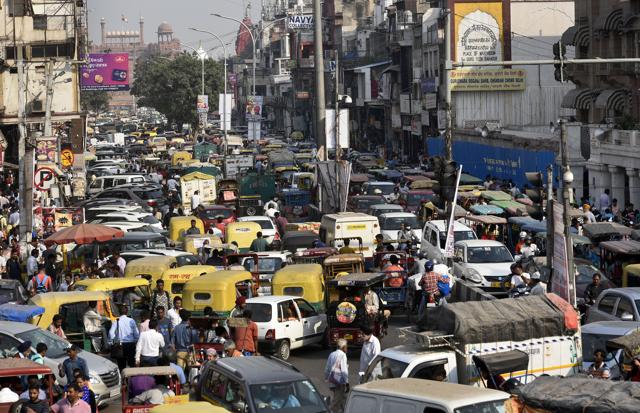
SRDC officials said that work on internal roads is likely to be taken up for redevelopment in subsequent phases.
Author and historian Swapna Liddle said that the development of the area was long overdue. She said echoed the sentiments of residents and stressed the need to take cognisance of the traffic flow from internal roads to the main stretch. “One needs to plan holistically. We need to take into account how the traffic flow on the main stretch will impact areas such as Dariba Kalan or other smaller streets. Holistic development is key for the historical area,” said Liddle.


