E-Paper



Air may get worse on Diwali day in Delhi: CPCB
According to the forecast, the AQI would reach “very poor” on Sunday and further fall to “severe” on November 13.

 Prefer HTon Google


The impact of Friday’s overnight showers continued to improve the air quality in Delhi and surrounding regions for the second consecutive day — a day before Diwali — and kept it two notches away from the “severe” category.
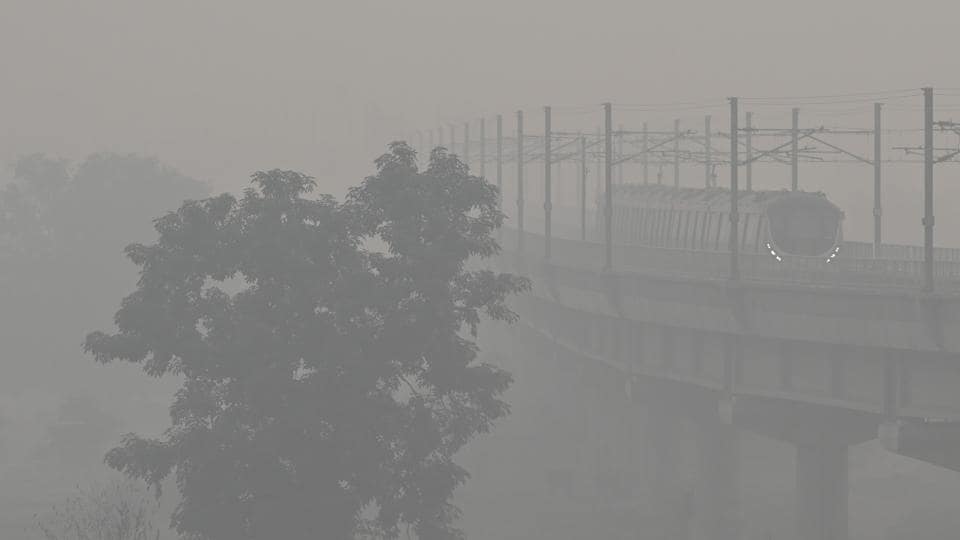
The 24-hour air quality index (AQI) at 4pm on Saturday came to 220 as strong winds swept the city, but a staccato of firework sounds punctured hopes that citizens would adhere to the ban on Sunday, which will likely lead to a spike in pollution levels once Diwali celebrations are over.
The pollution forecast released by the Central Pollution Control Board (CPCB) for the next six days too suggested the relief might be temporary, making for rather sooty days when the air quality will deteriorate on and post Diwali.
According to the forecast, the AQI would reach “very poor” on Sunday and further fall to “severe” on November 13.

This year, between November 2 and November 9, the Capital lives through its longest and most severe stretch of air pollution when the AQI was above 390 for a record eight consecutive days.
For the six days after November 14, “the air quality is likely to remain in ‘severe’ to ‘very poor’ category,” said the forecast.
Officials said that despite lower pollution levels, measures under stage 4 of the Graded Response Action Plan (Grap) – which include a ban on construction and most heavy vehicles from outside of Delhi -- will remain in place until a review on Monday.
Typically, the Commission for Air Quality Management (CAQM) calls an emergency meeting to implement or withdraw restrictions under various stages of Grap whenever there is a sudden change in air quality, but such a meeting was not held either on Friday or Saturday, when the air improved drastically due to a western disturbance that brought rain and thundershowers.

Much will now depend on Diwali celebrations. CPCB data from 2016 showed that the AQI worsened the day after Diwali every year except last year, when strong winds helped blow away the toxic smoke from firecrackers.
Officials said similar meteorological conditions may occur this year as well since strong winds are expected over the next few days.
The strong winds also helped the city received its clearest sunshine in weeks, taking Saturday’s maximum temperature to 26.3 degrees C, three notches above normal. The minimum was a degree below normal at 13.8°.
On Sunday and the following two days, the maximum temperature is expected to be around 27°C while the minimum is expected to be around 13°C. The India Meteorological Department (IMD) has predicted mainly a clear sky with shallow fog for Sunday morning.
“Moisture in the air has reduced and it will be cold and dry now. However, pollution levels continue to be low as the southeasterly winds are helping with the dispersal of pollutants, the direction is changing to northwesterly now,” said Kuldeep Srivastava, scientist at IMD.
Curbs under stage 4 were introduced by CAQM last Sunday. The measures include a ban on diesel light commercial vehicles (LCV) registered outside Delhi which are not BS6, from entering the Capital. Similarly, there is also a ban on the entry of trucks into Delhi, alongside a ban on plying of all diesel medium goods vehicles (MGV) and heavy goods vehicles (HGV). This apart, all linear construction projects such as highways, roads, and flyovers have also been stopped.
Hospitals ready ‘pollution clinics’
Anticipating a surge in respiratory and other pollution-related illnesses post Diwali, the Delhi government directed three major hospitals in the city to start pollution clinics and smaller centres to also have dedicated teams to tackle the patient surge. A senior health department official said that the health facilities are prepared to deal with the surge.
“Three of our major hospitals — Lok Nayak, Guru Teg Bahadur, and Rajiv Gandhi Super Speciality Hospital — will have dedicated pollution clinics. Other smaller facilities, including Mohalla clinics, will also start dedicated teams,” said the official.
Doctors said the outpatient departments (OPD) in hospitals are recording at least 100-150 patients every day with some form of distress that can be traced to high pollution levels. While it is limited to respiratory problems, aggravated allergies, headaches, and itchy eyes owing to prolonged outdoor exposures in most people, those vulnerable are coming in with extreme deterioration in health conditions.
“The current level of pollution can reduce lungs and later on the body’s defence mechanism, leading to pneumonia, bronchitis, pharyngitis, conjunctivitis, both allergic, as well as infective. Chronic exposure to this level of pollution can lead to COPD (chronic obstructive pulmonary disorder), lung cancer, hypertension, heart attacks, stroke, anxiety, sleep disorders, and poor control of already existing diseases like diabetes, hypertension, and asthma,” said Dr Akshay Budhraja, senior consultant, respiratory and sleep medicine, Aakash Healthcare.
(With inputs from Soumya Pillai)