
 E-Paper



World Autism Awareness Day: Early detection, intervention can help patients
In India, approximately 18 million people suffer from autism, according to estimates.

 Prefer HTon Google


Dr Archana Nayar’s son was only two when in 2005 he was diagnosed with autism spectrum disorder (ASD), a developmental disability caused by differences in the brain. While she struggled to find services and resources in the country to provide her child with equal opportunities, Dr Nayar took it upon herself to help other such parents raise their children in an inclusive society.
Read here: World Autism Awareness Day 2023: How to manage anger in children with autism
More than 15 years later, Dr Nayar now runs a not-for-profit intervention programme for children with autism, with an aim to provide equal opportunities to children and young adults with ASD.
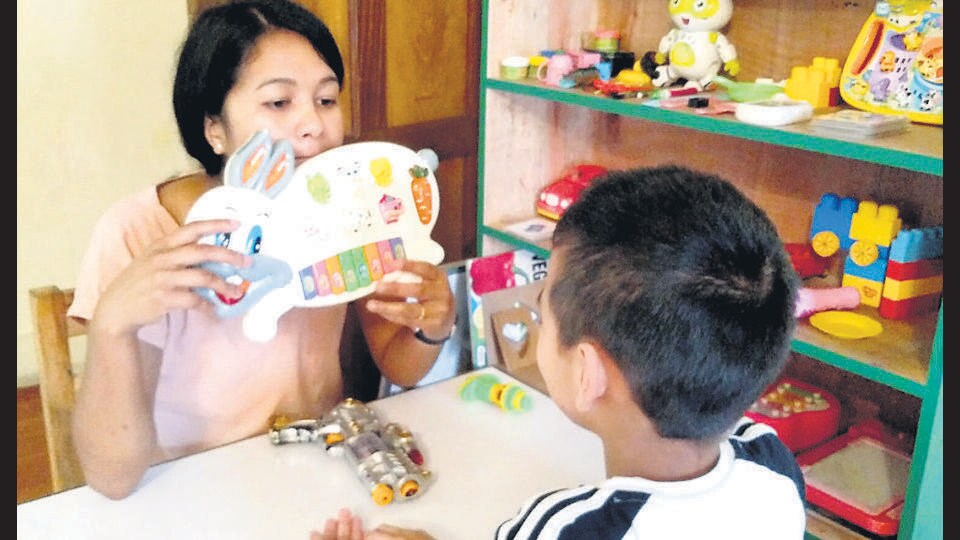
“When I came to India from the US with my son, somewhere in 2007, I was struggling to find services and opportunities for him. I started off by introducing a small programme in a private school and then went on to create our centre where we focus on behavioural therapy and need-based learning for each student,” said Dr Nayak, who is the director of the Gurugra-based Autism Centre for Excellence.
April 2 is observed as World Autism Awareness Day. According to the World Health Organisation (WHO), ASD, or autism, affects one in every 100 children. In India, approximately 18 million people suffer from autism, according to estimates. The condition can affect how a person absorbs, processes and responds to information. It is usually categorised along a spectrum, from mild to severe.
While experts say that the condition can be significantly improved with early detection and intervention, India still has limited resources and facilities for those suffering with ASD.
To fill this large space, ACE works majorly on developing programmes for teachers to educate children affected with autism. At present, the centre itself is working with over 40 children.
According to experts, most of the ASD cases are usually detected in developing years of children, and early intervention plays an extremely significant role in improving a child’s verbal and social development.
Lubdhak Research Foundation, which has a branch in Delhi, which has been helping such children through behaviour therapies since 2018.
“Most parents seek medical help only when children reach the age of three or four, when their speech starts to develop. But early signs of autism can be detected when they are a year old. Most children in the spectrum do not respond to physical or verbal cues. Some also indulge in repetitive behaviour. These are signs that parents can pick up,” said Anit Chhetri, director of Lubdhak Research Foundation.
Several scientifically backed programmes help in improving an autistic child’s speech, language development and understanding, play and social skills, Chhetri added.
Read here: World Autism Day: Stitching, painting: Children with special needs unleash their artistic side
“At our centre we use the applied behaviour analysis (ABA) therapy to provide a one-on-one programme for our kids. We are also taking these programmes to rural and tier two and three centres, where such interventions are not easily available to families,” Chhetri said, who is also running learning centres in Shillong and Dehradun.
Dr Deepak Gupta, a child and adolescent psychiatrist and the founder director of the Centre for Child and Adolescent Wellbeing (CCAW) in Delhi, a multi-speciality centre working for the last 18 years to enhance emotional and mental well-being for children and adolescents, said that autism is one of the most misunderstood neurodevelopmental conditions. A peculiar trait of children with autism is their concern with social communication difficulties.
“This, however, does not mean that they lack abilities to perform daily functions in life. On the contrary, some of the children with autism are brilliant and exhibit performance which is sometimes far superior to ones who are not on the Autism spectrum. With understanding and compassion for their special needs, we can surely induct them into the mainstream.”


