
 E-Paper



Big push for health in Delhi's budget
The budget saw an increase of 6.15% from the previous year’s budgeted outlay of Rs65,000 crore, now revised to Rs59,000 crore.

 Prefer HTon Google


The Delhi government on Tuesday presented its budget for 2021-22 with a total outlay of ₹69,000 crore, themed around “deshbhakti” (patriotism), promised to make the per capita income in the city state equivalent to that in Singapore by 2047, and get the Capital ready to bid to host the 2048 Olympic Games.
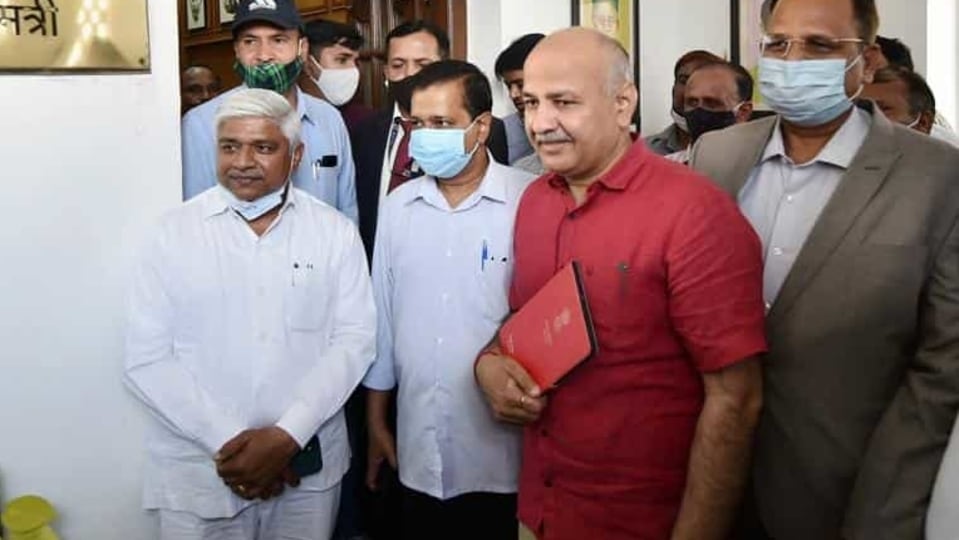
The budget, tabled by Delhi’s finance minister (and also deputy chief minister) Manish Sisodia in the legislative assembly, saw an increase of 6.15% from the previous year’s budgeted outlay of Rs65,000 crore, now revised to Rs59,000 crore. This is the government’s first budget after the emergence of the Covid-19 pandemic, which led to a revenue loss of around 40%, said Sisodia.
Sisodia announced an “aam aadmi free covid vaccine” scheme under which the Delhi government will provide free Covid vaccination at all state-run health care centres. In private hospitals, however, doses will cost up to ₹250 per dose. He also said the government will increase its daily Covid vaccination capacity from 45,000 persons to 60,000 in the “next few days”.
Like its last six budgets, the Aam Aadmi Party (AAP) government proposed the highest share for the education sector in which it plans to build a “virtual model school” and a university specifically for teachers’ training. The proposed outlay for education is ₹16,377 crore, which is 23.7% of the total budget estimate, and an increase of ₹1,285 crore from the previous year’s budgeted allocation on education. This was followed by the health sector, which has been allocated ₹9,934 crore, an increase of ₹2,230 crore more from last year’s budget– the highest sector-wise increase. “The vaccine for freedom from Covid-19 will be available in the market for ₹250, but we have families in Delhi who would have to choose either to buy a full month’s ration for their family or get the vaccination for corona from their monthly salary,” said Sisodia.
The announcement drew flak from the opposition Bharatiya Janata Party (BJP) which alleged that the same scheme is being run by the central government across all states and union territories.
Dr K Srinath Reddy, president of Public Health Foundation of India, said: “Extensive vaccine coverage is needed even for people below the age of 60, because of a high prevalence of comorbidities in younger age groups. Many people with those health conditions are unaware of them, especially in the lower socio-economic groups. Both to protect such people and to slow down the transmission, vaccines have to be administered free of cost in government hospitals. The decision for free vaccine administration for all in government hospitals is a welcome move.”
With around at least 2,300 new buses, including 1,300 electric buses, planned over the next one year, the Delhi government allocated ₹9,394 crore for transport and road infrastructure which is an increase of ₹2,050 crore from last year.
The budget also laid out the government’s vision for the next 25 years, which includes bidding for the 2048 Olympics and making Delhi’s per capita income equivalent to that of Singapore’s by 2047. Delhi’s current per capita income is ₹3.54 lakh a year; Singapore’s is around $60,000. To be sure, comparisons will also have to factor in purchasing power parity.
To commemorate 75 years of independent India (August 15, 2022 is the 75th independence day), the government allocated ₹45 crore for installing Indian flags, like the giant one in Connaught Place, across 500 locations in the city. The Indian tricolour in Connaught Place is hoisted on the top of a 207 feet high mast. The flag is 60 feet in width and 90 feet in length.
The government also plans to organise patriotic programmes running for 75 weeks at a stretch, a daily class to teach patriotism in government-run schools, and also allocated a separate budget for events to celebrate the lives of Bhagat Singh and BR Ambedkar .
Addressing a press conference after the assembly session, chief minister Arvind Kejriwal said the Delhi budget is a reflection of “efficient financial management” as the Capital’s revenue continued to be in surplus despite actual collections declining by 40% against the targeted budget estimate due to the strict lockdown. He explained that despite the pandemic, the budget is 6% more than the previous year’s outlay which was possible because the Delhi government kept its establishment costs (cost incurred on running the government machinery) at 45% and assigned 55% of the proposed funds towards subsidy schemes, programmes and infrastructure projects. “The budget covers all aspects of the society, from women to the elderly, students, youth, all religions, and all castes. This budget has laid the foundation for what India should be like in 2047 when she completes 100 years of independence. The aim for 2047 is to bring Delhi’s per capita income at par with Singapore.”
Sudhir Krishna, former chairman of the 5th Delhi Finance Commission, said: “The primary sector of agriculture and secondary sector of industry contribute as much as 37% to the GDP of India as a whole, whereas for Delhi, it is just about 20%. Owing to environmental and geographical constraints, Delhi cannot expect to push these sectors and needs to strengthen the tertiary sector such as trade, hotels, restaurants, and real estate, which contribute as much as 80% to the Gross State Value Addition (GSVA) of Delhi. Therefore, Delhi should work on travel, tourism including medical tourism and education tourism and service activities like call centres, BPOs etc. Enhancing the quality of life of the residents through the improved safe water supply, cleaner air and water, quality education and healthcare would not only provide greater well-being for Delhi residents, but would also attract visitors from within India and abroad, which will add to Delhi’s GSVA.”
On plans to host the 2048 Olympics in Delhi, Kejriwal said his government will take up whatever infrastructure and other necessities are needed to be created for the same. “We will also discuss this with the Central government as without their efforts achieving this dream would not be possible,” he said.
In the budget the government emphasised on women’s empowerment with new schemes such as Mohalla clinics for women, using its anganwadi hubs as a resource to help women entrepreneurs develop micro business enterprises and promoting self-help groups, enhancing safety at tourist spots, and setting up 33 self-help units to make women aware of existing government schemes for women such as free bus rides, widow pensions, scholarships for school-going girls, etc.
Sisodia cited a government survey and said that before the Covid crisis, in February 2020, 26% of women in Delhi were unemployed. In February 2021, this statistic was 40%, he said. “This reveals that among the women of Delhi, who are available for employment, 40% are unable to find any work; 45% of these women have completed 12th class and 60% of these women are less than 30 years of age. It is essential to economically empower these women and integrate them with the economy of the family and the state.


