E-Paper



Condemned to breathe in hell: Residents react after Ghazipur landfill fire
For thousands of people who live in the shadow of Delhi’s tallest garbage mound, the experience was nothing new

 Prefer HTon Google


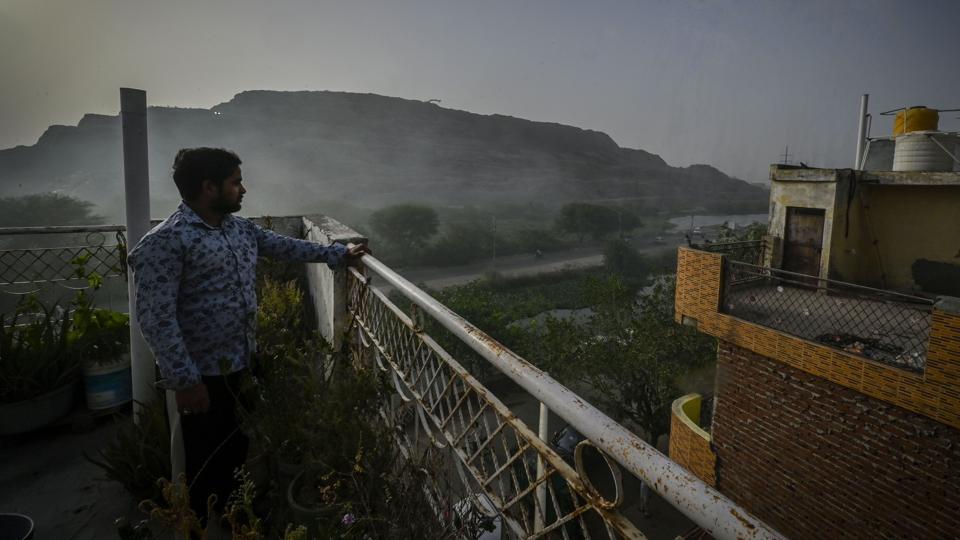
Tendrils of smoke hang in the air, as Alok Kumar, 29, pulls down the shutter of his shop, located at Rajbir Colony (Gharoli), around 500 metres away from the Ghazipur landfill site. The previous day, on Monday, the garbage mound caught fire — the first major blaze at a landfill in the city this year. Though firefighters managed to douse the flames after operations lasting more than eight hours, fumes from the blaze continued to envelop the area on Tuesday, with residents complaining of irritation in their eyes and breathing troubles.
Also read: Robots at Delhi’s Ghazipur to douse blaze at landfill
For thousands of people who live in the shadow of Delhi’s tallest garbage mound, the experience was nothing new. Data from the Municipal Corporation of Delhi shows that five such major landfill fires were reported in 2022, eight instances were reported in 2021 and 2020 each, and 48 such cases were reported in 2019. Such landfill fires lead to toxic fumes emitting greenhouse gases such as carbon dioxide, and polluting gases such as hydrogen sulphide, dioxins, and furans.
According to Alok, the fire on Monday caught everyone’s attention, but smaller fires often go unnoticed. “These smaller fires lead to smoke entering our homes. But last night, the cloud of the smoke was so thick that fumes reached Khoda (across the Uttar Pradesh border), and in Rajbir Colony, even closing our doors and windows has not helped,” he said.
Most of Delhi suffers through episodes of smog and poor air quality in the winter, but residents of areas like Rajbir Colony, Mayur Vihar Phase 3, Mullah Colony and Ghazipur Dairy, which adjoin the Ghazipur landfill, dread the summer — methane released by organic matter at the garbage dumps often combusts at times of high temperatures, sparking landfill fires that translate to respiratory illnesses, breathing problems and chest infections for thousands of locals.
Dharmendra Kumar,35, who runs a two-wheeler repair shop in Mullah Colony, said the smaller fires, which last only 1-2 hours and extinguish on their own, are a regular feature at the landfill. “Our children suffer from cough and respiratory problems during the summer… During some extreme episodes last year, the cloud of smoke was so thick that even cars located across the streets were not clearly visible. I am mostly worried about my mother’s asthma,” he said.
During a spot visit of the landfill site on Tuesday afternoon, HT saw some smoke still emanating from the waste, though there were no flames. For 40-year-old Neelam Kumari, who had moved into her new rented house in Rajbir Colony three months back, this was the first experience of a large scale landfill fire. “We just arrived at this place three months back. I felt congestion in my chest and had to cover my face with a cloth. I was more worried about my 11-year old son Vikas who continues to play outside,” she said.
Residents of Ghazipur Dairy, located within a kilometre’s radius of the landfill site, said many people have left after developing respiratory problems. Md Sakir, 44, who carries out repair work related to e-rickshaws, said that he lived in Ghazipur Dairy for more than 25 years, but has now shifted to Khoda Colony in UP. “We mostly spend our time in the new house and only return for work-related matters. I had become used to it but the toxic smoke is a slow poison for children,” he said.
Also read: A year on, probe into IED at Ghazipur market at dead end
However, many residents say that things are looking up.
Inderpal, 38, who lives in Rajbir Colony, said most local residents have grown accustomed to the problem, but is hopeful of the future. “A large chunk of the landfill has been removed, so we are still hopeful that solution will be found in coming years,” he said, pointing to the trommel machines segregating the waste at the garbage mound, even as bulldozers dumped inert material on the landfill face that had caught fire.
Sakir, said that the size of the landfill site has gone down over the last couple of years after the biomining process started. “The khatta (landfill) is the biggest problem in the area. Once it is removed in the next couple of years, the property rates will shoot up,” he said.