
 E-Paper



Cut short by fourth wave, Delhi’s latest sero study offers few clues
The report, submitted to the government last Monday, hasn’t officially been released and holds little epidemiological value since less than half of the planned sampling actually took place, and the serological prevalence triggered by the fourth wave would only be detectable much later.


Over 56% of those sampled during Delhi’s truncated sixth serological survey, in April, were found to have antibodies against the Sars-CoV-2 virus, a proportion nearly identical to the study conducted in January, said senior state government officials.
The report, submitted to the government last Monday, hasn’t officially been released and holds little epidemiological value since less than half of the planned sampling actually took place, and the serological prevalence triggered by the fourth wave would only be detectable much later.
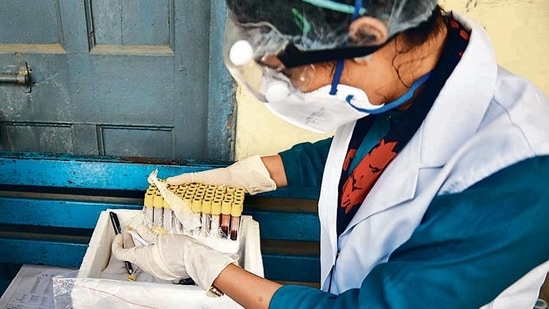
The survey was conducted from April 12 and only 13,000 of the 28,000 planned samples were taken. The Capital entered its fourth wave of infections in late March, and the surge peaked around a month later. These people are likely to develop detectable IgG antibodies only weeks after their infection.
The report, by researchers from Maulana Azad Medical College, also suggests that the next sero survey be conducted in end-June or early-July to capture the fourth wave exposure. At its peak, Delhi recorded 28,000 cases in the third week of April.
During the April round, samples were collected from only 141 of Delhi’s 272 wards. “The survey had to be stopped midway because cases started rising and a lockdown was implemented. Now, the samples that were collected during the five or six days that the survey was carried out are being analysed,” a Delhi government official told HT earlier.
The reports of the antibody testing are yet to be shared with the study participants.
“The dates for the next round of sero survey haven’t been confirmed yet,” said an official from Delhi’s health department.
“The seroprevalence remained the same because there were hardly any Covid-19 cases in January and February. The cases started going up in April, while the survey was being conducted. Even if those who had the infection then were samples, they would not have developed the antibodies,” said Dr Jugal Kishore, head of the department of community medicine.
When the first sero survey was conduced in June-end last year, 22.6% of the 21,000 people sampled had antibodies. This rose to 29.1% of the 15,000 people sampled in August, and then dropped to 25.1% among the 17,000 sampled in September (due to a change in methodology and dropping antibody levels in the population, the researchers said). In October, it went up to 25.5% in a sample size of 15,000.

Stay updated with all top Cities including, Bengaluru, Delhi, Mumbai and more across India. Stay informed on the latest happenings in World News along with Delhi Election 2025 and Delhi Election Result 2025 Live, New Delhi Election Result Live, Kalkaji Election Result Live at Hindustan Times.


