E-Paper



2 Aerocity flyovers to help connectivity in Delhi-NCR
Delhi International Airport Limited (DIAL), which operates IGI airport, is building two flyovers to decongest Aerocity

 Prefer HTon Google


The Delhi International Airport Limited (DIAL), which operates the Indira Gandhi International (IGI) Airport, is building two flyovers along the Northern Access Road in Aerocity to decongest the locality, officials aware of the matter said on Wednesday.
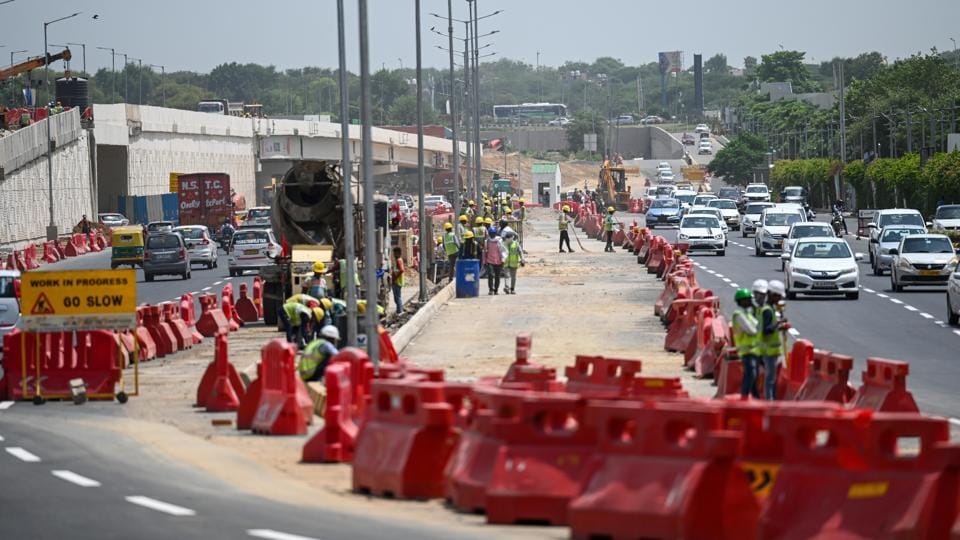
The flyovers are slated to be completed by the end of the year. The first, called Aerocity Flyover, will be 800m long and is being built between Andaz Delhi hotel and Central Spine Road. The second, called Parallel Access Road Flyover, is being built between Andaz Delhi and the Hanuman temple near National Highway 48 (NH-48). Work on both has been underway for a while now but details of their span have only now been disclosed.
DIAL said Aerocity Flyover will have four lanes and the Parallel Access Road flyover — which will provide an easier access to the airport for passengers coming from Vasant Kunj — will have two.
“Aerocity Flyover will decongest the area around the Aerocity traffic signal junction and provide commuters a signal-free trip from Terminal 1 (T1) to Terminal 3 (T3), via Aerocity.
The second flyover will, meanwhile, decongest the entire stretch of road from Terminal 2 (T2) and the cargo terminal to NH-48,” said a DIAL spokesperson.
Work on both flyovers began in June 2022. In May this year, DIAL issued a traffic advisory for diversions around Aerocity due to the ongoing construction. To manage traffic from Mahipalpur and Aerocity towards T2 and T3, a single 250m-long lane has been made operational from the Aerocity signal to the new traffic light on Central Spine Road.
“This lane is exclusively designated for traffic from Mahipalpur and Aerocity heading towards T3 and T2. Traffic intending to reach T3 and T2 from Aerocity or Mahipalpur must make a compulsory left turn at the next signal towards the south direction and then make a right turn after 500m, merging with traffic coming from Radisson Circle,” a DIAL spokesperson said.
DIAL said the diversions have had little impact on traffic, which it said, is being coordinated with the traffic police.
Delhi traffic police officers did not respond to requests for comment.
The airport is expected to see a flurry of activity on September 9 and 10, when Delhi will host the G20 Summit.
The airport in a statement on Saturday clarified that it is ready to handle any additional flights due to the Summit.
“We’d like to assure all travellers that the Delhi Airport is fully equipped, with ample parking space for aircraft. So far, we have received requests for cancellation of approximately 80 departing and 80 arriving domestic flights over the three days, which is a mere 6% of the normal domestic operations at the airport. The restrictions will not cause any impact on international flights,” DIAL said in a statement.