
 E-Paper



Delhi assembly: The chequered three decades
The first legislative assembly in Delhi was in 1952, not 1993, and the first chief minister was Ch Brahm Prakash. Kejriwal is not the first chief minister to clash with the lieutenant governor. The political setup in Delhi has changed multiple times over the years, and the current system of governance has been in place for the past three decades. The last few years have been tumultuous with disputes between the CM and LG. Overall, the last three decades have seen progress and development in Delhi.


Unlike what people think, the 1993 legislative assembly was not the first one in Delhi, nor was Madan Lal Khurana the first chief minister; the one in 1952, following the adoption of the Constitution, with Ch Brahm Prakash as the first chief minister, was the first.
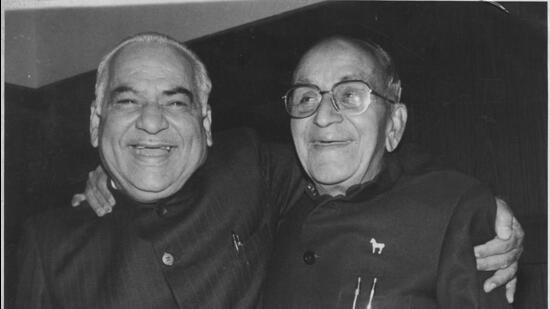
Interestingly, Kejriwal is not the first chief minister to clash with the lieutenant governor -- Prakash beat him to it. His squabbles with the then home minister GB Pant and then Prime Minister Jawaharlal Nehru ultimately led to his replacement by Gurmukh Nihal Singh. Not just this: when Delhi was declared a Union territory, following the States Reorganisation Commission Report, the Centre decided to replace it with an elected municipal corporation, choosing to govern directly through the chief commissioner. The Centre thus reverted to the system of governance that was first introduced when the capital moved to Delhi from Calcutta in 1911.
When I came to Delhi in late 1966, there was talk of change in the air. The population of Delhi was fast increasing and so were the ambitions of the politicians. Being unable to resist the political pressure, the Central government finally decided to give some sort of a political set up for governance. The metropolitan council, given a limited number of so called “transferred” subjects, had powers only to debate and discuss matters within their purview and merely propose legislations to Parliament.
The executive head was the chief executive councillor but it was the LG who presided over the executive council meetings. Interestingly, even the decisions of this council could be vetoed by him. The first election led to interesting results: the fledgling Jan Sangh won the election, the first state in which it triumphed, and Vijay Kumar Malhotra became the CEC and LK Advani the chairman of the metropolitan council. The veteran Congress leader Shiv Charan Gupta was the Leader of the Opposition.
Following the shifting of the Capital from Calcutta in 1911, a building to house the central secretariat was needed. What is now known as the Old Secretariat was designed by noted architect Herbert Baker, built in just a few months, and was occupied by the then central government in 1912, Now, when the metropolitan corporation came into being, this was found to be a convenient building for it to move in. The offices of the executive councillors were also set up in the building.
It didn’t take the politicians long to realise that the council was nothing short of a debating society; in fact it was so lacking in any effective powers that a two-time chairman, Purushottam Goyal, once described its membership as a ‘death trap’. But still it took the politicians a full two-and-a-half decades to get it changed, and for it to be replaced by the present setup, which too, at best, can be described as a ‘fractured’ governance pattern. At least the present CM thinks so, considering the number of times he has taken issues to the Supreme Court!
The first 20 years of the present setup, 15 of which Sheila Dikshit was in the driving seat, saw a harmonious relationship with the Centre and speedy development. Roads were widened, new flyovers built, a number of new hospitals opened, and the introduction of the Metro and substantial improvement in the transport services. The most dramatic improvement was in the schools for which special emphasis was put by all the chief ministers. The Khurana government, gave new buildings and put an end to tented and two-shift schools and the intensified efforts of the Dikshit government, led to the pass percentage in government schools rising to as much as 98.4% in 2013.
The last few years have been a little tumultuous, with relations of the CM and LG reaching their nadir. A dharna by the entire cabinet in Raj Niwas, a criminal case being filed by the chief secretary alleging assault by MLAs in the CM residence, important ministers being imprisoned and with a case being filed by the elected government daily in the Supreme Court on one issue or the other are not examples that can lead to good governance. One hopes that all this does not bring back the dark period after Brahm Prakash’s removal when there was no elected political set up in the capital at all!
Overall, the last three decades have been a period of progress and development and one can only hope that the squabbles that have muddied the waters lately end and the Capital can again move ahead on the path of progress and development.
Omesh Saigal was the former Delhi chief secretary and secretary to Government of India.

Stay updated with all top Cities including, Bengaluru, Delhi, Mumbai and more across India. Stay informed on the latest happenings in World News along with Delhi Election 2025 and Delhi Election Result 2025 Live, New Delhi Election Result Live, Kalkaji Election Result Live at Hindustan Times.


