E-Paper



DMRC proposes to extend Delhi Metro's Red Line to Haryana’s Kundli
This would be the first Delhi Metro Line directly connecting Uttar Pradesh and Haryana, officials said

 Prefer HTon Google


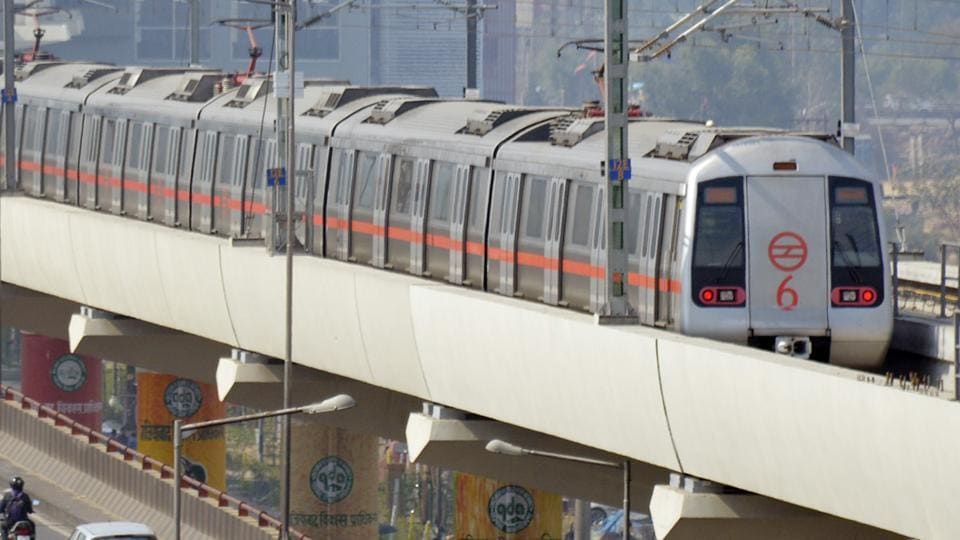
The Delhi Metro Rail Corporation (DMRC) has proposed that the Red Line, presently operational between Shaheed Sthal and Rithala, be extended up to Kundli in Haryana, officials aware of the plan said on Tuesday. DMRC is likely to submit a detailed project report (DPR) for the extension plan to the Centre and the governments of Delhi and Haryana by the end of this month for approval.
Read here: Proposed Rithala-Narela corridor of Delhi Metro may get extended up to Kundli in Haryana
If approved, this would be the Delhi Metro’s fourth expansion into Haryana after the Yellow Line (Gurugram), Violet Line (Faridabad) and Green Line (Bahadurgarh). This would also be the first Delhi Metro Line directly connecting Uttar Pradesh and Haryana, officials said.

“If approved, the entire corridor shall be 27.319km, comprising 22 stations. While 26.339km will be elevated, 0.89km will be at grade (surface level). Of the 22 stations, 21 will be elevated and one will be at grade,” said Anuj Dayal, principal executive director, corporate communications, DMRC.
The proposed stations on this corridor are Rithala, Rohini Sector 25, Rohini Sector 26, Rohini Sector 31, Rohini Sector 32, Rohini Sector 36, Barwala, Rohini Sector 35, Rohini Sector 34, Bawana Industrial Area – 1 Sector 3,4, Bawana Industrial Area – 1 Sector 1,2, Bawana JJ Colony, Sanoth, New Sanoth, Depot Station, Bhorgarh village, Anaj Mandi Narela, Narela DDA Sports Complex, Narela, Narela Sector 5, Kundli and Nathupur. Out of these, the depot station will be at-grade, similar to Yamuna Bank.
The proposed Rithala-Kundli corridor is a revision of an earlier plan to extend the Red Line only till Narela.
DMRC had between 2017 and 2018 submitted six proposed corridors under its phase 4 expansion — Tughlakabad to Aerocity, Majlis Park to Maujpur corridor, Janakpuri West-RK Ashram, Rithala to Narela, Lajpat Nagar to Saket G block, and Inderlok to Indraprastha. The Delhi government in December 2018 gave its approval for all six projects; however, the Centre only approved the first three corridors.
Read here: DMRC removes Noida’s Sector 52 FOB pillar to ease traffic flow
DMRC had also envisaged the Rithala-Narela corridor as a “Metrolite” corridor — a light rail urban transit system with three to four coaches — but the plan was scrapped last year after estimates of a high footfall at Narela.
“Enhanced connectivity to these areas will immensely help residents of these residential colonies. In the past, DMRC’s expansion to Dwarka had boosted the connectivity to the sub-city,” Dayal said.