
 E-Paper



Delhi must revisit its traffic plans in wake of Covid-19, say experts
In this last instalment of a four-part series, Hindustan Times spoke to traffic experts, researchers and senior police officers to understand how various aspects of travelling have changed since the pandemic hit

 Prefer HTon Google


A global crisis like Covid-19 has undone many things in many places. In Delhi, it has undone years of work in decongesting roads, among other things. Planners and traffic experts believe there is a need to return to the drawing board to understand the new travelling patterns in the city and the new challenges in their wake.
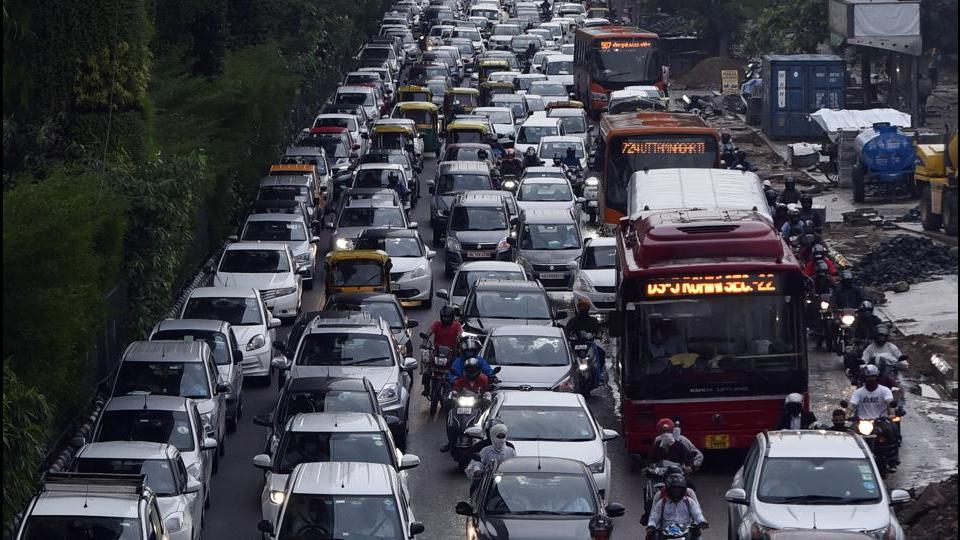
In this last instalment of a four-part series, Hindustan Times spoke with traffic experts, researchers and senior police officers to understand how various aspects of travelling have changed since the pandemic hit, and how the city can reinvent strategies so that private vehicles don’t dominate road traffic.
Study the congestion patterns
Transport experts said that in the last year since the pandemic began, traffic volume has increased on the city roads, jams are more spread out beyond the rush hour, and newer congestion hotspots have emerged. But many advised caution in interpreting these as permanent trends.
Sewa Ram, professor (transport planning) at the School of Planning and Architecture, said Delhi is witnessing a “transition” from a situation that it had never experienced before, and the city administration needs to “wait and observe traffic patterns”.
“What we need to do is carefully study the trends for at least another year to understand how congestion patterns are affecting the city. It would not be right to start panicking now, because we are still recovering from a pandemic. Schools and colleges are yet to open, workplaces are yet to come to a set routine, and public transport modes are still functioning with restrictions. Patterns have to be consistent to become trends and we need to carefully monitor the way we travel for the next few years,” Ram said.
‘Flexible’ transit modes needed
Ram said that over the last year “non-scheduled trips” or “flexible trips” have increased as private companies are allowing employees to work from home or come to offices for a limited number of days or periods. This was one of the reasons for unforeseen traffic congestions in various parts of the city.
Amit Bhatt, director (integrated urban transport) at the World Resources Institute (India), said that another reason for increased congestion in the city is the safety concerns among commuters while travelling in mass transit modes such as public buses and the Delhi Metro.
“Delhi was heavily invested in mass transit modes till the pandemic hit us. But now, we have been observing that commuters are reluctant to use these mass transit modes because of safety concerns. This is also leading to people moving more towards private vehicles,” Bhatt said.
Surveys over the last year have observed a trend of people switching to private vehicles. In a survey conducted by Cars24, an online platform for buying and selling used cars, April saw a spike in the sale of second-hand two-wheelers and cars since June last year. The survey said that 50% of their customers were in favour of pre-owned vehicles because it not only solved the purpose of privacy during a commute but was also a cheaper and more viable alternative.
“The sudden spike in the demand for used bikes and cars come from a consumer base that is looking to shift from public transport options like buses and trains to private vehicles. Given the new social distancing norm where people are trying to stay safe from crowded spaces, there has been a spurt in used two-wheeler buying,” the survey report read.
Bhatt said that the takeaway from this is that commuters are moving away from mass transit modes. “So, it might be a wise idea for the city’s decision-makers to now invest in flexible, demand-based transit modes. For instance, a demand-based bus system to cater to the working population that is now having flexible working hours, such a system is already in place in San Francisco. The bus system now is timetable-based but commuter demands are changing because of the pandemic,” Bhatt said.
Time is right to go green
Experts also suggested that the pandemic has offered an opportunity to shift the city’s infrastructure to greener and more sustainable modes.
Anumita Roychowdhury, executive director (research and advocacy), Centre for Science and Environment (CSE), said that this would be the right time for the city to invest in green infrastructures such as cycling tracks and pedestrian walkways.
“After the first lockdown, we all observed a renewed interest for cycling. Many commuters were seen cycling for leisure or short trips. We need to cash in on this interest so that it can be supported with infrastructure. Continuous lanes need to be created to ensure that there is a safe space for cyclists. This is the safest mode of transportation as it has a single occupant and also ensures social distancing,” said Roychowdhury.
Many cities across the world have taken a cue from the pandemic to work towards redesigning their streets and encouraging cyclists and pedestrians, viewing these as the safest travel modes post-pandemic.
Paris introduced over 45km of new cycleways, known as “coronapistes”, and restricted motor traffic along selected areas as part of the ‘Paris Respire’ (Paris Breathes) plan to clean the city’s air and improve the quality of life.
In Milan, the city officials are transforming around 35km of streets into cycle lanes and widening pavements to ensure that pedestrians get enough space to maintain social distancing while walking.
In Germany, Colombia and Mexico, authorities reclaimed more than 150km of roads across their capitals, using existing resources such as cones, temporary lights and lane separators. In New York, the city council is reportedly planning a reconfiguration of roads for walking and cycling, turning 75 miles of roads into “streets for people”.
Policing needs a reboot
Apart from working on long-term infrastructural tweaks, the city’s traffic enforcement teams will also need to adapt to new ways of policing given the restrictions brought about by the pandemic.
“We have directed our officials to be stationed at traffic junctions and intersections during the rush hour, instead of standing to challan drivers. We are shifting our focus to congestion management,” said Muktesh Chander, special commissioner of police (traffic).
Other than bringing about an attitudinal change to policing among the staff, the department is also increasing the use of technology to limit interaction among drivers and police officials.
Other, smaller cities are also emulating this model of shifting towards technology-driven policing. In Chandigarh, the police department on August 20 directed enforcement teams to refrain from issuing any manual challans and move completely to an online prosecution system.


