
 E-Paper



Delhi riots case: HC denies bail to Umar Khalid, Sharjeel Imam
Delhi High Court denied bail to Umar Khalid and Sharjeel Imam in the Delhi riots conspiracy case, citing their "grave" roles in inciting violence.

 Prefer HTon Google


The Delhi High Court on Tuesday denied bail to student activists Umar Khalid and Sharjeel Imam in the larger conspiracy case linked to the February 2020 Delhi riots, holding that their roles appeared “prima facie grave” and that they were the first to act after Parliament passed the Citizenship Amendment Bill (CAB) in December 2019.
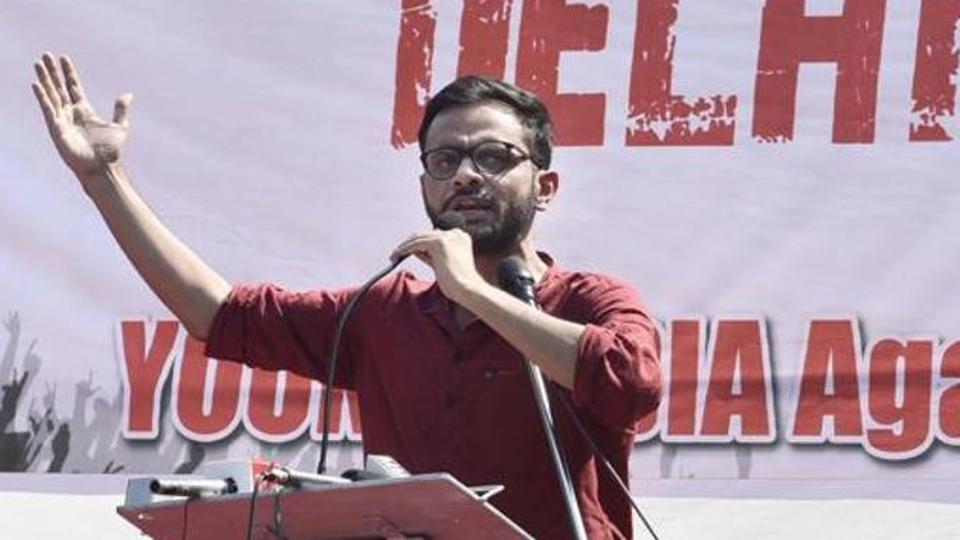
A bench of Justices Navin Chawla and Shalinder Kaur, in a 133-page verdict, also rejected bail pleas of seven others – student activist Gulfisha Fatima, United Against Hate founder Khalid Saifi, Athar Khan, Mohd Saleem, Shifa-ur-Rehman, Meeran Haider, and Shadab Ahmed – taking note of the roles assigned to them in furtherance of the alleged conspiracy, which, according to investigators, culminated in communal clashes in Delhi that left 53 people dead and hundreds injured.
Imam was arrested on January 28, 2020, and Khalid on September 14, 2020. Both were booked under the stringent Unlawful Activities (Prevention) Act (UAPA). The Delhi Police have alleged that they were the “intellectual architects” of the conspiracy, which escalated into violence in north-east Delhi from February 23, 2020, during protests against the Citizenship Amendment Act (CAA).
Delhi Police, represented by solicitor general Tushar Mehta and special public prosecutor Amit Prasad, argued that Imam gave inflammatory speeches in Aligarh, Asansol, and Chakand, while Khalid spoke in Amravati on February 17, 2020, urging protests on February 24 – the day US President Donald Trump began his state visit to India. They alleged that both men, working with others, created WhatsApp groups, distributed pamphlets in Muslim-majority areas, and planned chakka-jams (road blockades) to disrupt essential supplies.
“Considering the evidence on record and the events unfolding in the alleged conspiracy, prima facie it appears that the appellants (Imam and Khalid) were the first ones to act after the CAB was passed in early December 2019, by creating WhatsApp groups and distributing pamphlets in the Muslim populated areas calling for protests and chakka-jaams,” the judgement maintained.
It added that both Imam and Khalid delivered speeches “on communal lines to instigate a mass mobilisation of members of the Muslim community.” At this stage, the bench said, the evidence against them “cannot be branded as weak.”
The judges rejected the argument that the two were not present at riot sites when violence broke out. Imam was in custody since late January, and Khalid was not in Delhi when the clashes began. But the court held their absence irrelevant, saying the planning and mobilisation had already been carried out. “The mere absence… a few weeks or days before the riots may not be sufficient to mitigate their role,” it observed.
The two had moved Delhi HC after their bail pleas were rejected by the trial court. Imam challenged the order dated April 4, 2022, while Khalid appealed against the order passed on May 28, 2024. Both argued that the case against them was weak and that no evidence placed them in meetings where violence was planned.
Their lawyers also contended that they were entitled to bail on parity with co-accused Natasha Narwal, Devangana Kalita, and Asif Iqbal Tanha, who were granted bail in 2021, and that their incarceration as undertrials for over five years was unjustified.
The accused had also asserted that they were acting within the constitutional parameters while exercising their right to protest against a piece of legislation.
Further, Imam had said that he was not engaged in a discussion that the alleged turning point of the protests would be the State visiof the President of the United States. While Khalid had contended that he made a mere mention of the said dignitary’s visit in his speech on February 17, 2020 at Amravati, however, that it is not a circumstance to be read against him and cannot be said to have any nexus with riots that ensued a week later. He said he made no utterances with respect to any protests taking place in Delhi during the Trump’s visit.
They further submitted that they were not even in Delhi or near the site of riots, at the relevant time since Imam had been in custody for nearly a month since January 28 and Khalid was not present in northeast Delhi when the riots erupted.
While the court acknowledged the principle of “grant of bail as the rule and refusal as the exception”, it said that the exercise of such discretion depends on the facts and circumstances and in a special statute like UAPA.
The court noted that the investigating agency had made “genuine efforts” to uncover the alleged deep-rooted conspiracy and had gathered substantial evidence. “The state carried out a detailed investigation, which led to the arrest of several individuals and the filing of four supplementary charge sheets, with multiple accused persons charge-sheeted, and as many as 58 witnesses, including protected witnesses, whose statements … were recorded before a magistrate.”
In that context, the judges said, the pace of trial “will progress naturally” and a hurried trial “would be detrimental to the rights of both the appellants and the state.”
On parity, the court ruled that Khalid and Imam’s roles were not comparable with those already on bail. “Unlike the limited roles of co-accused, the involvement of Imam and Khalid appears prima facie to be grave,” the order said.
Regarding the right to protest against the legislation, the court observed that conspiratorial violence disguised as protests or demonstrations cannot be allowed. It said that such acts must be regulated and curtailed by the state machinery, as they do not fall within the scope of the constitutional rights to freedom of speech, expression, and association.
“The citizens have a fundamental right to voice their concerns against the legislative actions, which only fortifies the democratic setup by indicating the participation of the citizens in governance. This right is crucial, as it enables citizens to express their dissent, expose flaws in governance, and demand accountability from the state authorities. However, such actions must be within the bounds of law,” the court said.

Stay updated with all top Cities including, Bengaluru, Delhi, Mumbai and more across India. Stay informed on the latest happenings in World News along with Delhi Election 2025 and Delhi Election Result 2025 Live, New Delhi Election Result Live, Kalkaji Election Result Live at Hindustan Times.


