E-Paper



Delhi set to add 600 electric buses this month
With around 100-150 new electric buses being delivered every month, the government has also started phasing out the older CNG buses


The Capital is set to add 600 electric buses to its transport fleet this month, taking the number of e-buses in the Delhi Transport Corporation (DTC) to 1,400, officials aware of the matter said on Monday. The last batch of 400 e-buses was launched in early September.
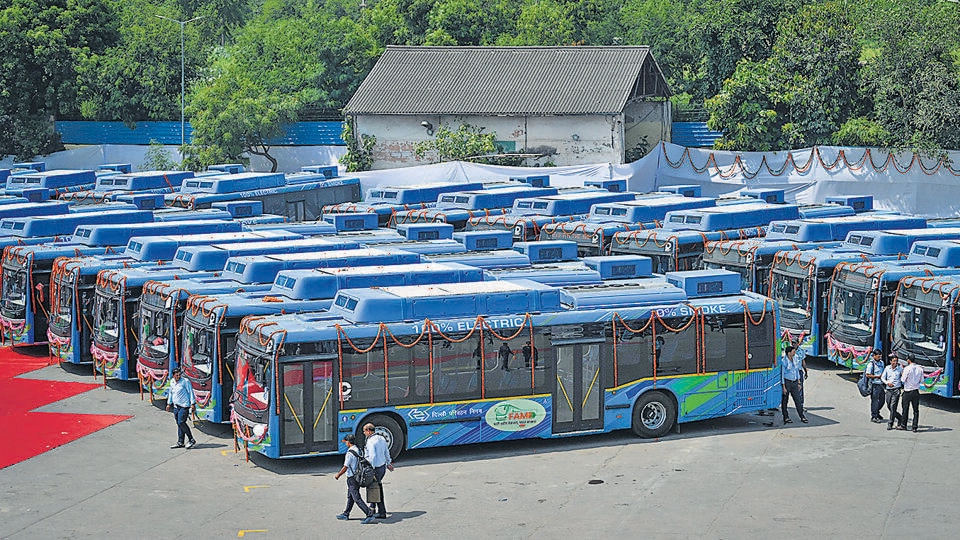
With around 100-150 new electric buses being delivered every month, the government has also started phasing out the older CNG buses that have reached the end of their life and are prone to frequent breakdowns. The entire existing fleet of DTC and Delhi Integrated Multi-modal Transport System Limited (DIMTS) is expected to be replaced with electric buses by 2024.
“We already have around 800 operational e-buses, and 600 additional buses will be added to our fleet this month. We are continuously receiving small batches from the manufacturer almost every week,” said Ashish Kundra, transport secretary-cum-commissioner.
“We are in the process of finalising the routes and depots where these buses will be deployed. Once we receive the additional buses, these may be launched together by the middle of this month,” said Shilpa Shinde, managing director, DTC.
Officials say that by 2025, only two cities will have more e-buses than Delhi — Shenzhen in China and Santiago in Chile. Shenzhen has a fleet of around 16,000 e-buses and is considered to be the first city that converted all its public buses to electric, besides having a large fleet of electric taxis as well. Santiago started procuring e-buses in 2017, and now has around 7000 e-buses.
“The buses that have reached their life are being gradually phased out as and when we receive a new batch of new buses. The plan is to phase out all older CNG buses and replace these with electric buses by the end of next year. Most of our bus fleet needed to be upgraded as hardly any new buses have been procured in the last 8-10 years. We made a conscious decision to go for electric buses as it is one of the big steps that will eventually help lower pollution levels in the city. We need more such systemic changes and not emergency measures that can improve air quality,” said Kundra.
No vehicle which is 15 years old can operate on the roads of the national capital, according to orders issued by the National Green Tribunal (2015) and the Supreme Court (2018). For diesel vehicles, this time period is cut down to 10 years only. The government calls such vehicles “end-of-Iife” vehicles, and driving them in Delhi is illegal. The aim behind these rules is to cut down on the number of vehicles on the city’s roads with dated emission standards.
To be sure, phasing out of DTC buses is an annual affair.
Transport officials also said that bus depots across the city are gradually being electrified — of the 16 depots, 14 will have charging stations.
Delhi currently has a fleet of approximately 7,300 operational CNG public buses — the DTC fleet has 4,010 (1,256 AC and 2,504 non-AC), while DIMTS has another 3,319 CNG buses. Nearly all these CNG buses are reaching their end of life.
The condition of the buses is evident from the breakdown rates of these public buses. The Delhi Traffic Police reports at least two breakdowns on the roads per day, with officers saying that this is one of the major causes of congestion on Delhi roads, especially along flyovers and narrow two-lane roads.