E-Paper



Delhi water supply hit as Yamuna level goes 6.5 ft below the normal mark
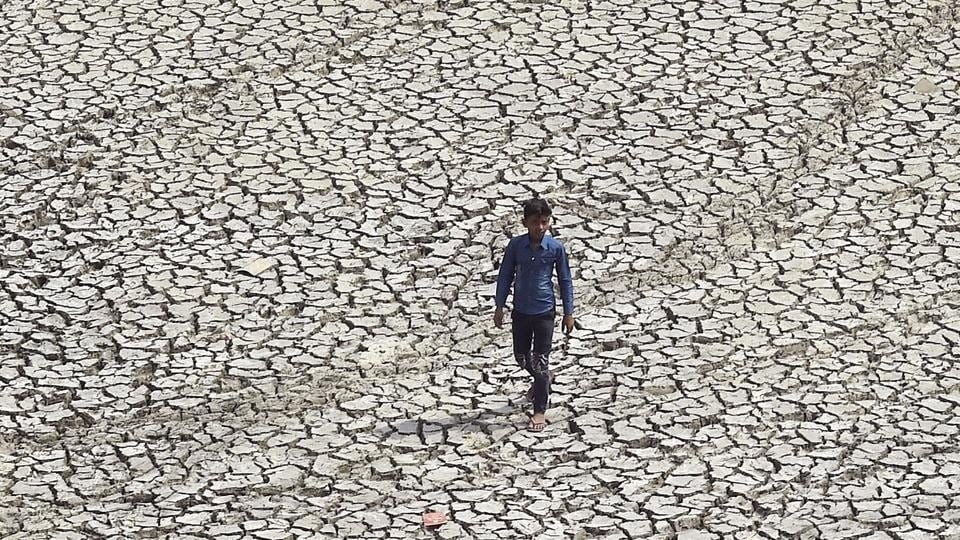
The ripples of the decreasing water levels at Yamuna river was felt at Wazirabad on Sunday as the water level here reached 668ft.

 Prefer HTon Google


The ripples of the decreasing water levels at Yamuna river was felt at Wazirabad on Sunday as the water level here reached 668ft, 6.5ft lower than the average normal of 674.5ft for this time of the year, said officials from the Delhi Jal Board (DJB).
The water treatment plants at Wazirabad were producing 922 MGD (million gallon per day) of water against the targeted peak summer production of 998 MGD. The city requires an estimated 1,380 MGD of water, which has been derived from the norm of 60 gallons per capita per day (GPCD) for an estimated population of 23 million in Delhi. In the last 10 days, the DJB has issued four advisories to residents to store sufficient quantities of water in the wake of falling water levels at Yamuna river.
While Delhi has blamed its neighbour Haryana for the water crisis, the latter has consistently maintained that it is releasing the legally mandated share of water for the Capital and no additional quantum of water can be released.
Also read: Yamuna short of water, says DJB, asks Haryana to ramp up supply
A senior Jal Board official said that due to decreasing water levels at Wazirabad, authorities are trying to divert water from Carrier Lined Canal (Munak) towards Wazirabad to keep up the water production in Wazirabad and Chandrawal facilities.
“There is maximum possible diversion from CLC towards Wazirabad and fluctuations are being observed in the flow towards Delhi sub-branch canal. Munak canal is also facing the issue of excessive floating materials at the intake point in Haiderpur plant. All these factors have affected operations at Haiderpur Phase-I, Phase-II and Bawana water treatment plant. We are reviewing the situation constantly and trying to rationalize the water supply from various plants, as a result of which water is available at low pressure in various parts of Delhi,” said the officia.
According to DJB, the most affected areas are north, north-west , west Delhi and a few parts in south Delhi. Water minister Satyendar Jain visited the Wazirabad barrage on Saturday night to inspect the raw water discharge.
DJB operates nine water treatment plants in the city, which collectively produce 861 MGD of water while 137 MGD is derived from groundwater.
Residents from various parts of city reported issues with the water supply on Sunday. Anjali Sorout, a resident of Janakpuri, said supply in C block was badly affected. “There is no clean water supply either through submersibles. The ground water is also dirty,” she complained.
Vinod Kumar from Vishnu Garden said that there has been no water supply in his block over the last three days. “What kind of service is this? What should we do in this hot summer without water?” he asked.
A water-stressed state, Delhi relies on its neighbours for a bulk of its raw water needs. Around 40% of its raw water comes through Yamuna river channel, Munak canal and DSB canal, 25% from Upper Ganga Canal via Uttar Pradesh and 22% from Bhakhra-Nangal project, which flows through Haryana to the Capital. The remaining 13% is generated through subsurface sources, such as ranney wells and tube-wells.
While Delhi has announced several projects to increase its raw water availability, a bulk of which it derives from its neighbours, many of these projects either remain in initial stages or have faced stiff resistance from other riparian states of Yamuna basin. A DJB official said the pilot project to store excess water during flooding cycles in monsoon in the river near Palla has shown positive results but it will take more time for large scale implementation.
Besides reusing the treated sewage within the city, Delhi also planned to barter its treated resource with its neighbours. The national capital is planning to implement a project to exchange 140 MGD treated wastewater at an estimated cost of ₹6,931 crore in return for fresh water from neighbouring Uttar Pradesh.
A feasibility report commissioned by the Uttar Pradesh irrigation department found that 270 cusecs of water from Ganga can be shared from Murad Nagar regulator, while the treated effluent can be released from Okhla. “While the project was found to be feasible, it was not approved at the political level last year,” said a DJB official.
Also read: Delhi grapples with water shortage amid severe heatwave
A similar water exchange of 20 MGD wastewater with Haryana is stuck at Upper Yamuna River board level. The board has submitted a detailed proposal regarding 20MGD waste water substitution for irrigation purposes at Auchandi and Jaunti regulator with Haryana. But recent indications from Haryana do not inspire confidence, said officials.
On Friday, Haryana chief minister Manohar Lal Khattar stated that Haryana’s responsibility is to supply 1,049 cusecs to Delhi from Munak and will keep on supplying it even though the state is falling short of water. “The AAP government in Punjab should also ensure that Haryana gets its share of 3.5 million acre feet of Ravi-Beas water by constructing the Sutlej Yamuna Link Canal,” said Khattar.
To this, the AAP-led Delhi government said the national capital faces a water crisis because of Haryana’ refusal to provide Delhi its fair share of water.