E-Paper



Check bus travel, ask PG owners to dissuade students: Cops' plan for CJP's anti-EC stir at Jantar Mantar
The directions also include monitoring local bus operators and checking bookings to ascertain who is hiring buses and what is the destination.

 Prefer HTon Google


Delhi Police have stepped up measures across the city ahead of the Cockroach Janta Party (CJP)’s October 10 protest, directing station house officers (SHOs) to monitor protesters with alleged criminal antecedents, track movement of buses headed towards New Delhi district and engage with educational institutions and paying guest (PG) accommodation owners to discourage students from joining the demonstration.
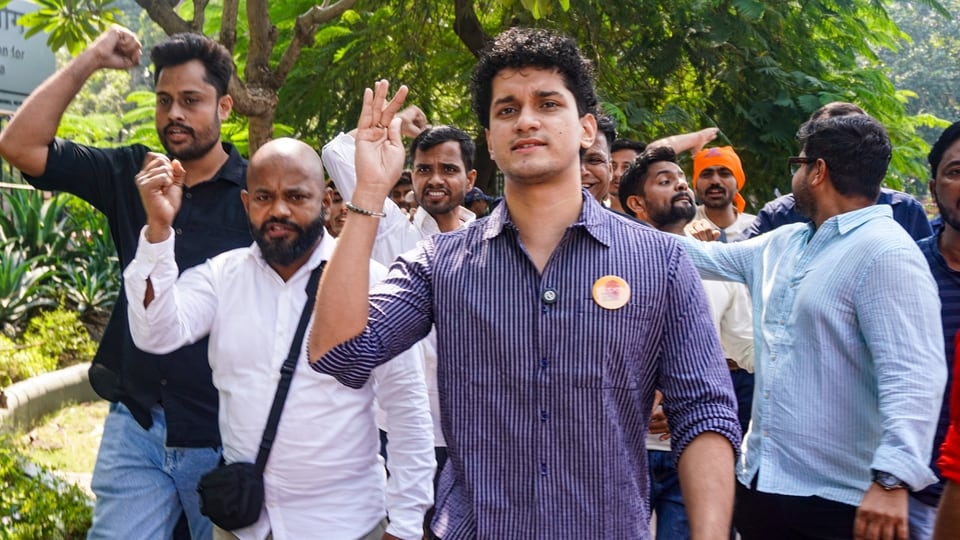
According to police officials aware of the details, senior cops have specifically asked SHOs to keep track of around 2,800 people identified through the Facial Recognition System (FRS) as having criminal antecedents, including their movements and activities. To be sure, police have not yet granted permission for the agitation.
“SHOs have been asked to identify and keep track of such people in their respective areas, particularly those who may have a history of serious offences. The idea is to know who is moving towards the protest site and from where,” a police officer said seeking anonymity.
Deep Dive

The directions also include monitoring local bus operators and checking bookings to ascertain who is hiring buses and what is the destination. Police have been told to establish whether groups are being transported to Delhi - especially towards New Delhi - for the October 10 protest.
“They have been asked to keep a watch on bus operators, including bookings being made and the destination. If there is organised movement of people towards New Delhi, the local police should be aware of it and stop it,” the officer said.
The police have also been asked to speak to heads of universities and colleges in their jurisdictions and urge them to ensure that students do not participate in the protest. Officers have been directed to reach out to PG owners in major student accommodation hubs and ask them to advise students against going to the demonstration.
Also Read | ‘Mom cried as if I was heading to war zone’: Abhijeet Dipke on leaving home for anti-EC stirs
According to the police, the protesters could potentially enter Delhi through three broad routes – the eastern and Shahdara borders with Uttar Pradesh and from the southwest, particularly the Rajasthan side. Officers have, therefore, been asked to maintain heightened surveillance along these routes. "Barricades will be installed at entry points," the officer said.
The police have also been instructed to ensure that no protesters are allowed to sit or stage a demonstration anywhere in the New Delhi district, officials said. The directions come amid heightened security around Jantar Mantar and other parts of the central Delhi area.
"The leaders are putting on social media that if protestors are stopped anywhere, they should just sit where they are stopped. We have to ensure that doesn't happen," a second officer said, also seeking anonymity.
Also Read | Barricades up, body cameras on: Delhi Police gear up for CJP's visit to seek Jantar Mantar march nod
At least 2,873 people with alleged criminal antecedents were identified among those who attended the CJP agitation over the NEET-UG paper leak at and around Jantar Mantar in July. Of these, nearly 989 were allegedly linked to heinous offences, according to the police. They also claimed that 101 of those identified were booked in murder cases, including 42 who were allegedly involved in two or more murder cases and 12 who were booked in 10 or more murder cases.
CJP spokesperson Saurav Das on Wednesday informed the police about the planned stir.
Since October 1, Delhi Police have requisitioned at least 20 companies of Central Armed Police Forces (CAPF), which have been deployed in and around Jantar Mantar. Several stretches in the area have been restricted, while nearly 4,000 security personnel have been deployed across the New Delhi area, officials said.
Police have also discussed setting up temporary detention facilities at stadiums across the city in case large numbers of protesters arrive, refuse to disperse and insist on courting arrest, according to officials.
The October 10 call comes months after the CJP-led agitation in July, when thousands of demonstrators attempted to march towards Parliament, demanding the resignation of then Union education minister Dharmendra Pradhan over alleged examination paper leaks.
Police used tear gas and baton charges to disperse protesters after they attempted to breach multiple layers of barricading. Videos circulated on social media appeared to show some protesters being beaten, while Delhi Police maintained that force became necessary after the demonstrators turned violent.