
 E-Paper



Delhi’s air quality warning system forecasted over 80% of severe pollution days: Study
The study highlighted improvements in forecasting the most severe pollution days (AQI >400) with the system predicting 5 out of 14 episodes in 2024-25, compared to only 1 out of 15 in 2023-24.

 Prefer HTon Google


An independent study by the Council on Energy, Environment and Water (CEEW) has found that Delhi’s Air Quality Early Warning System (AQEWS) accurately forecasted over 80 percent of the city’s ‘very poor and above’ air pollution days during the winter months of 2023-24 and 2024-25. The system predicted 83 out of 92 high pollution episodes (AQI >300) in 2023-24 and 54 out of 58 such episodes in 2024-25.
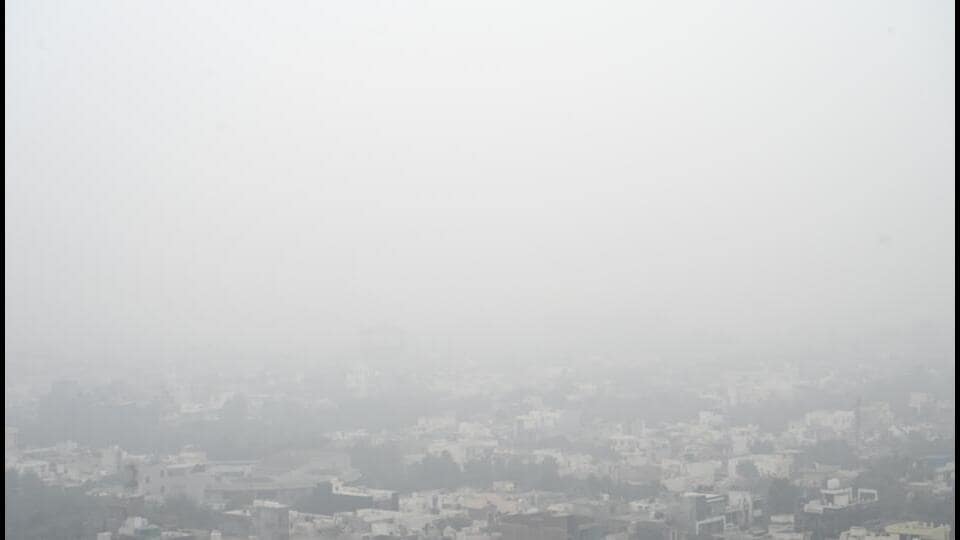
The study, titled ‘How Well Can Delhi Predict Air Quality? Insights for India’s Decision Support Systems,’ highlighted improvements in forecasting the most severe pollution days (AQI >400) with the system predicting 5 out of 14 episodes in 2024-25, compared to only 1 out of 15 in 2023-24.
“Accurate forecasts empower policymakers, authorities, and citizens to act early on actions such as transport and construction restrictions, and school activities, and safeguard public health,” the study noted.
Mohammad Rafiuddin, programme lead at CEEW, said, “India has made important strides under the National Clean Air Programme, with better monitoring networks and early warning systems now operational in several Indian cities.The high accuracy of Delhi’s early warning systems is a positive sign.”
He added, “Updated emission inventories can improve the accuracy further. It would enable us to have a better understanding of what pollutes Delhi’s air and in what quantities.”
Delhi’s AQEWS was launched in 2018 by the Ministry of Earth Sciences and is run by the Indian Institute of Tropical Meteorology (IITM) and the India Meteorological Department (IMD). It provides air quality forecasts three to ten days in advance.
In 2021, a Decision Support System (DSS) was also introduced to attribute pollution sources. However, the DSS currently operates only in winter, limiting year-round tracking.
The study recommended upgrading forecasting tools, developing a national emission inventory updated every couple of years, and providing public access to data. It concluded that with targeted investment in high-resolution modelling and computing, Delhi’s systems could progress from predicting poor air quality to actively preventing it.
Currently, eight Indian cities, including Ahmedabad, Pune, and Jaipur operate AQEWS systems, with more planned under the National Clean Air Programme (NCAP) in the coming years.
Stay updated with all top Cities including, Bengaluru, Delhi, Mumbai and more across India. Stay informed on the latest happenings in World News along with Delhi Election 2025 and Delhi Election Result 2025 Live, New Delhi Election Result Live, Kalkaji Election Result Live at Hindustan Times.


