E-Paper



Delhi’s minimum temperature rises marginally to 9°C; AQI remains ‘poor’
The IMD said the rise in minimum temperature was a fairly localised phenomenon, with most parts of northwest India seeing no significant change in the last 24 hours

 Prefer HTon Google


Delhi recorded a marginal rise in minimum temperature as the mercury rose to 9°C on Friday which is around normal for this time of the season. It was 4.5°C a day earlier -- Delhi’s lowest for December in three years.
The India Meteorological Department (IMD) said the rise in minimum temperature was a fairly localised phenomenon, with most parts of northwest India seeing no significant change in the last 24 hours.
“The rise in minimum temperatures is quite localised and can be attributed to variable wind conditions. Minimum temperatures have not shown any significant change over most parts of northwest India,” said an IMD official, stating it had risen by more than 2°C only at isolated places including Patiala, Karnal, Rohtak, Delhi, Sikar, Alwar and Phalodi.
“A rise of more than 3°C rise in minimum temperature has occurred only over Sikar, Rohtak, Phalodi and Safdarjung over the entire Northwest India plains,” the official said, stating no station in Delhi recorded coldwave conditions either.
The IMD had a yellow alert in place for Friday, forecasting coldwave conditions to persist in Delhi NCR, with the minimum likely to hover around 4°C.
Mahesh Palawat, vice president at Skymet meteorology said consistent northwesterly winds are still blowing towards Delhi NCR and will continue till the weekend.
“There can be fluctuation in temperature during such spells, generally when winds become calm. This can happen at night-time”, he said.
Also Read: Air quality worsens again in Delhi, enters upper end of ‘poor’
The last time Delhi recorded a lower minimum in December before Wednesday was 3.2°C on December 20, 2021. For context, Delhi on Thursday was also colder than popular hill stations like Shimla (5°C) and Mussoorie (6.9°C) on Thursday.
The lowest minimum across the city on Thursday was meanwhile recorded at Pusa (3.2°C) and Ayanagar (3.8°C), with coldwave conditions seen at both these stations.
The IMD classifies it as a coldwave when the minimum temperature is below 10°C, with the departure being 4.5°C or more below normal. It is also declared if a station’s minimum is 4°C or lower.
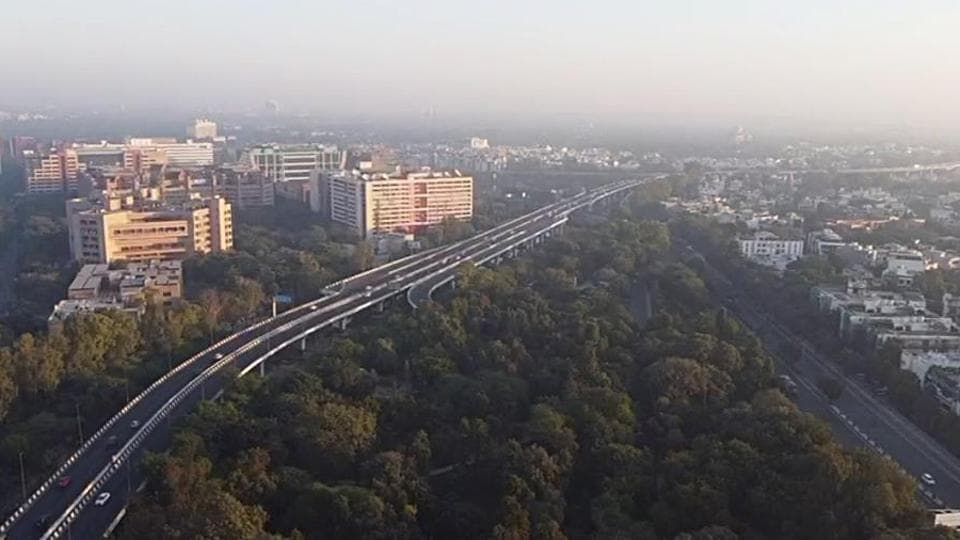
Meanwhile, Delhi’s air quality remained in the ‘poor’ category, marginally improving in the past 24 hours. Delhi’s average air quality index (AQI) stood at 273 (poor) at 9am on Friday. It was 288 (poor) at 4pm on Thursday.