
 E-Paper



Delhiwale: In little Jyoti’s memory
Delhi's historic cemeteries, like Nicholson and Paharganj, reflect diverse stories, from colonial rulers to poignant tales of forgotten lives.


Neem and tamarind trees watch over the weedy ground like friendly neighbourhood chowkidars. While bougainvillea shrubs liberally shed pink petals over old, cracked graves inscribed with words like ‘dearly loved’ and ‘beloved’. One grave says: “Weep not.”
Nicholson Cemetery is Delhi’s historic Christian graveyard, mostly littered over with the colonial-era graves of the ruling British, who died thousands of miles away from their homeland. While the more orderly cemetery on Prithviraj Road, near Khan Market, is a resting place for some of contemporary India’s highly distinguished figures, such as President K. R. Narayanan. Then there are Delhi’s lesser-known cemeteries, containing their own uniqueness.
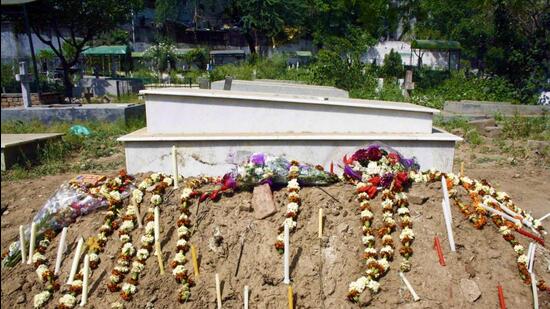
The Indian Christian Cemetery in Paharganj is nestled within a congested central Delhi locality, and yet commands a silence so assertive that visitors instinctively lower their voice on entering. The leaf-strewn ground houses hundreds of graves. A tiny grave has “Still Born” inscribed on its battered granite. The grave of another “Still Born” identifies its dweller as “Baby Girl Angel.” The grave of Jyoti Mariyam Hora was not privileged with an identifying marker. Her story is poignant. Per a newspaper report from 2013, the motherless Jyoti one day abruptly left her Jharkhand village (and her alcoholic father), boarding an express train for Delhi. She was only 10. Nudged by a friend, she had hoped to find work in our city as a “domestic help.” Jyoti died within a week of her arrival, apparently because of jaundice. Her body lay in a hospital morgue for days. Eventually, Delhi Catholic Archdiocese stepped in to arrange the child’s burial. This reporter had visited the cemetery on the day of Jyoti’s final rites. The burial party had already left. Garlands and extinguished candles lay on the unattended mound, which smelled of freshly dug earth—see photo. This muggy afternoon, years later, it is difficult to locate the child’s unmarked grave.
Less mournful is the Christian Cemetery in Gurguram’s Civil Lines. It is full of singing birds. A tombstone here is inscribed with profoundly consoling words that might, at least briefly, soothe a broken heart: “Say not in grief he is no more but live in thankfulness that he was.” One grave in the cemetery is marked with the year 1854—and they call Gurugram the Millennium City!
The most desolate of all the city graveyards has to be the Indian Christian Cemetery in north Delhi’s Burari. It has the eeriness of a far-flung corner. A highway passes by the vast burial ground; the roar of the speeding vehicles accentuating the remoteness of the place. One stone bears the words:
Just as I Am
Rajib Roy
“Mickey”
This being author Arundhati Roy’s father’s grave.


Stay updated with all top Cities including, Bengaluru, Delhi, Mumbai and more across India. Stay informed on the latest happenings in World News along with Delhi Election 2025 and Delhi Election Result 2025 Live, New Delhi Election Result Live, Kalkaji Election Result Live at Hindustan Times.


