
 E-Paper



Delhiwale: Maximum Millennium City
Nobel prize winner Alice Munro's words on complexity apply to Gurugram, where old structures like "makaan" and "bangla" reveal layers of history and modernity.


The complexity of things—the things within things—just seems to be endless, nothing is easy, nothing is simple. So said Alice Munro, the Nobel prize winning author who died last week.
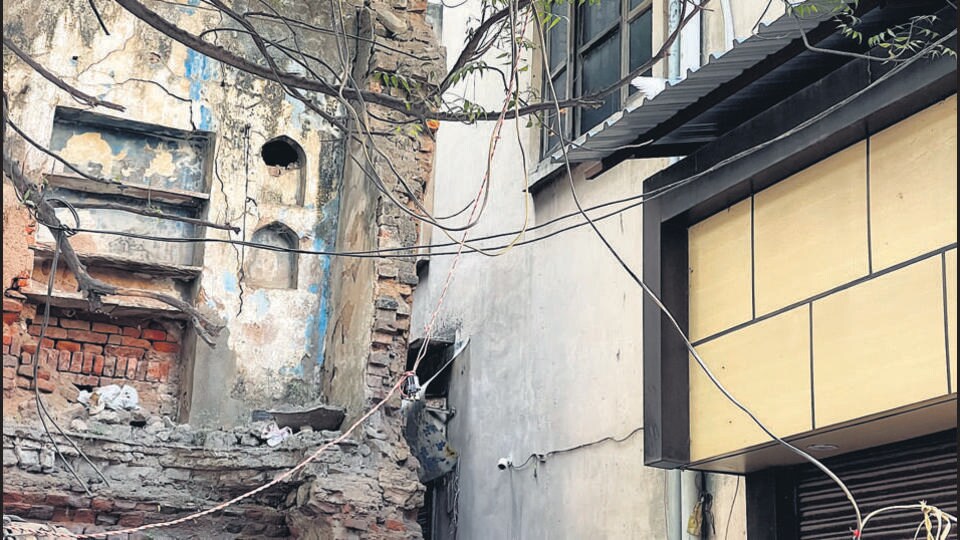
In an altogether different context, the wisdom of Alice Munro’s words can be made applicable to Gurugram, a city often dismissed as a land of mere shopping malls. For it is actually impossible to crack the city into an easy definition. Like neighbouring Delhi, it too comprises of contradicting layers. Any Gurgaonwale will tell you that their city’s history goes back to the days of Mahabharat—a consideration surreal to comprehend while downing a pumpkin spice latte in one of the many trendy Gurugram cafés. Somewhere between the city’s two extremities, between its ancient past and its futuristic present, lies material souvenirs that are neither very old, nor very new. Such ordinary-seeming structures enrich our understanding of the city’s complications. Take these two landmarks.
This one is in Sadar Bazar. That one is on Gurudwara Road. This one is a derelict mansion overlooking a market lane; people in the vicinity refer to it as “makaan.” That one is a well-preserved bungalow overlooking a busy road, people in the vicinity refer to it as “bangla.”
The makaan is more than a century old, a bazar hawker asserts. He offers no evidence. He himself, like many present-day Gurugram wale, is a young first-generation migrant. Some portions of the makaan however does appear to be of lakhori bricks, the building material of yesteryears. The bangla too is more than a hundred years old, asserts the man calling himself its caretaker. He explains that this stretch of the road used to be lined with similar bungalows.
The makaan is so damaged that today it is but an assortment of fragments. An impressive part of the building appears to have collapsed over the years. The exterior walls are mostly gone, the interiors completely exposed to the public view—a staircase within connects nothing to nothing. The bangla on the other hand is wholly intact, with a front verandah supported on hefty rounded columns.
The makaan is deserted, except for a couple of cats. Squirrels scamper along the defaced walls. While the bangla is… shall we call it semi-deserted? The gate is open, the door within is locked. The caretaker says that the Delhi-based owner is an occasional visitor.
The makaan and the bangla must have reasons for their current state. A curious citizen only needs to recognise their continued survival in a rapidly altering world. and to substantiate the Millennium City’s timeworn complexities.


Stay updated with all top Cities including, Bengaluru, Delhi, Mumbai and more across India. Stay informed on the latest happenings in World News along with Delhi Election 2025 and Delhi Election Result 2025 Live, New Delhi Election Result Live, Kalkaji Election Result Live at Hindustan Times.


