
 E-Paper



Delhiwale: Remembrance of a gaon past
Gurugram, once a village, transformed into a modern city. Its agricultural past lingers, evident in occasional mustard fields amidst urban landscapes.


Malls, multiplexes, housing towers, sleek bungalows, and those posh offices of multinational companies. That’s Gurugram.
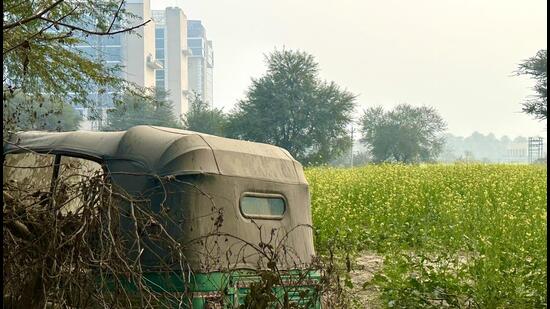
And yet, until 2016, Gurugram was called Gurgaon; the “gaon” in the name translating to village. Farm fields would spread out as far as eyes could see—says an elderly Gurugram citizen. Until decades ago, he recalls, here was a village. Over time, it quickly enlarged into a town, then into a cosmopolitan city, ultimately transforming into the so-called Millennium City.
Here’s the recreation of that vanished world, summoning how a typical year looked like to earlier generations of Gurugramwale; they mostly being farmers. The precious information, including certain terms and phrases, are sourced from the Gazetteer of the Gurgaon District 1910. Let’s start with a season of fresh sowing.
Asarh, meaning June-July: As soon as the rain falls, Gurgaonwale plough the land, and start the sowing of kharif crop.
Sawan, July-August: The sowing of juar is completed. The formerly sown kharif crops are then weeded. Beware, locusts likely to attack the crops. Ploughing for the rabi starts.
Bhadaun, August-September: Corn is cut. Crops must be guarded from the predatory birds.
Kuar, September-October: Bajra is cut. Cotton begins to bear. First sowings of gram and barley start.
Katak, October-November: Harvesting of bajra and autumn pulses conclude. Cotton picking continues; part of juar cut. Rabi crops sown.
Mangsir, November-December: Cotton picking continues. The rest of juar, pala and pula are cut. Rabi sowings completed; kharif crops threshed and stored.
Poh, December-January: A brief spell of rain is desired, after which fresh ploughing for kharif starts.
Magh, January-February: Less hectic season for farmers. Even so, melons are sown, tobacco planted, cotton harvested.
Phagun, February-March: Nasty season of damaging hailstorms! Nevertheless, sugarcane planted. Rabi crops must be watered.
Chait, March-April: Barley, mustard, and gram are cut. Cotton sowing starts.
Baisakh, April-May: Rabi harvesting concludes. Harvested crops trodden out and winnowed. Earth is said to be sleeping during this season, so largely left untouched.
Jeth, May-June: Rabi crops stored, early cotton and juar watered, bajra sown (only if the rain falls).
The year ends, the cycle re-starts.
While this phase of Gurugram is gone, its ghost persists—discerned sometimes in a sudden winter-time sighting of a mustard field (see photo), and sometimes, in most unlikely of spaces. Such as in a foot overbridge in ultra-slick DLF Cybercity. The fancy bridge is landscaped with bushes, hedges, flowers—and with a smattering of grain stalks, giving a glimpse of Gurugram’s agricultural past.


Stay updated with all top Cities including, Bengaluru, Delhi, Mumbai and more across India. Stay informed on the latest happenings in World News along with Delhi Election 2025 and Delhi Election Result 2025 Live, New Delhi Election Result Live, Kalkaji Election Result Live at Hindustan Times.


