
 E-Paper


Delhiwale: Dial M for Morena
Say Murano and you think of glass

 Prefer HTon Google


Say Murano and you think of glass. Say Morena and someone might ask how much you want.
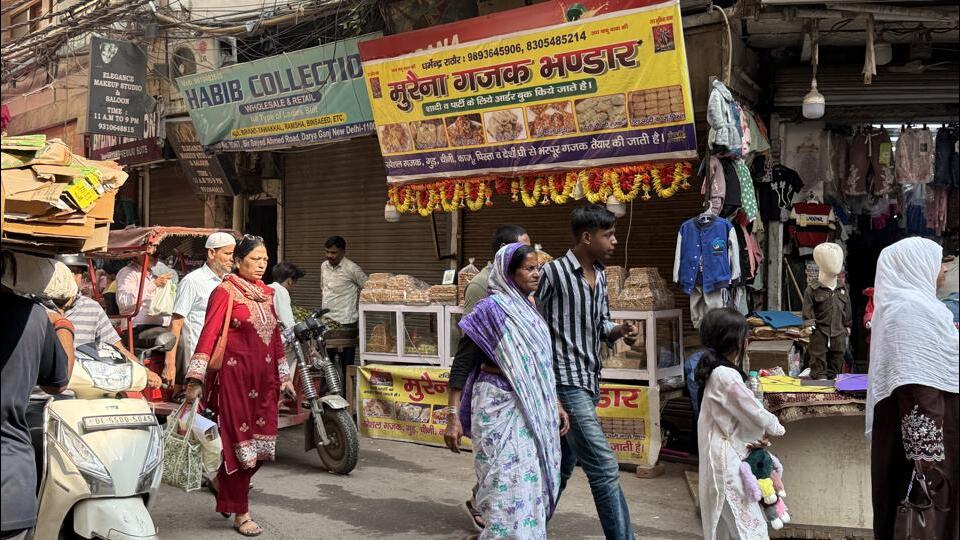
Murano is in Italy, and Morena… well, it certainly is not in Delhi. It is in Madhya Pradesh, some hours from Delhi, in the Chambal valley, once known for its dacoits. And yet, Morena turns up in our neighbourhood bazars, around Diwali that is. Look for the banners that say “Morena.” Or see this photo of Morena Gajak Bhandar, with its yellow-and-red banner, snapped this afternoon.
Gajak is a winter sweet, believed to warm the body. Morena janpad is so strongly identified with gajak that Morena Gajak even has an official sarkari tag. It is entry No. 681 in India’s Geographical Indications Registry, registered in the name of the Morena Gajak Nirmata Association. The little emblem on the certificate shows a peacock (or is it a duck?) with a piece of gajak where its body would be.
The taste is only part of the pleasure. There’s also the name. Few writers have described the magic of place-names as memorably as Marcel Proust does in his novel In Search of Lost Time. The name of Parma, a town in northern Italy, is for him “compact and glossy, violet-tinted, soft.” As for the name Morena, it can summon you the sound of ‘krak krak’ that a piece of gajak makes when you bite into it.
In zila Ghaziabad, the main post office is near the railway station. On the narrow, dusty lane leading to it, vendor Maldar is seen this afternoon with his cart heaped up with gajak. It is the day after Diwali and this reporter’s first gajak sighting of the season. Maldar says he started selling gajak at the end of October. His gajak, he says, is “local,” not made by Morena men.
In Delhi, a modest gajak cart usually has only one kind, made with gur and til. Some stalls sell chocolate gajak too. Some gajaks come embedded with kaju or badam or both.
For a look at how gajak is made, go to Gurugram’s Sadar Bazar or Jacobpura in December. At some shops, the karigars (almost all claim to be from Morena) are seen working beside the counter, sitting on their haunches. A karigar brings down his wooden balla on a hot, sticky sheet of gajak. Thak. Again. Thak. You can hear the thak-thak from the gali. The flattened sheet is folded over and over, cut into pieces, and left to harden.
By late January, gajak cooks start to leave Delhi-NCR. A year ago in Gurugram, one cook spoke of going home once the season would be over.
He would return to… guess!


Stay updated with all top Cities including, Bengaluru, Delhi, Mumbai and more across India. Stay informed on the latest happenings in World News along with Delhi Election 2025 and Delhi Election Result 2025 Live, New Delhi Election Result Live, Kalkaji Election Result Live at Hindustan Times.


