E-Paper



DPCC notifies complete ban on firecrackers in Delhi till January 1
The order comes more than a month ahead of Diwali, which will be celebrated on November 12 this year

 Prefer HTon Google


The Delhi Pollution Control Committee (DPCC) on Monday said it has notified a complete ban on firecrackers across the Capital till January 1, 2024. The ban includes the manufacturing, storage, bursting, and sale of all types of crackers, including green crackers, officials aware of the development said.
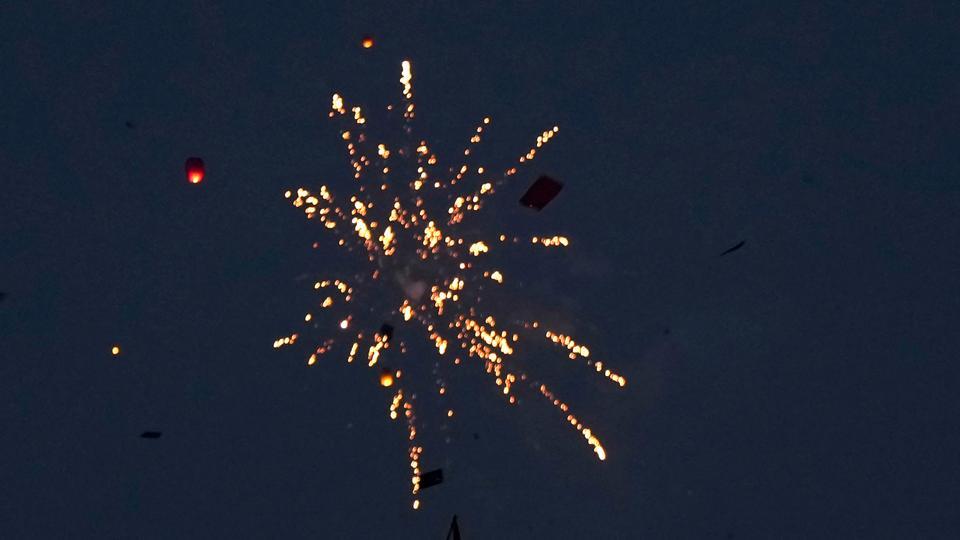
“There will be a ‘complete’ ban on all kinds of firecrackers on the manufacturing, storage, selling (including delivery through online marketing platforms) and bursting of all kinds of firecrackers up to January 1, 2024 in the territory of the NCT of Delhi...” the order, dated October 6 but shared by DPCC on Monday, said.
The order comes more than a month ahead of Diwali, which will be celebrated on November 12 this year.
Officials said the ban has been imposed under section 31 (A) of the Air (Prevention and Control of Pollution) Act, 1981, and rule 20(A) (6) of the Air (Prevention and Control of Pollution) (Union Territories) Rules, 1983.
DPCC said just like last year, those found selling, storing, or bursting firecrackers can be penalised under Indian Penal Code sections 188 (deliberate disobedience of an order) and 286 (negligent conduct with respect to explosive substances), while section 5/9B of the Explosives Act (manufacturing, possessing, or importing any explosive in contravention of a notification) can also be applied against those violating the ban.
To ensure that the ban is implemented, 285 teams, comprising of the revenue department and the Delhi Police have also been formed, officials said. “If required, these numbers will be increased,” a senior DPCC official said, declining to be named.
Every year, Delhi faces a public health crisis in the run-up to and during most of the winter season. The crisis begins with the emanation of farm fires in Punjab, Haryana, and Uttar Pradesh, where farmers set fire to hundreds of square kilometres of paddy fields after harvesting them to clear them of residue, causing a smog jacket to form over northern India, particularly Delhi.
What exacerbates this crisis is the fact that this period also coincides with Diwali, and the emissions from firecrackers, combined with the emanation from the farm fires, often leads to a drastic deterioration of the Capital’s air, with the Air Quality Index (AQI) climbing past 400 and even 450, to reach pollution levels of “severe” and “severe-plus”.
The Delhi government first banned firecrackers in 2017, when the Supreme Court asked whether a ban on bursting crackers in the Capital would impact the air quality. Subsequently, the Supreme Court in 2018 banned all conventional firecrackers in Delhi-NCR, and has allowed only green crackers without barium salts to be burst in the region. However, due to difficulty in differentiating between green and conventional crackers, the government has begun imposing a blanket ban on all firecrackers every winter season since 2020.
This year, the ban on firecrackers was first announced by environment minister Gopal Rai on September 11, who said the move was part of the government’s 15-point Winter Action Plan against air pollution.
On the same day, a nationwide network by mothers, called Warrior Moms, carried out a sensitisation workshop at the Defence Colony police station on the effective implementation of the firecracker ban. The group plans to carry out more such workshops at other police stations in the run-up to Diwali.
“Earlier, there used to be confusion over green firecrackers and how to differentiate them with conventional crackers. However, this year, just like last year, all types of crackers are banned,” said environmental activist Bhavreen Kandhari, who is also part of Warrior Moms. She said the suggestions given in the workshop include launching of awareness campaigns, effective pre-ban patrolling, using CCTV cameras and drones to track possible violators and setting up of surprise checkpoints.