E-Paper



Go by emissions, not age, to scrap end-of-life vehicles in Delhi, say experts
They said authorities should strengthen pollution under control tests to detect vehicles that actually harm the environment

 Prefer HTon Google


The National Capital Region (NCR) requires a more scientific basis to phase out polluting vehicles instead of a blanket rule that forces residents to discard their “end-of-life” vehicles, experts have recommended, adding that the authorities should invest in on-road emission tests and strengthen pollution-under-control (PUC) tests to detect vehicles that actually harm the environment.
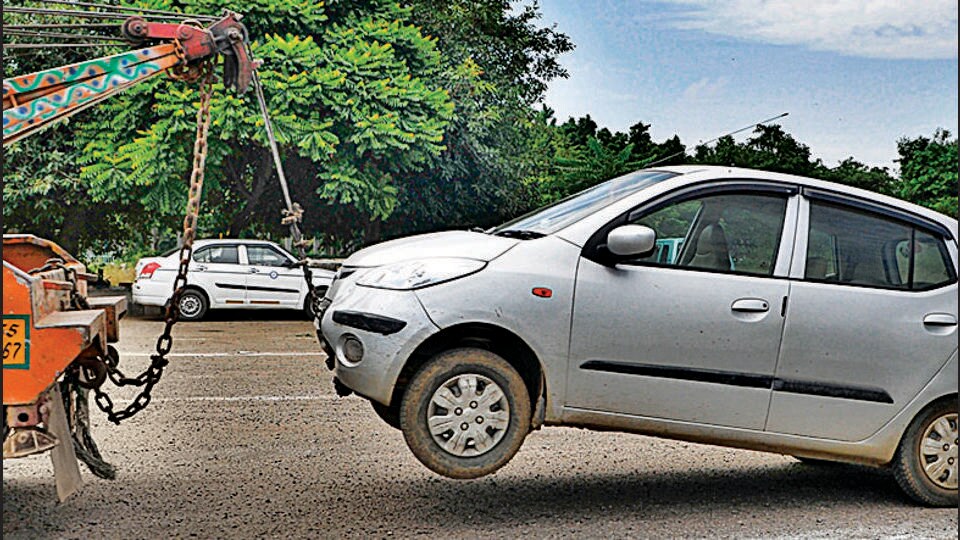
In Delhi, no vehicle which is 15 years old can legally operate on the roads, according to orders issued by the National Green Tribunal in 2015, and the Supreme Court in 2018. For diesel vehicles, this time period is cut down to 10 years. The government calls them “end-of-life” vehicles.
The aim behind these rules is to cut down on the number of vehicles on the city’s roads with dated emission standards, and over the past few months, the Delhi transport department has accelerated its drive to impound 10-year-old diesel and 15-year-old petrol vehicles, sending them to be scrapped in yards located in Uttar Pradesh — Delhi at present has no scrapyard for vehicles.
BS-VI or Bharat Stage VI are the latest emission norms in the country, and any new vehicle being manufactured has to comply to its standards. The norms are much more stringent than the previous BS-IV norms — for example, BS-VI allows for diesel vehicles to emit nitrous oxides (NOx) at a rate of 80 mg/km, compared to 250 mg/km for BS-IV.
However, the existing PUC test only monitors carbon monoxide (CO) and hydrocarbons (HC), not other emissions such as nitrogen oxides (NOx) and particulate matter.
In 2017, the Supreme Court-mandated Environment Pollution (Prevention and Control) Authority — now dissolved — had informed the court in its Report No. 73 that the current PUC certificate mechanism negated the impact of switching to tighter emission standards.
A direct correlation between age and mileage of the vehicle and its ability to meet emission norms has also been analysed by Delhi Technology University (DTU) through a study published last year.
“The current process to phase out vehicles is not scientific as vehicles may last longer, or less than the 10- or 15-year-old timeline. We need a new mechanism where factors such as mileage and real-world emissions are factored in. Based on that, a vehicle can be allowed to run longer — or less — than the Supreme Court and NGT benchmark,” Rajeev Kumar Mishra, assistant professor at DTU’s department of environmental engineering and lead author of the study, said.
Since 2018, the Delhi transport department has legally de-registered around 5.5 million overage vehicles, but experts have urged the Delhi government to consider factors other than age to remove polluting vehicles from the Capital’s roads.
“The actual life of a vehicle depends on multiple parameters — how much it is used daily, and how well it is being maintained. We see commercial vehicles that barely last seven to eight years, whereas a well-maintained private vehicle, even with a lower mileage, can last well beyond 15 years,” said Amit Bhatt, managing director (India) of the International Council on Clean Transportation (ICCT).
Bhatt said instead of arbitrarily assigning a time frame to make a vehicle obsolete, NCR needs a new system where the actual real-world performance of the vehicle determines whether it is at the end of its life or not.
“In its present form, the PUC certificate is not enough, as the test is taken when the vehicle is not running but is idle. Rather, we need to monitor real-world emissions and for that, remote sensing has begun across several countries,” said Bhatt.
Sagnik Dey, lead researcher at the Indian Institute of Technology (IIT)-Delhi and coordinator at the Centre for Excellence for Research for Clean Air (Cerca), said there is sufficient data to show that as a vehicle ages, its emissions also increase, but there is no fixed time frame as to when these emissions may go beyond permissible standards.
“We cannot say for sure when a diesel vehicle or a petrol vehicle starts polluting considerably. In the case of cabs, we have seen some of the cabs cross 200,000km in under 10 years, whereas a private vehicle may not even cross 80,000km in that period. A cab is likely to reach its end-of-life in around seven years, whereas a private vehicle, if maintained well, may not even do so in 15 years,” said Dey.
He asked for a policy-level intervention moving forward, where vehicles are identified based on their condition, arguing for PUC norms to be strengthened further too.
“We need to monitor NOx too and add all pollutants that form a part of the AQI (air quality index),” Dey said.
This is a point that many car-owners echo.
Anuj Agrawal, 41, who runs a travel business in Gurugram, owns two cars that now need to be scrapped. He, however, said his cars are still in a great working condition.
“Since I was a child, I wanted to be able to earn enough to buy a luxury car. I worked hard for 12 years and bought an Audi A4 2.0. I also always get it serviced in front of my eyes. This is my dream car and in great working condition. I refuse to believe that it is more polluting than any other vehicle,” he said.
Anumita Roychowdhury, executive director, research and advocacy at the Centre for Science and Environment (CSE), said scrapping older vehicles is essential, as these were vehicles running on emission norms of BS-IV or less.
However, she said, it is important to gradually incorporate remote sensing moving forward. “We need to keep in mind that these older vehicles are designed to emit several times more than what the vehicles we sell today are emitting, so inherently, there is more pollution through them. Certifying vehicles that are compliant based solely on the PUC is also not adequate, as it is an idling test and does not capture real-world emissions. For that, we need remote sensing, which measures a much wider bunch of pollutants and how much of these pollutants are being emitted in real-world conditions,” she said.