
 E-Paper



Fines, rules do little to quell the noise at night in Delhi
The festival season in north India, between September and early November, traditionally coincides with the annual air pollution scourge, with levels spiralling to toxic and draping all of the National Capital Region in a blanket of smog. But that obscures another major concern -- noise pollution levels that spike well beyond safe limits, often late into the night


Celebrations by the pious often come at a heavy cost to the vulnerable. Religious festivals, if not observed responsibly in a legally permissible manner, pose severe health risks by way of air and noise pollution.
The festival season in north India, between September and early November, traditionally coincides with the annual air pollution scourge, with levels spiralling to toxic and draping all of the National Capital Region in a blanket of smog. But that obscures another major concern -- noise pollution levels that spike well beyond safe limits, often late into the night.
Despite a wide band of fines in place to penalise violations of noise pollution standards and loudspeaker norms, transgressions pick up sharply during Navratri and Durga Puja, peaking during Diwali, police officers say.
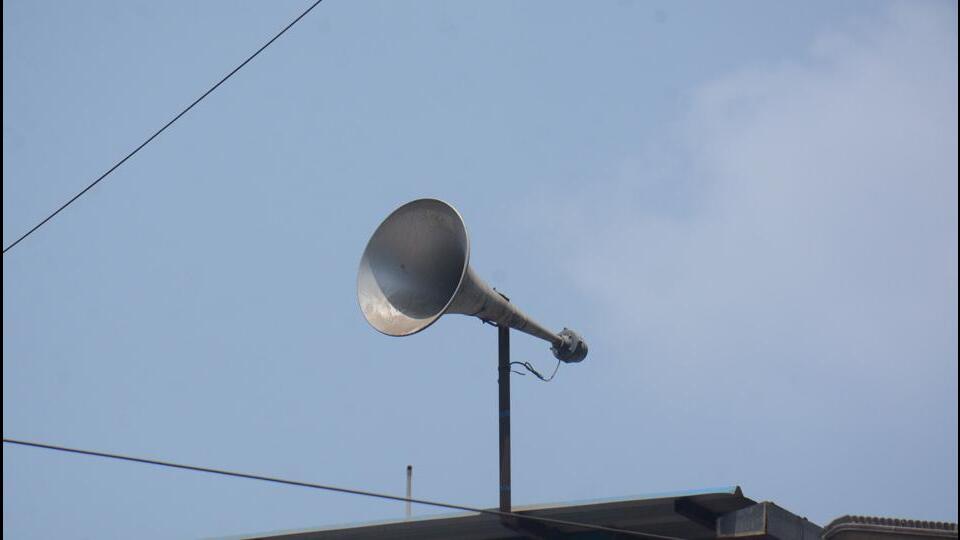
The biggest irritant for residents are loudspeaker systems booming till into the night, regardless of surroundings, with organisers often setting up events in the middle of residential areas. Little action is taken on the ground, with a police officer admitting that they avoid imposing penalties on account of the festive season and people’s religious feelings.
Separate norms govern general sound levels and sounds from loudspeakers. However, as a blanket norm, Delhi Police disallows the use of any loudspeakers beyond 10pm, no matter where they are used or how loud the music may be.
The Central Pollution Control Board (CPCB) permits a maximum noise level in residential areas of 55dB(A) between 6am and 10pm. This threshold falls to 45dB(A) from 10pm till 6am.
Db(A), or a weighted decibel, is a measure of how loud something sounds to the human ear. Regular conversation between a group of adults usually ranges at levels between 60db(A) and 70db(A). An air-conditioner generates around 65db(A) of sound, while a passenger car runs at around 70db(A).
Sound norms are even more stringent in zones around hospitals (known as silent zones), with 50dB(A) permitted during the day and 40dB(A) beyond 10pm.
For loudspeakers, the rules mandate that the noise level at the boundary of the public place where a loudspeaker or public address system is being used shall not exceed by more than 10dB(A) the noise standards for the area or 75dB(A), whichever is lower.
But these rules have little footing on the ground, with lax imposition, reluctant authorities and a general disregard for guidelines rendering them largely useless.
To be sure, the norms are true not just of loudspeakers set up in public spaces (as they often are, in grounds or parks), but also of sounds emitted within households. So, residents are required to stick to the noise pollution guidelines even during a house party, for instance, and neighbours are well within their rights to file a complaint in the event of transgressions. That the complaint may fall on deaf ears is another matter.
Delhi Police officers said event organisers are required to sign permission forms, which underline the noise pollution norms, and warn that they will be prosecuted for violations. This is true only on paper, however, not in practice.
It’s common to find a large event in nearly residential area in Delhi during the festive season, with a tower of speakers spitting out music at deafening levels deep into the night, actions that should ideally invite hefty penalties.
Jatin Matta, 25, a resident of west Delhi’s Rajouri Garden recalled making calls to police control room six times in a night in 2019 to complain about the noise from a Ramlila behind his house. “It was past midnight and I even requested them to stop, but they didn’t listen,” said Matta.
CPCB also mandates specific areas where loudspeakers can be installed, but it still not unusual to find loudspeakers installed on poles or on benches, right beside residential apartments.
Often, for instance, trucks loaded with speakers can be seen running through residential areas.
The Delhi Pollution Control Committee (DPCC) last year issued fresh guidelines that defined penalties for separate categories of violations. According to the rules, a fine of ₹1,000 will be issued for loud firecrackers being burst in residential and commercial areas, a penalty that jumps to ₹3,000 if the area is a silent zone.
People responsible for using loudspeakers or PA systems at volumes beyond the permitted limit will be fined ₹10,000.
Fines between ₹10,000 and ₹30,000 will be imposed for the use of loud firecrackers in rallies, weddings and other events.
Noise level breaches by construction equipment will be fined ₹50,000, while loud diesel generator sets (above 1,000kva) will be penalised ₹1 lakh.
Importantly, these fines are all compounding, which means repeat offenders will be penalised significantly heavier amounts, going up to ₹5 lakh.
Stay updated with all top Cities including, Bengaluru, Delhi, Mumbai and more across India. Stay informed on the latest happenings in World News along with Delhi Election 2025 and Delhi Election Result 2025 Live, New Delhi Election Result Live, Kalkaji Election Result Live at Hindustan Times.


