
 E-Paper



Delhi’s ageing flyovers in need of repairs
A key driver behind Delhi’s strong connectivity, the ageing infrastructure faces two challenges, of upkeep and evolving to cater to the city’s future needs

 Prefer HTon Google


Booming traffic footfall in the Capital over the past half-century has led to several traffic innovations, as increased vehicle ownership from the 1980s has kept Delhi’s administrators on their toes. But none of them has had the impact as one key emergence—the flyover.
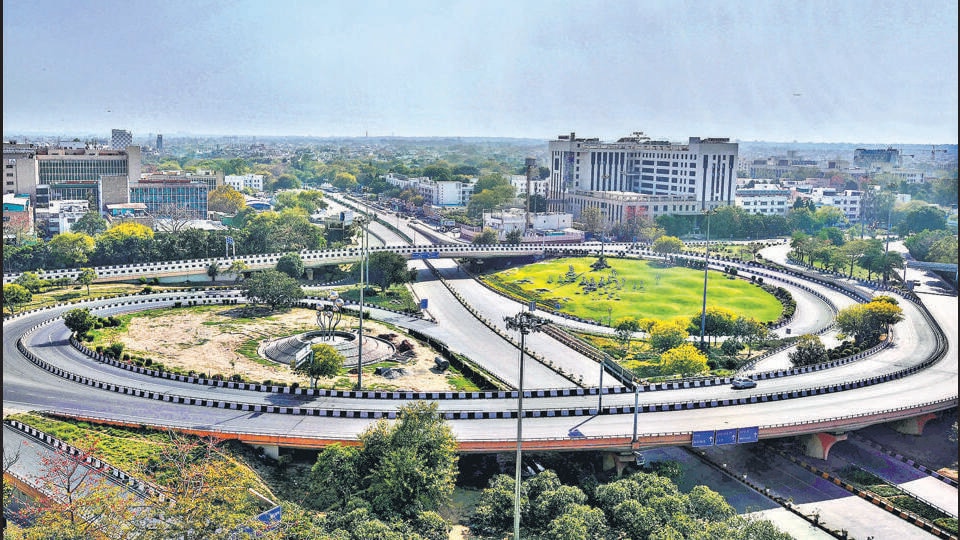
Under the Sheila Dikshit administration in the 2000s, the run-up to the CWG sparked a massive investment in transport infrastructure, including roads, flyovers, and Metro expansion.
According to PWD data, more than 47 flyovers and bridges were constructed in this period. These include flyovers at Moti Nagar (2005), Punjabi Bagh (2001) and Punjabi Bagh Club (2005), Raja Garden (2001), Africa Avenue (2001), Savitri (2001), Nehru Place (2001), Andrews Ganj (2002), AIIMS (2003), Britannia Chowk (2004), Madhuban Chowk (2005), Mukarba Chowk (2008) and Wazirpur (2005).
But, while flyovers have mushroomed across the Capital and more are being envisioned, time waits for no one.
The aged flyover network of the Capital needs upkeep, making its intermittent closures unavoidable. Of little relief to already harrowing commutes on many stretches, officials say comprehensive repairs of these structures are long overdue. Their closures, however, are set to wreak havoc on an already overburdened road network.
While the previous government had already cleared the repair of flyovers at Shahdara, Loni Road, Nangloi, Chirag Delhi, Okhla, Janak Setu and Pul Mithai, a set of 17 other flyovers, a majority of which were constructed in the early 2000s, is set for repairs in the near future.
Last week, the much-delayed repair of the Sarita Vihar flyover, which was built in 2001, also started.
A senior official of the Public Works Department (PWD) said: “Some of these flyovers are now decades old and have not seen any major repair work since construction. It is a cyclical process, and we have undertaken repairs of many flyovers over the last few years.”

PWD currently oversees more than 102 flyovers and bridges.
According to Chetan Sharma, a resident of Greater Kailash-2, Delhi truly became the city of flyovers in the 2000s, when the entire city “seemed to be dug up”. “Commuting during this period was a nightmare, but these flyovers led to massive relief along the ring roads. The idea was to improve access to stadiums, Asiad village and other facilities, but the city collectively benefited in the long run. Before this phase, flyovers were poorly maintained, and even the School Lane flyover (now Ranjit Singh flyover) was in a shabby condition. It even had speed breakers on it,” Sharma recalled.
History
While flyovers are a common sight and a road network staple currently, these were originally envisioned as a means to reach crucial facilities in the 1970s. Their benefits, however, extended to resolving other key issues. Increasing traffic causing bottlenecked intersections, as early as the 1980s, led to the need for grade separators and the rest, as they say, is history.
Looming on the horizon is the repair of the old Raja Garden and Shadipur flyovers, which is set to throw traffic flow in west Delhi into a loop. Coming decades after their construction, it is likely to start the dominoes of a major overhaul of the Capital’s ageing road infrastructure.
The Raja Garden flyover was developed in 2001, in a decade when flyovers were the flavour of road infrastructure, in the run-up to the 2010 Commonwealth Games (CWG). The Shadipur flyover, however, is much older, often considered one of the oldest in the city, given that it opened in 1971.
The concept of flyovers in Delhi started taking root in the 1970s, at a time when the city’s population was just beginning its exponential rise. By the 1980s, with vehicle ownership on the rise and Delhi emerging as a commercial hub, the need for grade separators at major intersections became urgent. Flyovers began appearing at key traffic hot spots, with the Oberoi Hotel Flyover, IP Estate Flyover and Moolchand Flyover being prime examples. The 1990s saw the erection of Hanuman Setu, ISBT Kashmere Gate, Chirag Delhi and IIT flyovers.
Ashok Bhasin, 70, a resident of north Delhi’s Malkaganj, said the first flyover in Delhi was the Shadipur depot flyover. “It created a positive perception for such infrastructure projects in decades to come.”
In 2021, the Municipal Corporation of Delhi marked the golden jubilee of the Shadipur flyover.
However, residents opine that not every flyover has eased life. “Some flyovers were incorrectly developed. It was a lack of foresight in planning. They had to double the Punjabi Bagh flyover, while south Delhi is still suffering due to the one-lane Savitri flyover. They did not take into account future growth,” Sharma said.
Repair. Bottleneck. Repeat
The senior PWD official said their damage and repairs are a cyclical process.
In April 2023, the repair work of the Chirag Delhi flyover sparked massive traffic snarls, causing public outrage. Other flyovers that underwent repairs in the past two years include Shahdara, Loni Road, Nangloi, Chirag Delhi, Okhla, Janak Setu in New Delhi, and Pul Mithai in Old Delhi. Officials said old flyovers which need repair and replacement of expansion joints include the Panchsheel, Britannia Chowk, Safdarjung-AIIMS, Nelson Mandela Marg, Andrewsganj, Nehru Place, Savitri Cinema and Africa Avenue flyovers.
An expansion joint is a small gap that provides space for the concrete to expand and contract. It is an iron joint placed between concrete slabs to prevent damage to the concrete and absorb vibrations. The repair work focuses primarily on replacing expansion joints and elastomeric bearings — components that absorb stress, temperature-related expansion, and the constant weight of traffic.
At many flyovers, spalled concrete and signs of honeycombing will also be addressed to prevent structural degradation. Honeycombing of the concrete refers to the formation of voids or air pockets in concrete, resembling a honeycomb-like structure, due to poor filling of the formwork. Spalling of the concrete refers to the flaking of concrete from a larger mass, often caused by internal pressure from rusting and freeze-thaw cycles.
The new government has allocated over ₹3,800 crore in the budget 2025-2026 to improve and develop roads and bridges. Following a March 3 order, PWD also inspected flyovers.
Besides repair, the other issues include the need to replace noise barriers and view cutters at 13 sites, clear encroachments, and revamp poorly maintained central verges.
Dr S Velmurugan, chief scientist and head of traffic engineering and safety division, Central Road Research Institute (CRRI), said: “Flyover repair needs to be undertaken periodically, but while undertaking the exercise, PWD and traffic police should ensure that no two flyovers where closures are being undertaken fall under the same continuous corridors. The flyovers should likely be located on unrelated distant patches.”
Detailed advisory should also be issued, and people must be warned about the possible disruptions on the route through VMS signs, he said.
For older residents, these repairs may stir up nostalgia for the years when these flyovers were being built, leading to longer commutes, dug-up roads and traffic jams. With the infrastructure cycle coming full circle, Delhi is at the cusp of a major flyover rehabilitation phase.


Stay updated with all top Cities including, Bengaluru, Delhi, Mumbai and more across India. Stay informed on the latest happenings in World News along with Delhi Election 2025 and Delhi Election Result 2025 Live, New Delhi Election Result Live, Kalkaji Election Result Live at Hindustan Times.


