
 E-Paper



In Delhi, 6am to noon worst time of day when PM2.5 levels peak: Data
Pollutants accumulate overnight and in the early hours due to calm winds, before being dispersed briefly between noon and 6pm, when winds pick up slightly.


Taking a morning walk in Delhi these days may do more harm than good since air pollution is usually at its worst between 6am and noon, the Central Pollution Control Board (CPCB) data shows.
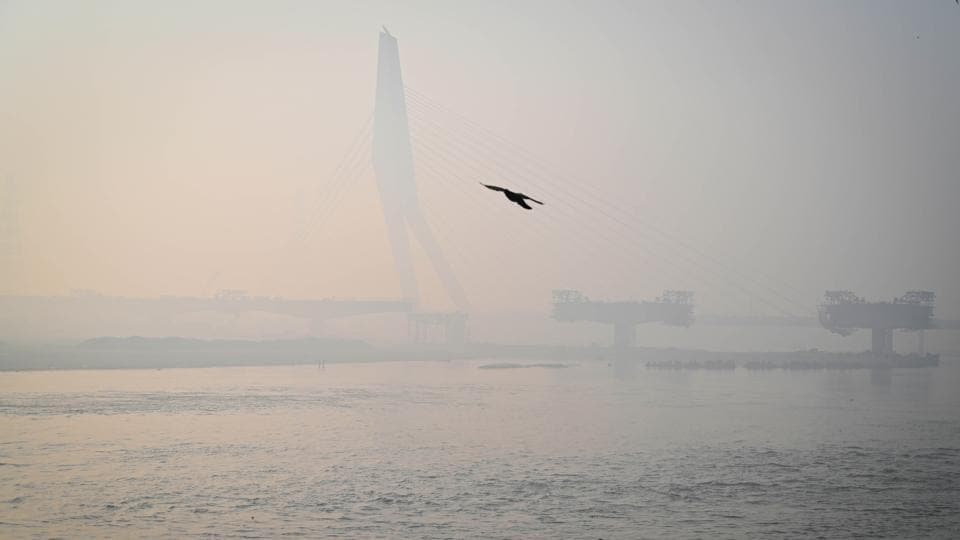
The data by CPCB, which started collating it on November 2, shows that the highest PM2.5 concentration during the current toxic air spell was recorded at 488 micrograms per cubic metre (µg/m3) at 12pm on Sunday — eight times the 24-hour national acceptable limit of 60µg/m3. The data also showed that the least concentration on average was around 6pm --- although this was still 156 ug/m3, or 2.5 times the limit under which the air is considered good.
Hourly PM2.5 concentration showed that the trend has been continuing since November 3 — pollutants accumulate overnight and in the early hours due to calm winds, before being dispersed briefly between noon and 6pm, when winds pick up slightly.
Delhi’s chief athletics coach, Dinesh Rawat, said the deteriorating air quality has affected athletes. “Athletes are training for important upcoming tournaments but many of them having breathing issues and a burning sensation in their eyes. We have stopped training in the morning and are doing only one session towards the evening,” he said.
But it also holds significant impact for the general public. Health experts advised to avoid going out even for early morning walks when there is smog. “At that time, pollutants are at the surface level. As the sun comes out and pollution reduces, exercising becomes safer,” said Dr G C Khilnani, chairman, PSRI Institute of Pulmonary, Critical Care and Sleep Medicine.
The city has shut classes for most children, who constitute one of the most vulnerable ages for pollution-related illnesses.
Similar to November 2, the following day too recorded wild swings in PM2.5 concentration --- from 452 ug/m3 at 10am to 156 ug/m3 at at 5 and 6pm.
The window for when most people take a morning walk too had high pollution. The hourly average PM 2.5 concentration remained over 400 micrograms per cubic metre on November 3 from 6 am; over 300 micrograms per cubic metre from 6am on November 4 and over 380 micrograms per cubic metre from 6am onwards on November 5.
“Winds are almost calm from late evening onwards from the evening of November 1, which is what led to this pollution spell. We briefly see some respite after noon, when an increase in temperature, allows winds to blow at the surface level. By 6 pm though, temperature has dropped and that leads to calm winds conditions again,” said Kuldeep Srivastava, scientist at IMD.
Sunil Dahiya, analyst at the Centre for Research on Energy and Clean Air (CREA), said the data highlights the impact of winds on Delhi’s air quality. “In the morning, we are seeing fog and after 7am, is also the time vehicles set out on the roads. If there are no winds, these emissions will also accumulate and lead to a fairly high concentration in the air before noon,” he said.

Stay updated with all top Cities including, Bengaluru, Delhi, Mumbai and more across India. Stay informed on the latest happenings in World News along with Delhi Election 2025 and Delhi Election Result 2025 Live, New Delhi Election Result Live, Kalkaji Election Result Live at Hindustan Times.


