
 E-Paper



MCD polls: Voters in riots-hit north-east Delhi rue civic apathy
The civic body elections are the first polls held in Delhi since the riots in 2020, and residents from the violence hotspots of Chand Bagh, Gokalpuri, Shiv Vihar, Jafrabad and nearby places said the scars from the disturbance more than two years ago are still fresh.


Neighbourhoods in north-east Delhi and east Delhi are largely unauthorised colonies, with small pockets of affluent, regularised colonies, and in the past, voters by and large used to vote for issues like sanitation and development. However, riots in February 2020 led to the death of 53 people in the area, and residents said that the violence from those events has affected how they voted in Sunday’s municipal corporation elections.
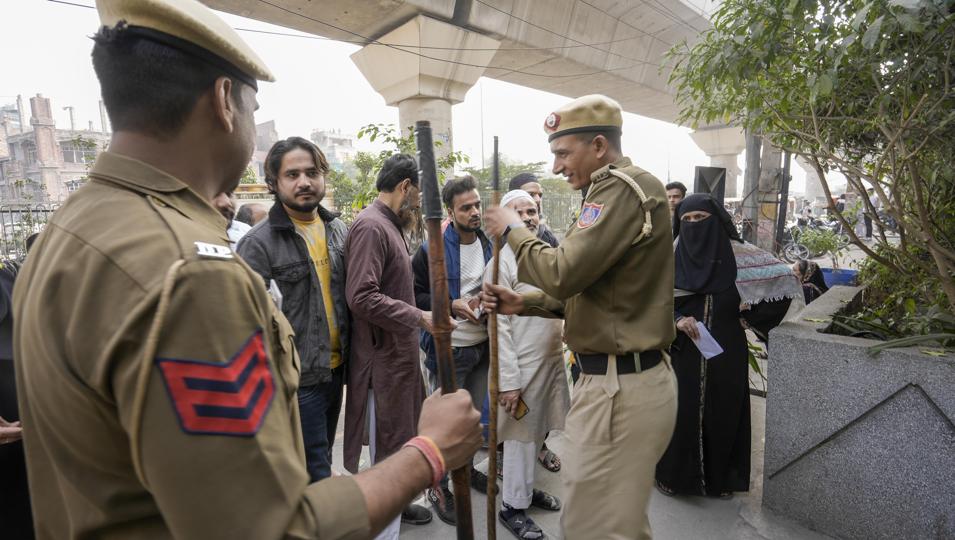
The civic body elections are the first polls held in Delhi since the riots in 2020, and residents from the violence hotspots of Chand Bagh, Gokalpuri, Shiv Vihar, Jafrabad and nearby places said the scars from the disturbance more than two years ago are still fresh.
Mohammad Naziruddin, 55, stepped out of a polling booth at a secondary school at the Karawal Nagar main road near Chand Bagh with a melancholic look on his face. He says his house nearby was set on fire by a mob during the riots. “The place where you are standing right now was a battlefield in February 2020 as rioters went on a rampage, burning shops and houses, and killing people,” he said.
Dhanwanti Devi, who runs a tea stall across the road, claimed that rioters threw petrol bombs at her shop from the roof of a nearby building. “Our source of livelihood went up in smoke before our eyes. We found it very hard to make ends meet for nearly two months, and no one provided us any relief,” she said.
In Shiv Vihar, a resident, on condition of anonymity, said, “People will remember the riots for decades. It is not something we can easily forget.”
These areas witnessed brisk polling, with several polling booths reporting long queues of voters. A police officer deployed at a polling booth in Dayalpur said: “The crowd was low when the polling began at 8am, but as the day progressed people came out in larger number.”
Many of the violence hotspots are typically neglected by the authorities, with garbage dumped on the streets and roads in a woeful condition, and communal fault lines in these areas run deep. However, residents said since their futures are linked to the place, and because they cannot change their neighbours, they have voted for peace and brotherhood. “We have a family to run and a life to live. The incident is a thing of the past, and we are attempting to move on,” said Istkar Salmani, whose hair-cutting saloon was torched during the riots.
Near Shiv Vihar, outside a polling booth at a school which was torched during the riots, a roadside stall owner, who did not reveal his name, said: “The riots were a result of outsiders who wanted to disturb the peace. I have been living here for over 40 years, but never saw any communal violence. It was all due to politics.”
In nearby colonies of east Delhi, which were close to the riots but remained immune from the violence, many residents said they were not satisfied with sanitation services, while others said the services had improved in the past few years. “Traffic congestion, waterlogging during rains and poor maintenance of parks are some of the things we want to be addressed,” said Karuna Jha, a resident of Vivek Vihar.
In Shakarpur, Pradeep Gupta said people of the area turned out in large numbers to vote. “The trifurcation of the MCD in 2012 led to east Delhi getting neglected, but now that the MCD has been unified, we hope this part of the Capital will get better attention,” he said.


Stay updated with all top Cities including, Bengaluru, Delhi, Mumbai and more across India. Stay informed on the latest happenings in World News along with Delhi Election 2025 and Delhi Election Result 2025 Live, New Delhi Election Result Live, Kalkaji Election Result Live at Hindustan Times.


