
 E-Paper



MCD toll plazas add to congestion, emissions
Toll collection from commercial vehicles in its current form began in 2000, and operations were outsourced to private contractors in 2003. The issue became more complex in 2015 when the Supreme Court, in response to Delhi’s pollution emergency, mandated a so-called environment compensation charge (ECC) for trucks entering the city, exempting only those carrying essential goods.

 Prefer HTon Google


At the Kalindi Kunj border, where a bridge spans the Yamuna connecting Delhi and Noida, vehicles crawl forward in a queue that stretches nearly half a kilometre. This scene of near-constant gridlock is not an anomaly but a daily reality at one of the Capital’s busiest entry points. Despite crores spent on technological upgrades and years of interventions, the Municipal Corporation of Delhi’s (MCD) toll collection system remains a primary cause of severe traffic congestion, contributing to both commuter misery and elevated pollution levels.
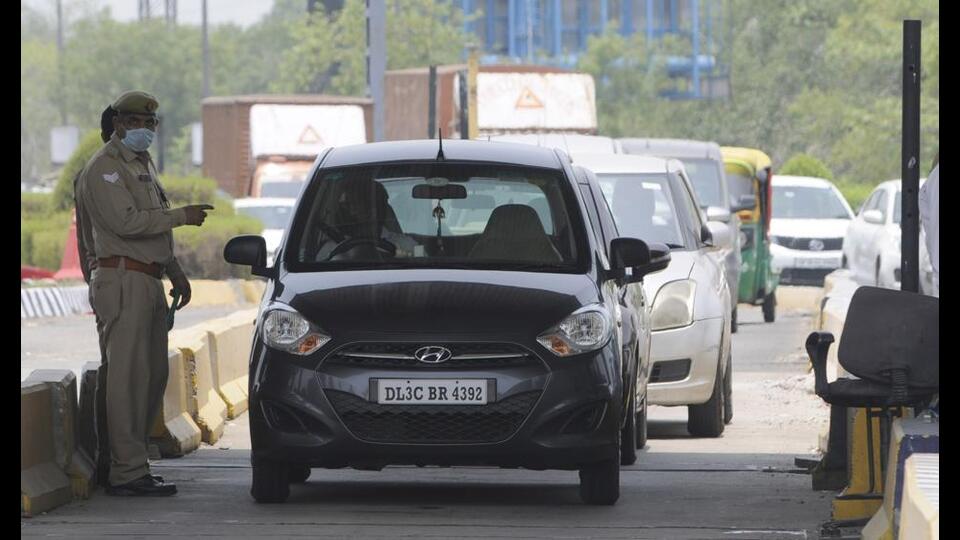
The snarls persist even though the plaza is equipped with a Radio Frequency Identification (RFID) system, introduced to enable seamless digital toll collection.
In practice, the system has failed to deliver fluid movement. Manual verifications, vehicles with insufficient RFID wallet balances, lane violations, and efforts to apprehend toll evaders all bring traffic to a halt. This pattern is repeated at other major borders like Ghazipur, Tikri, and Rajokri, turning these gateways into perennial bottlenecks.
The human and environmental cost of this congestion is significant. Commuters waste countless hours idling in fumes, and the resulting vehicular emissions exacerbate Delhi’s already severe air quality crisis. Recognising this, the Supreme Court had last Wednesday directed MCD to consider temporarily suspending toll collection at nine major plazas during periods of high pollution, an explicit acknowledgment of the system’s role in worsening the city’s air.
The roots of the current impasse stretch back over two decades. Toll collection from commercial vehicles in its current form began in 2000, and operations were outsourced to private contractors in 2003. The issue became more complex in 2015 when the Supreme Court, in response to Delhi’s pollution emergency, mandated a so-called environment compensation charge (ECC) for trucks entering the city, exempting only those carrying essential goods.
To streamline the dual collection of toll and ECC, the Supreme Court-mandated Environment Pollution (Prevention and Control) Authority pushed for an RFID-based system. The first phase was implemented at 13 plazas in October 2018, with RFID entry made mandatory from August 2019. However, the system was never fully expanded. Many border points still rely on handheld scanners, and the process remains prone to delays.
A key sticking point has been the manual inspection of vehicles claiming to carry exempted essential goods. Although the Supreme Court removed this decade-old exemption in October this year, the legacy of stop-and-check procedures continues to slow traffic flow.
For MCD, toll revenue is a critical income stream, making the corporation reluctant to dismantle the system without a financial replacement. When Union road transport minister Nitin Gadkari urged the Delhi government in June to remove the congestion-causing booths, MCD’s response was framed in fiscal terms.
The corporation has twice written to the Delhi government proposing alternatives: either an annual direct grant of approximately ₹900 crore (with a yearly inflationary increase) to offset lost revenue, or a 1% increase in the transfer duty levied on property sales in Delhi. Without such compensation, MCD had argued, removing toll plazas would cripple its finances. This revenue imperative creates a direct conflict with the urgent need for decongestion and pollution control.
Jagdish Mamgain, former chairman of the MCD’s Standing Committee, said that the traffic problem can only be solved by eliminating toll collection altogether. “As long as toll collection continues, vehicles will be stopped to generate revenue and profits, leading to continued traffic jams,” he said.
For daily commuters, the bureaucratic and financial stalemate translates into tangible daily hardship. Atul Goyal, president of URJA, an umbrella body of Resident Welfare Associations, states that congestion at Delhi’s borders is now a grim expectation.
“The RFID system has not been as effective as promised. Any manual intervention, lane violation, or wallet issue brings everything to a standstill,” he notes, calling for exploring entirely new collection mechanisms.
Nikhil Sharma, a 36-year-old sales executive from Okhla, has altered his commute to avoid the worst of the snarls. “The Kalindi Kunj bridge is almost always packed… I have stopped using that bridge as an entry point,” he said, opting for longer but slightly more reliable routes. His experience underscores a widespread adaptation to a problem that authorities have failed to solve.
The Sirhaul border has become one of the worst affected bottleneck for Delhi Gurugram commuters with lakhs of vehicles getting stuck at MCD toll plaza everyday to enter Delhi from Gurugram. As cabs and commercial vehicles stop to pay the toll, the queue buildup increases even for the ones being manually scanned and those who need to recharge. “We need to keep 30-40 minute buffer as the traffic jams during peak hours can start from a kilometre before the toll plaza. It is repeated day after day becomes mentally taxing besides wastage of so much time,” said Yash Bedi who commutes to office in Sarojini Nagar from Gurugram every day.


Stay updated with all top Cities including, Bengaluru, Delhi, Mumbai and more across India. Stay informed on the latest happenings in World News along with Delhi Election 2025 and Delhi Election Result 2025 Live, New Delhi Election Result Live, Kalkaji Election Result Live at Hindustan Times.


