
 E-Paper



Methane sensors to be deployed at Gurugram landfill
The sensors will detect rising temperatures and methane levels, allowing for the immediate sprinkling of water at the detected hotspots, thus preventing fires

 Prefer HTon Google


The Municipal Corporation of Gurugram (MCG) has installed heat sensors and methane detectors on surveillance drones to mitigate the rising number of fires at the Bandhwari landfill in Gurugram, officials aware of the matter said on Friday.
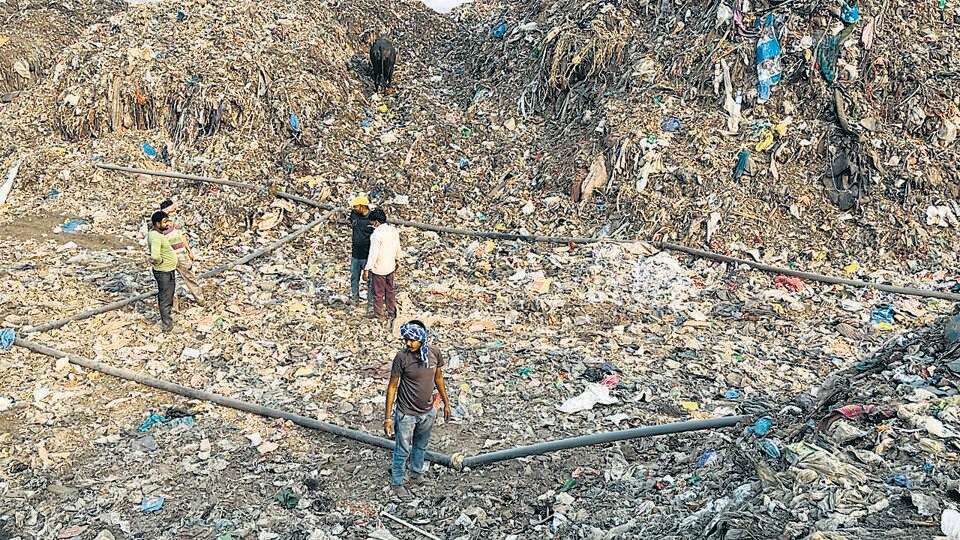
MCG commissioner Narhari Singh Bangar said the sensors will detect rising temperatures and methane levels, allowing for the immediate sprinkling of water at the detected hotspots, thus preventing fires. “Methane gas, formed beneath the waste, ignites when temperatures rise, causing frequent fires during the summer. Methane detectors and thermal cameras will be installed to monitor and prevent such incidents. Additionally, drones equipped with thermal cameras will enhance surveillance and help detect heat spots in the landfill,” said Bangar.
A team of executive engineers and technical staff has also been deployed at the landfill during the day to check the temperature and sprinkle water if the mercury goes beyond 50°C, said officials.
At present, the landfill has around 2.5 million tonne of waste and is estimated to be 23 metres tall, making it one of the largest dump sites in north India. Over 30 fire incidents have been reported at the site this year including six this month. MCG officials said this approach includes the continuous availability of water tankers to ensure an uninterrupted water supply, especially at the top of the waste heap, where fire trucks struggle to reach.
Bangar added they have stationed two fire tenders at the landfill to ensure timely action. “We have installed six CCTV cameras covering all directions and a 24x7 control room has been set up. Another thermal drone sensor is used to check the heat in the landfill throughout the day,” he said.
MCG officials said the initiative is expected to significantly reduce fires. “We are trying different methods to prevent fires at the Bandhwari landfill, work for installing the drip system on the landfill is under process and a 500-metre-long water pipeline has been laid and will be connected to the drip system in the second phase. This infrastructure will facilitate the efficient sprinkling of water over the landfill’s surface, crucial for controlling fires swiftly,” Bangar added.
Manas Human, chief executive officer of Nagarro, said the initiative is welcome, but Bandhwari is not the only place where waste is burning. “There are dozens of waste fires throughout the district and some places (like the Millennium Plaza Bus stop in Sector 29) where waste is burnt several times a week. In our opinion, the police are best placed to monitor such sites daily, report incidents to the fire stations, and act against the people responsible,” he said.
Meanwhile, locals alleged that repeated fires at the landfill have made life difficult, and have also contributed to pollution in the Aravalli forest area. “Reducing organic waste load from reaching the landfill site is key to minimising fires. Providing fresh waste to the landfill site, which has a high percentage of organic fraction, is actually providing methane fuel to the fire. Immediate mitigation is warranted by processing the organic waste within the city,” said Ruchika Sethi Takkar, founder member of Why Waste Your Waste, a civil society movement for a zero-waste city.


