
 E-Paper



Monsoon remains elusive in Delhi
The weather office maintained that conditions were favourable for further advance of the southwest monsoon

 Prefer HTon Google


An anti-cyclonic circulation continues to hold Delhi’s monsoon hostage, delaying the season’s arrival even as rains sweep across most of India. On Thursday, the India Meteorological Department (IMD) said the monsoon trough remained south of the Capital, preventing its northward push.
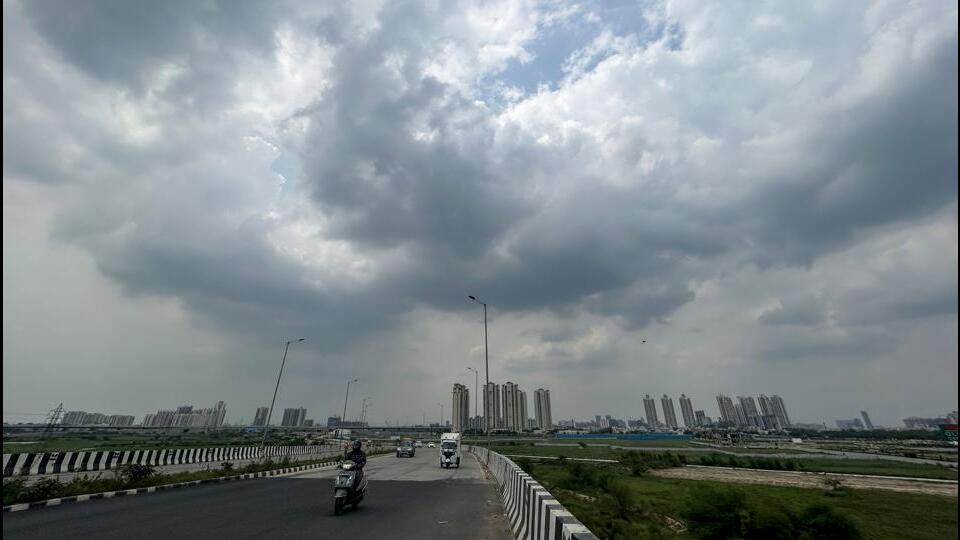
The city, instead, has been left reeling under persistent cloud cover and rising humidity.
For the past week, the monsoon has played a game of moving goalposts with the Capital. Last Friday, IMD said conditions were favourable for the monsoon to reach Delhi by Tuesday. On Sunday, the forecast was revised to say the onset would happen “in the next two days.”
By Tuesday, the arrival was expected within 36 hours. When that window passed without its arrival, IMD said the monsoon would arrive within 24 hours — a prediction missed again.
Despite these forecasts, only scattered, very light rainfall has been recorded.
Meanwhile, monsoon winds continued to move across the rest of north India. On Thursday, the IMD said the rains had advanced into more parts of Rajasthan, Haryana and Punjab. But Delhi and narrow belts to its west and east remain dry, according to the latest monsoon map.
The weather office maintained that conditions were favourable for further advance of the southwest monsoon across the remaining parts of the country over the next 3-4 days.
As of Thursday, the northern limit of the monsoon was passing through Jaisalmer, Bikaner, Jhunjhunu, Bharatpur, Rampur, Sonipat, and Anup Nagar — leaving Delhi out.
“Cloudy conditions prevailed over Delhi during the past 3-4 days. Very light to light rainfall occurred at a few places,” IMD officials said in a statement. They attributed the humid weather to persistent south-easterly winds driven by a seasonal trough located south of the city, around 2km above ground level. These winds brought moisture into the region, creating low to medium cloud cover.
However, what has prevented the monsoon from reaching Delhi is an anti-cyclonic circulation at the middle and upper atmospheric levels. “This ridge has dominated the wind and circulation pattern over Delhi, southwest Uttar Pradesh and adjoining parts of Haryana and Rajasthan,” IMD said. “This pattern is likely to change in the next 3-4 days as the east-west trough moves northward and the upper-level ridge weakens.”
Former earth sciences ministry secretary M Rajeevan said model outputs continue to show monsoon arrival in Delhi by June 28 or 29, with the entire country expected to be covered by June 30.
Mahesh Palawat, vice president (climate and meteorology) at private forecaster Skymet Weather, said the monsoon trough is currently running from Rajasthan to the northwest Bay of Bengal via Madhya Pradesh and Chhattisgarh. “It will take another two days for the trough to shift over Delhi. Rainfall will begin soon,” he said. “A cyclonic circulation over central Uttar Pradesh will help draw moisture-laden winds from the Bay of Bengal.”
Delhi’s normal monsoon onset date is June 27. Last year, it arrived a day late, on June 28.
A yellow alert for rain, thunderstorms, and gusty winds was issued for Wednesday, but most of the city remained dry. Ayanagar and Ridge recorded only trace rainfall, Najafgarh saw 2mm, and Narela just 0.5mm in the 24 hours ending 8:30am on Wednesday. Another yellow alert was issued for Thursday.
On Thursday, IMD data showed isolated very light rain across parts of the city. While Safdarjung, the city’s base station, recorded no rain between 8:30am and 5:30pm, Palam logged 0.9mm, Rajghat 0.3mm, and Mungeshpur 0.5mm. In the preceding 24 hours, Mungeshpur had recorded 2mm — the highest in the city.
No colour-coded alert is in place for the next three days, but IMD has forecast very light to light rain for the period.



Stay updated with all top Cities including, Bengaluru, Delhi, Mumbai and more across India. Stay informed on the latest happenings in World News along with Delhi Election 2025 and Delhi Election Result 2025 Live, New Delhi Election Result Live, Kalkaji Election Result Live at Hindustan Times.


