E-Paper



Smart devices to keep a watch on Delhi sanitation staff
The civic body on Saturday invited bids for deploying 2,400 GPS-enabled wristwatches, which will be distributed in 12 municipal wards, one from each of the corporation’s 12 administrative zones

 Prefer HTon Google


The municipal corporation of Delhi (MCD) has begun the process to buy the first batch of smart watches for real-time monitoring of the sanitation staff, a move that has raised privacy concerns among the workers.
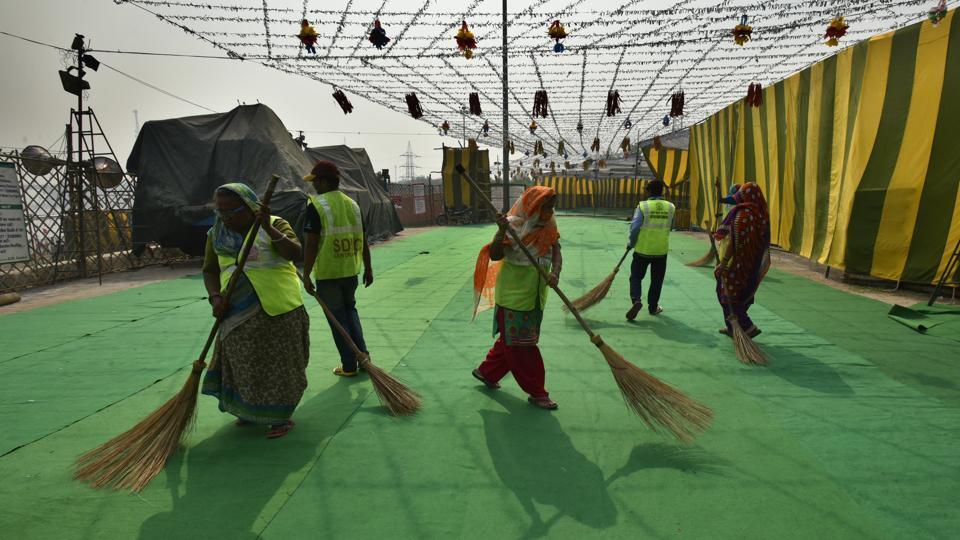
Senior MCD officials who are familiar with the development said the workers will be monitored through GPS devices in the smart watches at a centralised command and control centre at the municipal headquarters.
The civic body on Saturday invited bids for deploying 2,400 GPS-enabled wristwatches, which will be distributed in 12 municipal wards, one from each of the corporation’s 12 administrative zones.
“These watches will be distributed to 200 sanitation workers in each ward. A private firm will set up infrastructure for the control room, back-end monitoring, and data storage from these devices,” said a senior municipal corporation official from the sanitation wing.
A senior official from the sanitation department said that the tenders have been called and the final expenditure on the project will depend on the lowest bids from the private companies.
Sanjay Gahlot, head of the Delhi commission for safai karamcharis, questioned the need for tracking the staff in real-time, saying it infringes on the privacy of the workers.
“Why should sanitation workers be tracked like this? The work output will increase if the staff is paid on time and they are provided health care facilities. The corporation wastes money on such experiments rather than on basic welfare. Biometric machines have previously failed them. This will only increase corruption and wasteful spending,” he added.
According to the civic official, the first batch of watch distribution will be treated as a pilot, and based on the outcome, it will be replicated across all 250 wards.
According to the sanitation department’s project report, in addition to tracking the geographical location of sanitation employees, the devices will enable workers to click their photos and register attendance with their image.
MCD administers an area of 1,397.3sqkm, and is divided into twelve zones with 250 wards. Basic sanitation is the primary responsibility of the civic body .
More than 50,000 MCD sanitation workers manually sweep 15,582km of colony roads. The workers are expected to sweep the markets and commercial areas twice and clean the larger streets (those with a width of more than 60 feet) with 52 mechanical road sweepers. According to an MCD official, the watches will have an accuracy of two-five metres.
“This will assist us in developing a database of which side of the road length is being cleared so that more efficient routes can be established,” the official added.
Mukesh Baidya, president of all municipal corporation sanitation supervisor’s union, said that unless the system is made corruption free, no technological intervention can help improve the efficiency. “Previously, MCD squandered crores on deploying a biometric system that yielded no results. The civic body then attempted to use wireless systems to improve coordination, but the system has been dormant for the past two years due to a lack of funds. They’ve also tried using mobile app-based attendance to manage work, but the system isn’t working,” he added.
Atul Goyal, the executive director of Urja (united resident welfare associations joint action), said using technology is a good idea, but the civic body needs to involve local communities and RWAs as well.
“At the very least, people should be aware of the workers stationed in their areas so that feedback can be provided,” Goyal said.