
 E-Paper



‘Murder of young people’: SCorders states to halt farm fires
The Supreme Court has ordered the states of Punjab, Haryana, Rajasthan, and Uttar Pradesh to immediately stop burning crop stubble to combat hazardous air quality in Delhi. The court also criticized Delhi's odd-even car scheme, calling it "optics", and directed the cabinet secretary to devise a solution to rising pollution levels. The court will hear the matter again on Friday. Punjab, the main culprit of stubble fires, has shown little interest in addressing the issue. Farmers burn crop stubble to prepare fields for the next crop.


The Supreme Court on Tuesday directed the states of Punjab, Haryana, Rajasthan and Uttar Pradesh to immediately stop the burning of crop stubble that has pushed air quality in Delhi to hazardous levels, and made the heads of local police stations and chief secretaries of the four states responsible for this.
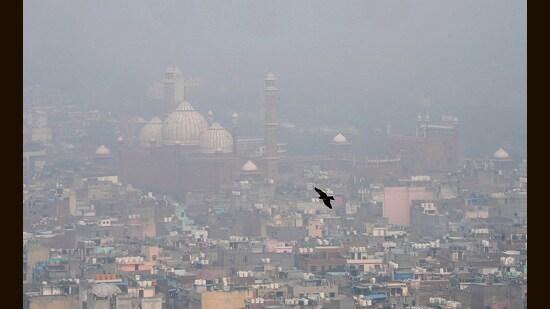
Delhi’s choked air is resulting in “complete murder of our young people”, said the court, which also directed the cabinet secretary to meet all stakeholders on Wednesday to devise an immediate cure to rising pollution levels in the capital. The matter will be heard next on Friday.
A bench of justices Sanjay Kishan Kaul and Sudhanshu Dhulia said, “We want this stopped altogether whether you take forceful action or give incentives against burning of stubble but you have to stop it. We are at zero level patience in these issues. This has to be sorted tomorrow so that it does not happen next year.”
The bench also took a dim view of Delhi’s so-called odd-even car scheme that was to go into effect from November 13, terming it “optics”, following which the Delhi government said it will make any further strategies or announcement only after it has studied the apex court’s directions.
To be sure, Punjab, responsible for the majority of stubble fires, has shown little interest in clamping down on them, with the chief minister’s own constituency, Sangrur, seeing the highest number of farm fires in the state. Farmers in Punjab, and also in Haryana, Rajasthan, and parts of Uttar Pradesh (although to a much lesser extent in the three states), burn stubble of their paddy crop after harvesting it so as to get their fields ready quickly for the next crop. Delhi’s air is always polluted, but at this time of the year as temperatures fall, making the air thicker and heavier, and winds slow, with their direction changing, the stubble fires push the air quality into dangerous territory.
Hearing a batch of cases seeking to curb Delhi pollution, the court , on October 31 directed the states of Punjab, Haryana, Uttar Pradesh, and Rajasthan to indicate what steps were being taken to control pollution with regard to eight issues: stubble burning, vehicular pollution, dust pollution (from construction and demolition activity), open waste burning, diesel generator sets, pollution from dispersed sources in Delhi, industrial pollution, other factors (including firecrackers). These issues were highlighted in a report submitted by the Commission for Air Quality Management (CAQM) for Delhi and neighbouring areas.
Dealing with the responses, the bench wondered that though on paper it was suggested that farm fires have dropped by nearly 40%, there was no visible change to be seen in Delhi’s air which had already slipped to severe levels. Delhi’s air quality was in severe category for four days before improving marginally to very poor quality according to Tuesday’s 4pm bulletin.
The bench also asked the Delhi government why, with the same party (the Aam Aadmi Party) in power in Punjab, farm fires were continuing. “You can’t be shifting the blame. It is complete murder of young people. See the situation in Delhi. How many children are on nebulizers. The suggestion given to them is to shift out of Delhi.”
“The residents of Delhi have been struggling with this problem and there doesn’t seem to be a solution to aggravated pollution this time of the year which passes to next year,” the bench observed. “One has to see if he have to traverse a different path. We cant depend on weather conditions to change to hope for some solution.” Tuesday’s marginal improvement, in fact, was the result of a change in the wind direction, and a western disturbance.
The court said that the major issue behind crop burning is the burning of low cost paddy crop (non-basmati) which is grown across 3 million acres in Punjab .
The Punjab government listed some solutions, which included Centre’s help to financially aid farmers in shifting to alternate crops such as basmati, cotton, maize or millets by providing minimum support price (MSP). The state also suggested an alternative in helping farmers in the state purchase equipment as part of crop residue management incentive payment (CRMIP) budgeted at ₹1,935 crore. Of this amount, Delhi and Punjab government expressed willingness to contribute ₹375 crore each, expecting Centre to foot in the remaining amount of ₹1,175 crore.
The bench noted that shifting from low-cost paddy farming is beneficial even to Punjab as the crop consumes a lot of water and the water table level in Punjab has already reached a stage from where it cannot be redeemed.
The court sought response of the Centre to these suggestions and directed cabinet secretary to hold an emergency meeting on Wednesday with all concerned stakeholders. “It is appropriate that for immediate action, Cabinet secretary calls for a meeting tomorrow (Wednesday) either physically or virtually so that we have a better picture and some redemption from bad air by Friday.”
For the Centre, solicitor general Tushar Mehta suggested that last year the Delhi chief minister Arvind Kejriwal talked about a biochemical decomposer developed in collaboration with Indian Council of Agricultural Research that reduces stubble to manure on being sprinkled. “Let Punjab now start doing it. It has come from the chief minister of Delhi, whose statement I accept at face value that this will be a win-win situation,” Mehta said.
“This blame game must end,” the court remarked, even as it pulled up Delhi government for not blaming Punjab now just because the same political party is ruling there. “It can’t be a political battle all the time depending on who is ruling the state. Because you are the same political party, Delhi now says Haryana is responsible. We want this stopped altogether.”
The court was assisted by two lawyers as amici curiae, senior advocates ADN Rao and Aparajita Singh who suggested that the court also issue immediate directions with regard to the other sources of pollution, such as vehicular and open burning of waste. The court directed Delhi government to ensure no municipal solid waste is burnt in the open.
With the Delhi government seeking to implement restrictions on vehicular traffic based on the odd-even scheme from next week (odd-numbered cars and even-numbered ones will ply on alternate days), the bench asked the state if this has worked in reducing pollution in the past. “These are all optics,” said the bench as it sought steps taken by Delhi and neighbouring states on implementation of colour-coding on vehicles based on use of fuel as ordered in December 2022. Amicus curiae Aparajita Singh said banning orange vehicles (diesel run) is more scientific as odd and even will even restrict even CNG-based vehicles.
The court also noted that most taxis operated by app-based aggregators have vehicles registered outside Delhi. It asked the Delhi government to inform it on the feasibility of restricting the plying of taxis registered outside the state during this time of the year when pollution peaks. It also sought details of environment compensation cost (ECC) collected by Delhi government from 2015 and the status of its utilisation.
The bench hoped that with these steps put in place there could be some difference in the air quality immediately. “It is time something is done as of yesterday than postponing it for future.”
Both the Delhi and Punjab governments said they were going to study the order and take steps accordingly.
In a meeting held after the court’s orders, Delhi environment minister Gopal Rai said, “We held a meeting today with officials from the traffic police, transport and environment departments where how to implement the odd-even scheme was discussed. However, we will make any further strategies or announcement only after we have carefully studied the SC order.”
A senior officer from Punjab government, who did not want to be named, said they were waiting for a copy of the court order, which was still to be uploaded on the SC website. “We will wait for the written directions order of the court so that we can comply with them point-wise,” he said.

Stay updated with all top Cities including, Bengaluru, Delhi, Mumbai and more across India. Stay informed on the latest happenings in World News along with Delhi Election 2025 and Delhi Election Result 2025 Live, New Delhi Election Result Live, Kalkaji Election Result Live at Hindustan Times.


