
 E-Paper



New weather station at Bharat Mandapam operational; another planned at IGNOU
The Pragati Maidan AWS can be used to make forecasts for Bharat Mandapam, where international events are likely to be held in the future

 Prefer HTon Google


India Meteorological Department (IMD) is planning to improve the network density of weather stations in the Capital, and will install an automatic weather station (AWS) at Indira Gandhi National Open University (IGNOU) in Saket in the coming months, officials aware of the matter said on Tuesday.
“Gradually, we are looking to add more weather stations in the city, to make the overall coverage dense. This will allow us to capture rain or give forecasts for each part of the city,” said Kuldeep Srivastava, scientist at IMD.
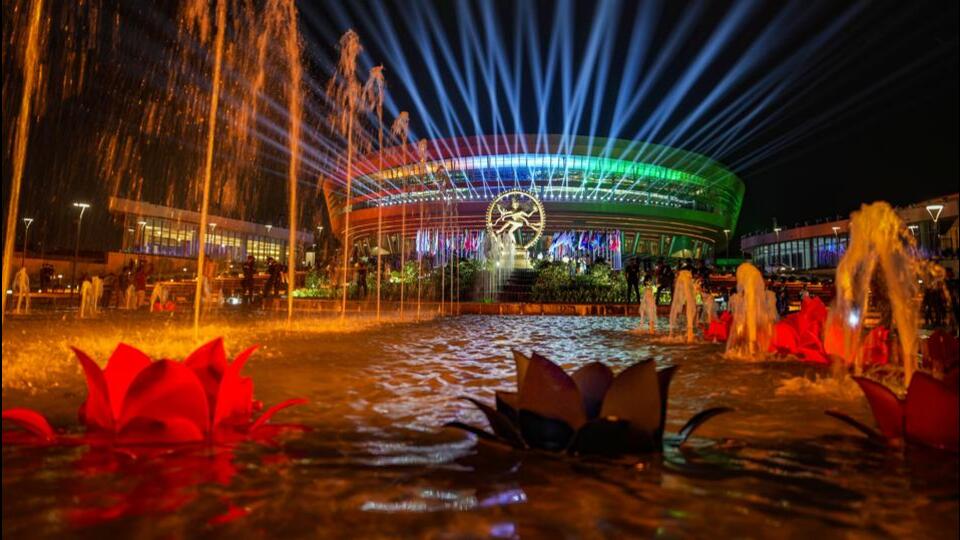
The plans for the new AWS at INGOU follow the recent installation and operationalisation of an AWS outside Bharat Mandapam, which will be called the Pragati Maidan weather station.
Officials said the Pragati Maidan AWS can be used to make forecasts for Bharat Mandapam, where international events are likely to be held in the future — the G20 Summit was held at Bharat Mandapam in September, around a month before the AWS was made operational, and IMD had made use of a mobile van to make local forecasts.
The new station will also make forecasts for Rajghat, officials said.
Srivastava said IGNOU was chosen as the next location for an AWS as it will give better coverage in the south district around Saket and Maidangarhi.
“The location within IGNOU is being finalised, and the station can be installed soon. After calibration, data is collected for some time to ensure it is correct. Once that is done, the data can be shared through our website for public viewing,” he said.
The Met department said after IGNOU, the next AWS will come up in the northeast district, though a location is yet to be finalised. “Once this new station at IGNOU is ready and operational, we can plan ahead for the next station,” an official said, on condition of anonymity.
Delhi has five manual weather stations – at Safdarjung, Palam, Lodhi Road, Ridge and Ayanagar. Readings here are collected manually, with a Met official using several instruments to note recordings at various intervals through the day.
The city also has nine AWS at present, where data is automatically recorded and transmitted through servers by pre-calibrated weather instruments — Najafgarh, Mayur Vihar, Sports Complex, Mungeshpur, Jafarpur and Pitampura, Narela, Pusa.
In addition, the Capital also has part-time observatories at the President’s House and Dhansa, which can be used, for local forecasts or data capture, if required.



