E-Paper



No respite from toxic Delhi air, ‘severe’ level close
At 11am on Wednesday, the average AQI reading was 366 (very poor) — inching towards the 'severe' zone.

 Prefer HTon Google


Delhi’s 24-hour average air quality index reading surpassed the 350-mark for the first time this season on Wednesday and plunged to the dirtier end of the “very poor” category as residents wheezed lungfuls of the all too familiar noxious air.
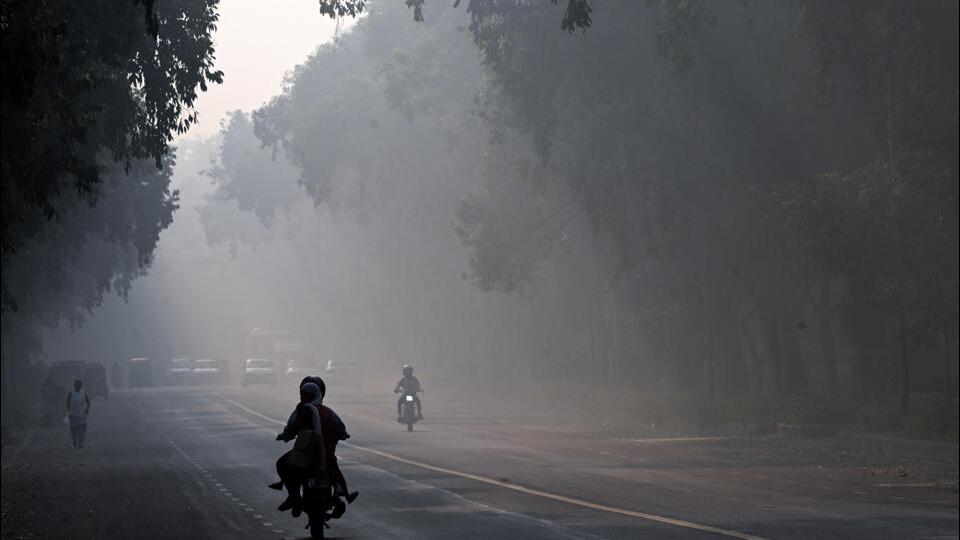
At 11am on Wednesday, the average AQI reading was 366 (very poor) — inching towards the “severe” zone — which settled at 364 at 4pm, according to the Central Pollution Control Board’s national bulletin. This was 39 points worse than Tuesday’s average at 4pm of 327.
Forecasts show Delhi’s AQI will likely hover in the “very poor” category till Saturday, and could touch “severe” next week.
The key contributors to the high pollution levels on Wednesday were calm surface winds, low temperatures, local emissions and incursion of stubble emissions to Delhi through north-northwesterly winds — all of which are routine factors.

The prominent pollutants on Wednesday were PM10 (particulate matter) and PM2.5, CPCB data showed. Delhi’s transport sector was the largest contributor to the PM2.5 load in Delhi, with an estimated contribution of 13.5%. The estimated contribution of farm fires to the PM2.5 load was recorded in double digits for the first time this season, at 11.1%. On Tuesday, this was around 8%, the Decision Support System (DSS) said, adding that this could rise to around 15% on Thursday due to the predominantly northwesterly winds.
Northwesterly winds facilitate the transport of stubble emissions in Punjab and Haryana towards the Capital, which, along with calm surface winds, makes it hard for the dispersal of pollutants.
“The wind direction will predominantly remain northwesterly for the next two to three days and if farm fires spike, the AQI will deteriorate further,” said Mahesh Palawat, vice president at Skymet meteorology.
The Centre’s Early Warning System (EWS) for Delhi said the adverse conditions do not show signs of improvement in the coming days.
“Delhi’s AQI is likely to be in the ‘very poor’ category from October 24 to 26. The outlook for the subsequent six days shows AQI to be between very poor and severe. Meteorological conditions are unfavourable for effective dispersion of pollutants as calm winds prevail during night,” said the EWS daily bulletin for Wednesday.
Meanwhile, the maximum and minimum temperatures have continued to remain warmer than usual. On Wednesday, the minimum temperature was 20.5°C, which was three degrees above normal. It was 20.4°C a day earlier.
The return of cooler northwesterly winds is expected to bring night-time temperatures down again, which will likely touch around 18°C by October 27, the India Meteorological Department said.
Separately, Delhi’s maximum was 33.1°C on Wednesday, which was a degree above normal. Delhi’s maximum is likely to oscillate between 33-34°C till the weekend.