
 E-Paper



Over 20% of Delhi groundwater samples exceed safe nitrate limits, says CGWB data
Delhi fared as the fifth worst-affected state or Union territory for high nitrate contamination, according to the report.

 Prefer HTon Google


More than 20% of groundwater samples tested in Delhi contained nitrate levels above the permissible limit of 45 mg/l, with some samples reaching up to 994 mg/l – over 22 times the safe standard – according to data submitted by the Central Groundwater Board (CGWB) to the National Green Tribunal (NGT).
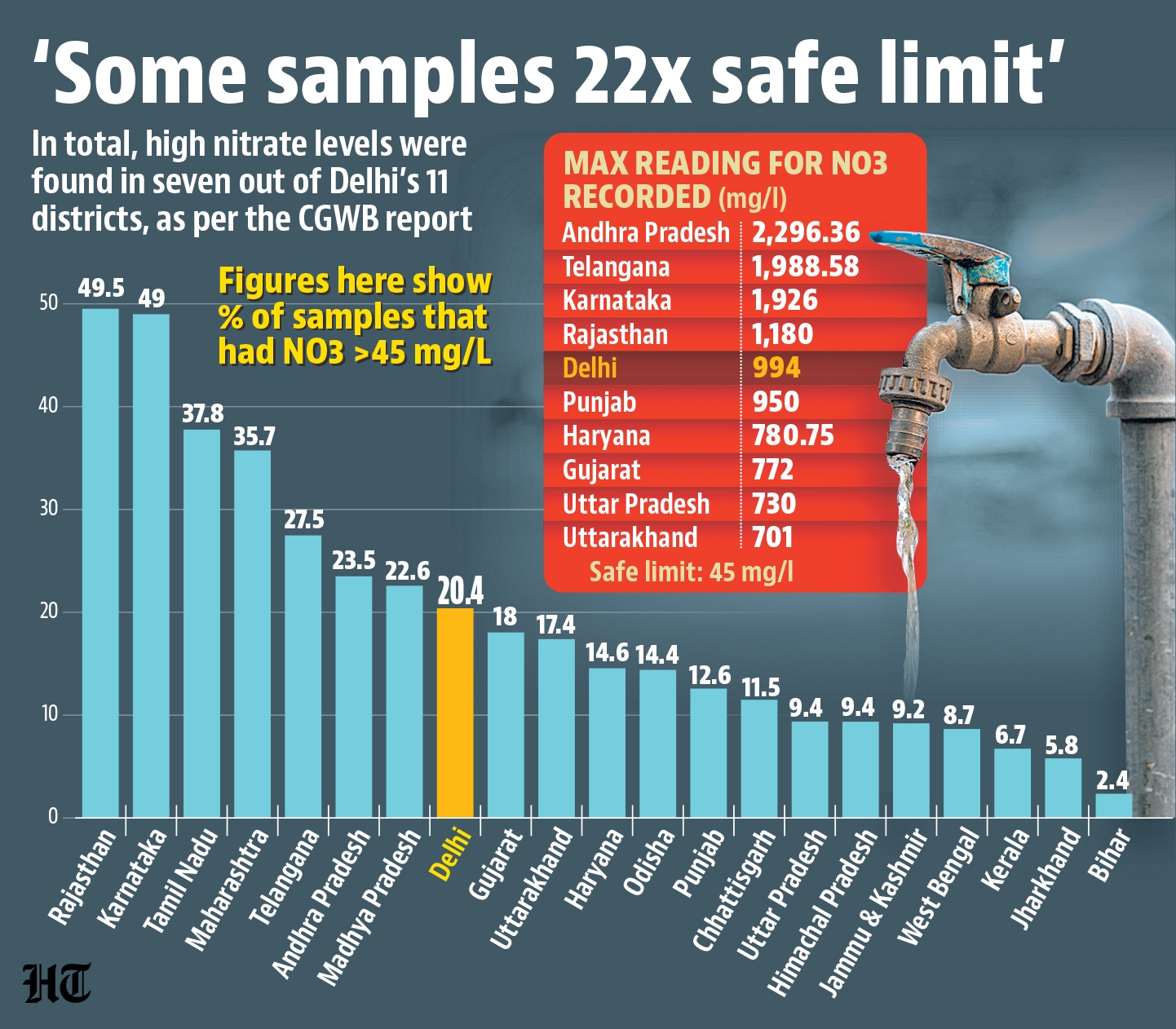
With a peak reading of 994 milligrams of nitrates per litre of drinking water, Delhi fared as the fifth worst-affected state or Union territory for high nitrate contamination, according to the report.
Andhra Pradesh fared the worst in the country with nitrate levels touching a peak of 2,296 mg/l, it showed.
While 20.39% of Delhi’s samples exceeded safe limits (eighth-worst among states and UTs), Rajasthan recorded the highest proportion of contaminated samples at 49.52%.
Also Read | Foggy, polluted New Year’s Eve in store for Delhi: IMD as AQI jumps
In total, high nitrate levels were found in seven out of Delhi’s 11 districts, including New Delhi, north, northwest, south, southeast, southwest and west Delhi, it said.
Nationally, the number of districts with excessive nitrate levels rose from 359 in 2017 to 440 in 2023.
“The consolidated national groundwater quality assessment report will be published in September 2026. In compliance with NGT directions, the annual ground water quality report 2024 is enclosed,” the submission stated.
Also Read | Delhi to resume source apportionment study, with focus on PM10
The findings are part of CGWB’s 2024 annual groundwater report, based on samples collected in 2023. The submission was made as part of an ongoing case, after NGT took suo motu cognisance of a news article in January 2025.
The report added nitrate contamination in groundwater remains a significant environmental and public health concern, particularly in agricultural regions where use of nitrogen-based fertilizers and animal waste is prevalent. “Elevated nitrate levels can lead to methemoglobinemia (blue baby syndrome) in infants. Adults can tolerate slightly higher concentrations. If the limit is exceeded, water is considered to be unfit for human consumption,” it said.
Also Read | Delhi’s air quality deteriorates to ‘very poor’ zone; marginal rise in min temp
Nitrate pollution, often linked to agricultural runoff from nitrogen-based fertilizers and animal waste, poses serious public health risks. Elevated levels can cause methemoglobinemia, or “blue baby syndrome,” in infants. Studies have shown that exposure to high levels of nitrates are associated with long-term risks such as cancer, thyroid disorders, and oxygen deficiency in adults.
CGWB said while monsoon rains typically improve water quality, it can have the opposite effect for nitrate levels – which can shoot up due to agricultural run-off.
“Following monsoon season, nitrate concentration often increases due to surface runoff from agricultural fields. Fertilizers and other contaminants can wash into aquifers elevating nitrate level…” the report said, citing data which showed while 30.77% of the levels exceeded the permissible limits in the pre-monsoon season; around 32.66% of the water samples exceeded the permissible nitrate limit, indicating a slight increase in contamination levels post-monsoon.
HT had on November 27 flagged how groundwater aquifers around Delhi’s saturated landfill sites at Bhalswa, Ghazipur and Okhla were highly contaminated, with multiple parameters such as chlorine, sulphate, fluoride and hardness measuring several times higher than prescribed limits. This was based on an analysis of samples conducted by the Delhi government.
Priti Mahesh, an Independent environment and public health researcher said in addition to fertilisers and animal waste, leaching from poorly managed septic tanks and sewage systems was another way of contamination. “This is a silent but serious public health concern that requires urgent attention. When such water is consumed over long periods, it can be especially dangerous for infants, pregnant women, and vulnerable populations, leading to conditions like ‘blue baby syndrome’ and increasing the risk of thyroid dysfunction and certain cancers. Because groundwater is the main source of drinking water for millions, unchecked nitrate contamination can quietly undermine community health..” she said.


Stay updated with all top Cities including, Bengaluru, Delhi, Mumbai and more across India. Stay informed on the latest happenings in World News along with Delhi Election 2025 and Delhi Election Result 2025 Live, New Delhi Election Result Live, Kalkaji Election Result Live at Hindustan Times.


