
 E-Paper



Sarai Kale Khan: FOB complete, traffic flows freely after 2-year gap
With this, passengers can now seamlessly travel between the Nizamuddin station and the Sarai Kale Khan RRTS station without needing to step out of either of the buildings

 Prefer HTon Google


Civil construction of the foot overbridge (FOB) connecting Sarai Kale Khan Regional Rapid Transit System (RRTS) station to Hazrat Nizamuddin Railway Station finished on Wednesday and the barricading — that choked traffic movement for the last two years and inconvenienced thousands of commuters — was removed to make the road fully operational, officials from National Capital Region Transport Corporation (NCRTC) said.
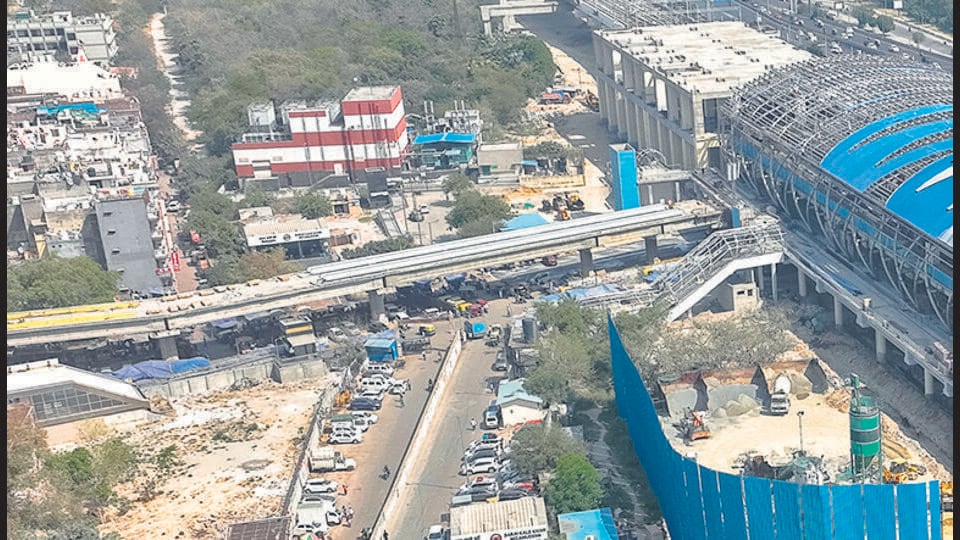
NCRTC also completed the installation of six travelators (moving walkways) along the 280-metre-long FOB to facilitate movement of commuters between the two transport modes.
With this, passengers can now seamlessly travel between the Nizamuddin station and the Sarai Kale Khan RRTS station without needing to step out of either of the buildings.
“With the completion of the civil work of the FOB, NCRTC has removed the barricading from the road leading to Hazrat Nizamuddin Railway Station, opening the road fully for public use. Additionally, prioritising commuter convenience, NCRTC has upgraded the road surface by applying a new tar blacktop, which will enhance durability and extend the road’s life cycle. Given the high traffic volume and congestion in the Sarai Kale Khan area, this initiative is expected to significantly ease movement and improve safety,” said NCRTC spokesperson Puneet Vats.
Daily commuters travelling between parts of Noida and Ghaziabad to southeast, south and central Delhi areas said the development is a big relief for them.
“The stretch was closed for nearly two years now, and has been a traffic nightmare during peak hours. Once the RRTS station also becomes operational and all the barricades are removed, we hope the situation will be much better,” said Namrata Relan, who travels from Noida to south Delhi every day and works at an infrastructure company.
The distance between Sarai Kale Khan Namo Bharat station and the railway station is approximately 300 metres, which necessitated the need for a dedicated FOB to ensure safe and convenient pedestrian connectivity, officials said.
“In the absence of proper connectivity between public transport systems, pedestrians are often compelled to cross busy roads amid fast-moving traffic, posing serious safety risks and causing traffic disruptions and congestion. Thousands of people travel daily through the various modes of public transport available at Sarai Kale Khan, where commuters have to brave crowds, chaotic traffic and walk long distances to move from one mode of transport to another,” said Vats.
Sarai Kale Khan is being developed as a multimodal transit hub. Its dedicated RRTS station is one of the largest stations on the Delhi-Ghaziabad-Meerut RRTS route and is connected with DMRC’s Pink Line, the Hazrat Nizamuddin railway station, and the Veer Haqiqat Rai ISBT.
Meanwhile, officials said that the finishing work for façade and roof of the RRTS station is currently underway. The station has 12 escalators and four lifts connecting the concourse to the platform level, all of which have been installed and are ready for operation. Additionally, platform screen doors have been installed on the platforms. Finishing work is in progress for the five entry-exit points, where escalators and lifts have also been installed and are ready for operation.
The 4.5 km-stretch between Sarai Kale Khan and New Ashok Nagar, which will enhance connectivity between Meerut and Delhi, is likely to start soon. Trial runs on this section started on April 13.


Stay updated with all top Cities including, Bengaluru, Delhi, Mumbai and more across India. Stay informed on the latest happenings in World News along with Delhi Election 2025 and Delhi Election Result 2025 Live, New Delhi Election Result Live, Kalkaji Election Result Live at Hindustan Times.


