
 E-Paper



SC questions need for ‘single-window’ Ridge board, flags conflict of interest, overlap issues
It directed the Union government to place on record an affidavit along with details of composition of various statutory and non-statutory authorities dealing with management of forest, green areas or related environment issues


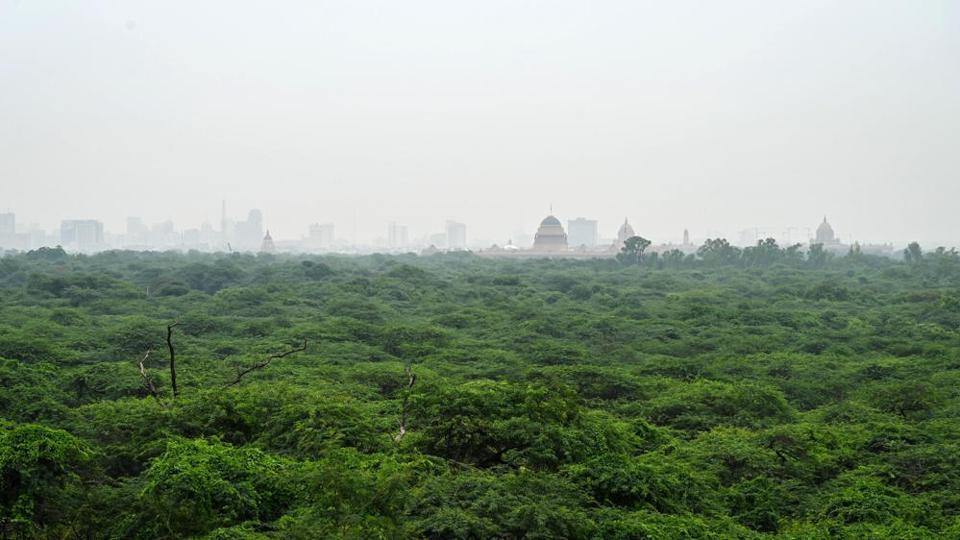
The Supreme Court on Monday questioned the need for a 14-member Delhi Ridge Management Board (DRMB) to serve as a “single-window” authority for permissions to divert ridge land for development activities, and raised concerns about possible conflict of interest and overlap between statutory authorities tasked with implementing environmental laws in the Capital.
A bench headed by Chief Justice of India (CJI) Surya Kant directed the Centre to file an affidavit providing details of all statutory and non-statutory authorities dealing with environmental issues and said, “Such information is important to delineate area of operation for all such bodies and further to identify areas which are overlapping.”
The order came while the court was dealing with the issue of protection of ridge land in the 1995 TN Godavarman case concerning protection of forests and wildlife.
The Centre, represented by advocate Suhasini Sen, informed the court that on November 11, 2025, the top court had directed the reconstitution of the 14-member DRMB headed by the Delhi chief secretary and gave it statutory backing.
Pursuant to this judgment, Sen said a notification was issued on December 1, but the board is yet to be reconstituted.
Going through the present composition of the DRMB, the bench noted that it included representatives of Delhi’s land revenue and housing and urban affairs departments, the Central Public Works Department, civic bodies such as the Municipal Corporation of Delhi (MCD) and New Delhi Municipal Council, and the Delhi Police.
“All are government functionaries. Will it not create conflict of interest if the government’s own agencies are required to divert ridge land? Who will decide in that case?” said the bench, also comprising justices Joymalya Bagchi and Vipul M Pancholi.
The court further said the issue of the Delhi ridge cannot be seen in isolation from environmental issues in neighbouring states.
“We have to get out of this mindset that Delhi alone needs green cover. We can succeed in Delhi only if we consider the approach in the neighbouring states,” the court said.
“The Delhi ridge is a small portion of the Aravalli range. You cannot have an isolated approach for Delhi. Any eco-sensitive work in Delhi cannot strictly go by geographical boundaries as you have to take on board Haryana and Uttar Pradesh,” the court added.
“If we have the central empowered committee (CEC) as a statutory body handling environment issues for the entire country, can it not deal with the functions of DRMB also,” the bench asked.
At one point, it asked the Centre’s counsel, “Was this plan for expanding DRMB your initiative or did we force it on you?”
Senior advocate K Parmeshwar, assisting the court as amicus curiae, informed the bench that the DRMB was constituted by the court’s order in 1995 because a need was felt to have a specialised agency to oversee the management of permissions relating to the protection and preservation of ridge land.
Last year, the court observed that several authorities were simultaneously dealing with issues concerning the ridge. To address this, the November 11 judgment directed that the DRMB be reconstituted and designated it as a “single-window” authority to monitor preservation of ridge land.
Posting the matter after four weeks, the bench said, “We direct the Union government to place on record an affidavit along with details of composition of various statutory and non-statutory authorities dealing with management of forest, green areas or related environment issues. Such details will include DRMB and CEC also.”
Further, the order said, “The affidavit will explain statutory framework where certain committees are required to undertake duties under different environmental laws.”
The court also directed Parmeshwar to identify all issues in the 1995 TN Godavarman case that require consideration by the top court and those that could be referred to the high courts.
Similar to the exercise it recently undertook to close the 1985 MC Mehta case, the bench said, “We request amicus to categorise the applications under different sub-heads. Once the applications are disposed of, the 1995 case shall be formally closed and the pending applications will be treated as independent writ petitions.”
The ridge land in Delhi is divided into northern Ridge (87 hectares), central Ridge (864 ha), south central Ridge (Mehrauli: 626 ha) and southern Ridge (6,200 ha). Of this, nearly 308.552 ha — around 5% of the area — was found to be encroached upon by the CEC in its report considered last year while passing the November 11 judgment.
The DRMB was formed by the top court in September 1995 and for three decades functioned without statutory backing. By granting it statutory status, the court intended to make its functioning transparent and accountable, and subject to the jurisdiction of the National Green Tribunal (NGT) under Section 14 of the NGT Act, 2010.
Further, orders of the DRMB can now be challenged before the high court and the Supreme Court.

Stay updated with all top Cities including, Bengaluru, Delhi, Mumbai and more across India. Stay informed on the latest happenings in World News along with Delhi Election 2025 and Delhi Election Result 2025 Live, New Delhi Election Result Live, Kalkaji Election Result Live at Hindustan Times.


