E-Paper



SC rules against additional curbson lawmakers’ freedom of speech
Justice BV Nagarathna, however, dissented from the majority view, saying that if a minister’s statements are reflective of the government’s stance, such statements may be attributed vicariously to the government.

 Prefer HTon Google


A government cannot be fastened with vicarious liability and dragged to a court for the controversial statements issued by its ministers, a Constitution bench of the Supreme Court ruled by a 4-1 verdict which underlined that restrictions beyond constitutional provisions cannot be imposed on the right to free speech of lawmakers and public functionaries holding high office.
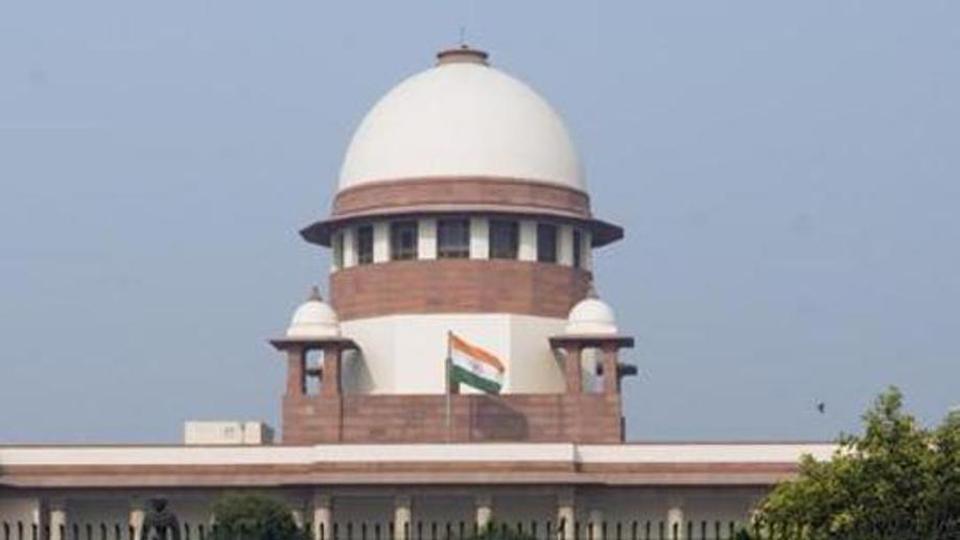
“A statement made by a minister even if traceable to any affairs of the State or for protecting the government, cannot be attributed vicariously to the government by invoking the principle of collective responsibility,” held the majority, comprising justices SA Nazeer, BR Gavai, AS Bopanna and V Ramasubramanian.
Writing for himself and the other three judges for the majority, justice Ramasubramanian held that the doctrine of collective responsibility applies to the council of ministers for the decisions taken or the acts of omissions, and cannot “extend to any and every statement orally made by a minister outside the House”.
“The Prime Minister or the chief minister does not have disciplinary control over the members of the council of ministers. It is true that in practice, a strong PM or CM will be able to drop any minister out of the Cabinet. But in a country like ours where there is a multi-party system and where coalition governments are often formed, it is not possible at all times for a PM/CM to take the whip, whenever a statement is made by someone in the council of ministers,” the verdict said.
Justice BV Nagarathna, however, dissented from the majority view, saying that if a minister’s statements are reflective of the government’s stance, such statements may be attributed vicariously to the government.
“A statement made by a minister, if traceable to any affairs of the State or for protecting the government, can be attributed vicariously to the government by invoking the principle of collective responsibility, so long as such statement represents the view of the government also,” said the lone dissenting judge on the bench.
Another crucial point decided by 4-1 related to enforcement of fundamental rights of free speech and life and liberty against private persons and non-State actors. While the majority judgment ruled that rights under Articles 19 and 21 can be pressed not only against the State and its instrumentalities but also against private persons, justice Nagarathna struck a discordant note.
Disagreeing with her four senior colleagues on the bench, she maintained that a person cannot claim enforcement of fundamental rights against private persons, except in habeas corpus matters where liberty of an individual is in peril.
The majority verdict further held that a mere statement made by a minister, inconsistent with the fundamental rights of citizens, will not amount to a constitutional right making the State liable to pay damages to the aggrieved party. “But if as a consequence of such a statement, any act of omission or commission is done by the officers resulting in harm or loss to a person/citizen, then the same may be actionable as a constitutional tort,” it noted.
Justice Nagarathna took a different view, and said that a proper legal framework is necessary to define the acts or omissions which would amount to constitutional torts, and the manner in which the same would be redressed. “It is not prudent to treat all cases where a statement made by a public functionary resulting in harm or loss to a person/citizen, as constitutional torts,” she held.
On Monday, justice Nagarathna had penned a judgment dissenting from the four judges on the same bench in the demonetisation case, wherein she held that the 2016 notification was unlawful. Her colleagues on the bench had, however, declared that the Union government was empowered to take the decision, and that due process was followed.
The judgment on Tuesday came on two petitions that had invited the top court’s ruling on the prime question if an additional accountability and thus, a legal obligation, can be cast upon ministers, MPs, MLAs and public functionaries with respect to obnoxious statements made by them.
The first petition cited the contentious statements issued in 2017 by Samajwadi Party leader Azam Khan, who was at that time a minister in the Uttar Pradesh government, regarding a gang rape case. The second petition related to a speech made by a Kerala minister portraying women in a disrespectful way.
Deciding five separate legal issues, the bench was unanimous in its refrain from reading any additional restrictions on the fundamental right of free speech, holding that the eight grounds of restrictions mentioned under Article 19(2) were exhaustive and that the “court cannot impose additional restrictions by using tools of interpretation.” Article 19(2) empowers the State to restrict the right to free speech in the interests of the sovereignty and integrity of India, the security of the State, friendly relations with foreign States, public order, decency or morality or in relation to contempt of court, defamation or incitement to an offence.
“Under the guise of invoking other fundamental rights, additional restrictions, over and above those prescribed in Article 19(2), cannot be imposed upon the exercise of one’s fundamental rights,” held the unanimous view.
The other four issues were, however, decided by 4-1 majority.
Justices Nazeer, Gavai, Bopanna and Ramasubramanian declared that a fundamental right under Articles 19 and 21 (life and liberty) can be enforced even against persons other than the State or its instrumentalities. The State, it added, is under a duty to affirmatively protect the rights of a person under Article 21 whenever there is a threat to personal liberty, even by a non-State actor.
Justice Nagarathna, on her part, rendered a nuanced view, holding that a positive duty on the State to protect the Article 21 right against private persons would lie only when there are constitutional and statutory laws obligating the State on the matter in question.