E-Paper



South Delhi body writes to PWD, wants cooperation in installing EV charging hubs
South Delhi Municipal Corporation (SDMC) said PWD removed equipment from Bhikaji Cama place and Lajpat Nagar. PWD said the contractor failed to get prior permission for the work. SDMC plans to install EV charging stations at 109 locations in south Delhi

 Prefer HTon Google


South Delhi Municipal Corporation (SDMC) officials on Monday wrote to Delhi government’s Public Works Department to facilitate installation of electric vehicles charging stations on roads maintained by the agency after the latter removed equipment from two locations in Bhikaji Cama place and Lajpat Nagar on Sunday, officials aware of the matter said.
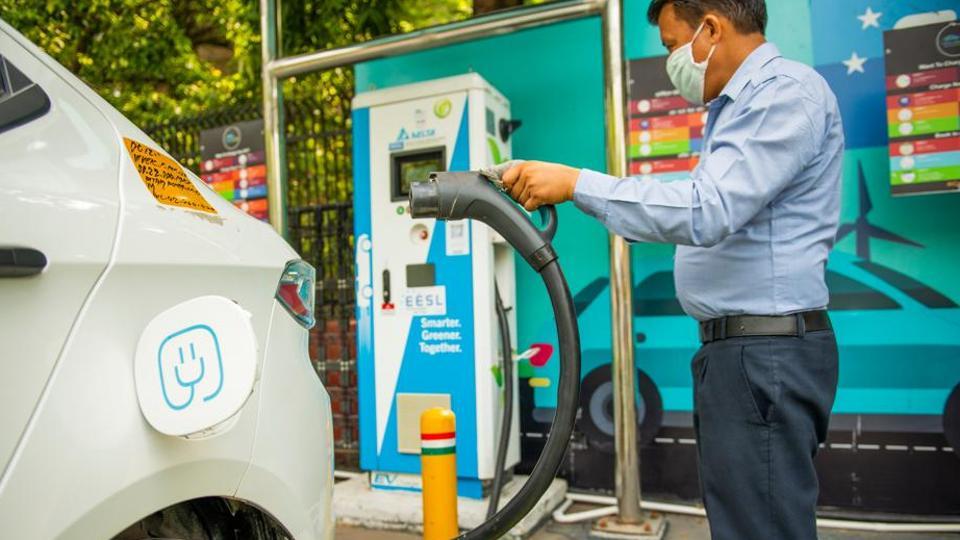
A senior SDMC official overseeing the project said the installation process has been suspended for now. He added that the public sector undertaking Telecommunications Consultants India Limited (TCIL), which has been tasked with installing 35 e-charging stations, has reported that it is facing resistance from PWD in carrying out the work.
“Charging stations have been removed at two locations and equipment from Lajpat Nagar has been confiscated. It is a loss of public money. The local PWD officials said that the road comes under their jurisdiction. Inter-departmental co-ordination will be necessary to make the electric vehicle policy successful,” the official said.
The PWD officials, however, said that the stations were removed since the contractor did not take prior permission for the work.
The remunerative project cell of the south corporation wrote the PWD on Monday for intervention to facilitate the installation work. Civic officials also argued that the roads wider than 60 feet were only transferred to the PWD for maintenance purposes, and the actual ownership of land still lies with the three municipal corporations.
SDMC is installing e-charging stations at 109 locations of which installation work for two-wheeler specific modules will be carried out at 35 locations by TCIL, official said. “41 charging stations will be installed by EESL, 6 sites by BSES power discom, and 17 sites will be covered by another PSU,” the official said.
A senior PWD official said the charging station Bhikhaji Cama was removed since no prior information was provided to the agency about the work. “It was not considered an encroachment, but the contractor appointed by the south corporation did not prior permission. We are now in touch with the civic body and details about all the locations will be submitted to us. All the locations will be considered on case-to-case basis so that the installation does become obstructions on the roads,” the PWD official said asking not to be named.
The Delhi Electric Vehicles policy, announced in August last year by the Delhi government, envisages that 25% of all new vehicle registrations should be Battery Electric Vehicles (BEVs) by 2024.