
 E-Paper



Supreme Court proposes reforms in police logs during MLA plea on ‘BC’ tag
A bench of justices Surya Kant and KV Viswanathan directed for a review of policy regimes by all states and Union territories


The Supreme Court on Tuesday proposed nationwide reforms in the maintenance of police records, seeking to address concerns regarding the indiscriminate profiling of individuals at the altar of “human honour” and “social image”.
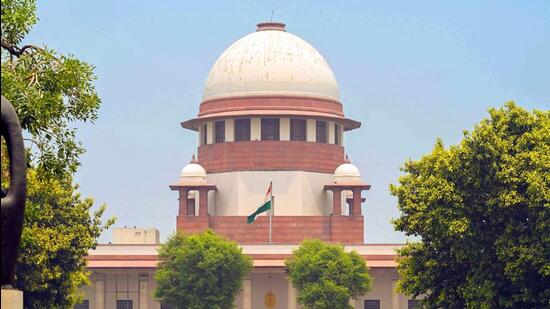
A bench of justices Surya Kant and KV Viswanathan directed for a review of policy regimes by all states and Union territories to consider establishment of a periodic audit mechanism, overseen by senior police officers, for preventing the arbitrary inclusion of innocent individuals in police records, commonly known as history sheets.
“The value for human dignity and life is deeply embedded in Article 21 of our Constitution. The expression ‘life’ unequivocally includes the right to live a life worthy of human honour and all that goes along with it. Self-regard, social image and an honest space for oneself in one’s surrounding society, are just as significant to a dignified life as are adequate food, clothing and shelter,” stressed the judgment.
The court was hearing a petition by Aam Aadmi Party (AAP) legislator asking to have the stigma of having “bad character” removed from him due to his pending criminal cases. The MLA said that the Delhi police had violated his family’s privacy and defamed him because the names of his wife and little children were on the police-prepared dossier. According to Khan’s plea, this paper was leaked to the public and shared on social media, damaging his reputation.
Last week, the Delhi police told the court that a standing order that had been in place since June 2022 and regulated the history sheeters was changed in March 2024. The names of minors or juveniles connected to the history sheeter could not be disclosed under the modified order that clarified that history sheets are “internal documents” of the department and not a publicly accessible report. However, the March order clarified that the names of the juveniles who helped the perpetrator elude the police will be disclosed.
The bench on Tuesday noted that the scope of the proceedings should be expanded so that all states and UTs revisit their policy frameworks regarding history sheets and consider necessary amendments to align with the proposed reforms. The court instructed its registry to distribute copies of the judgment to the chief secretaries and directors general of police across all states and union territories, urging prompt compliance within a stipulated timeframe of six months.
The court’s directives, issued in exercise of suo motu powers, further aimed at safeguarding the rights of individuals from socially and economically disadvantaged backgrounds, particularly Vimukta Jatis, Scheduled Castes, and Scheduled Tribes.
The directions issued, the judgment said, were to ensure that no mechanical entries in history sheets are made of innocent individuals, simply because they happen to hail from the socially, economically and educationally disadvantaged backgrounds, along with those belonging to backward communities, scheduled castes and scheduled tribes.
“All the state governments are therefore expected to take necessary preventive measures to safeguard such communities from being subjected to inexcusable targeting or prejudicial treatment. We must bear in mind that these pre-conceived notions often render them ‘invisible victims’ due to prevailing stereotypes associated with their communities, which may often impede their right to live a life with self-respect,” held the judgment, authored by justice Kant.
To ensure the effective implementation of reforms, the court proposed creating a regular audit process to be supervised by senior police officials. This mechanism, modeled after the existing framework in the National Capital Territory (NCT) of Delhi, should aim to review and scrutinise police records to eliminate biased entries and discriminatory practices, according to the bench. It emphasised that such audits would play a crucial role in upholding the constitutional guarantee of living with human dignity.
The proposed reforms are expected to bring about significant changes in police record maintenance practices nationwide, ensuring fair treatment and safeguarding the fundamental rights of all individuals, irrespective of their social or economic background.

Stay updated with all top Cities including, Bengaluru, Delhi, Mumbai and more across India. Stay informed on the latest happenings in World News along with Delhi Election 2025 and Delhi Election Result 2025 Live, New Delhi Election Result Live, Kalkaji Election Result Live at Hindustan Times.


